The Airspace Gap: Rethinking Security in a Drone-Enabled World
For decades, physical security has been built on the premise that threats approach through relatively predictable physical pathways.
As a result, security programs have focused on perimeter protection, access control, intrusion detection, and patrol operations designed to stop threats before they reach critical assets. While technologies have become more sophisticated, the underlying model has remained largely unchanged. Security professionals have sought to manage risk by controlling access through gates, doors, and other defined boundaries.
The rapid proliferation of drones is challenging that model.
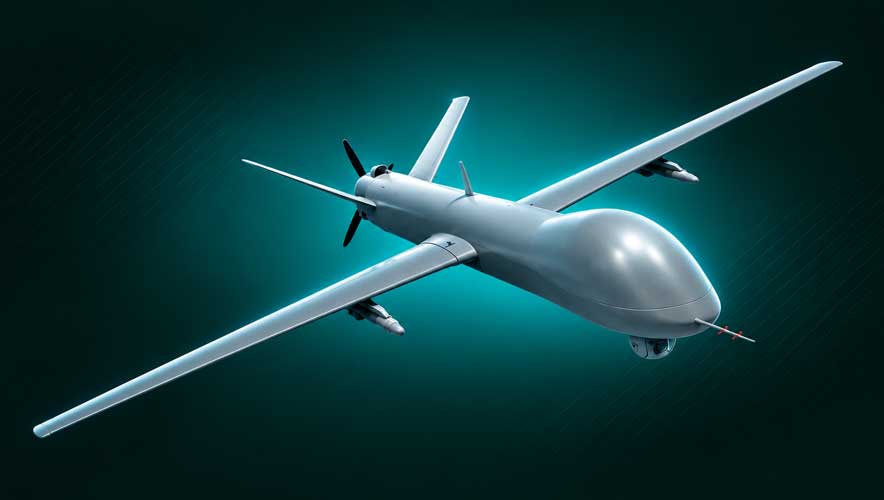
Today, uncrewed aerial systems (UAS) are readily available, relatively inexpensive, and increasingly capable. Most are used legitimately for inspection, mapping, logistics, emergency response, and many other applications. At the same time, they create new security challenges, especially for critical infrastructure operators, transportation hubs, data centers, manufacturing facilities, public venues, and urban environments.
The issue is not simply that drones represent another threat vector. Rather, drones expose a structural gap in how many organizations think about security itself. In a drone-enabled world, security can no longer be viewed as a two-dimensional problem.
From Perimeter Security to Airspace Awareness
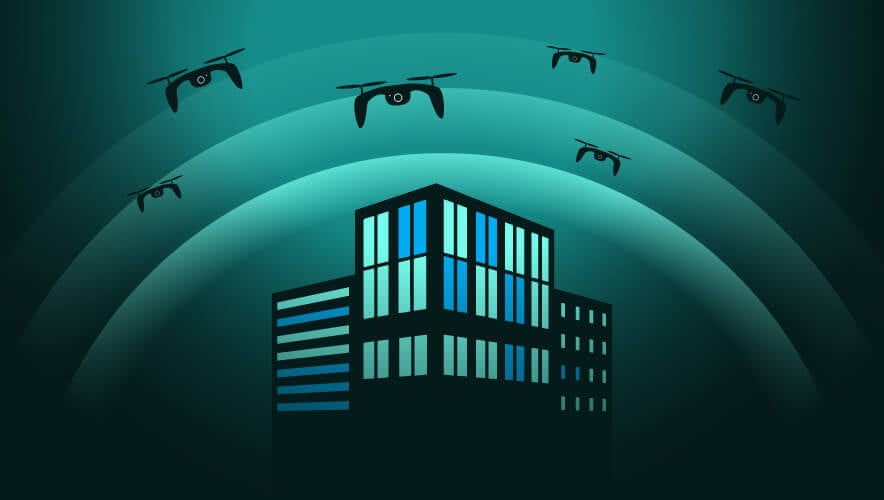
Traditional security architectures are designed to detect movement across physical boundaries: cameras monitor entrances, sensors protect fences, access control systems manage who enters a facility. Drones bypass many of those controls entirely. An unauthorized drone can approach from above, avoiding gates, checkpoints, and perimeter barriers. It can conduct surveillance, capture sensitive imagery, disrupt operations, transport contraband, or create safety risks without ever triggering conventional intrusion detection systems.
This challenge has become apparent across critical infrastructure sectors. Security teams protecting large facilities often discover that while they have sophisticated visibility across the ground plane, they have limited awareness of activity in the surrounding airspace. The result is what many security practitioners are beginning to recognize as an airspace gap—a blind spot between traditional physical security responsibilities and emerging aerial threats. Addressing this gap requires expanding security beyond the perimeter and embracing a more comprehensive approach to situational awareness.
In a drone-enabled world, security can no longer be viewed as a two-dimensional problem.
Recent Federal Aviation Administration (FAA) security measures illustrate how seriously this challenge is being taken. During the 2026 FIFA World Cup, U.S. federal authorities established temporary “No Drone Zones” around stadiums and fan venues, supported by enhanced detection, enforcement, and drone-seizure capabilities. These measures reflect growing recognition that low-altitude airspace is an operational security domain requiring active monitoring.
The Emergence of 3D Security
As drone activity increases, security leaders are beginning to rethink protection through a three-dimensional lens. The concept of 3D security reflects a simple reality: effective protection now requires awareness across land, buildings, and low-altitude airspace. This does not mean replacing existing security investments—it requires extending them.
Just as organizations once evolved from isolated cameras to integrated video management systems, many are now extending their security ecosystems to incorporate airspace monitoring alongside existing physical security operations. In practice, this means treating low-altitude airspace as another domain requiring visibility, assessment, and response. The goal is not simply to detect drones, but to understand the broader environment and provide operators with the context needed to make informed decisions. That distinction is critical.
Detection without context often creates more problems than it solves. Many security teams already struggle with alarm fatigue, information overload, and staffing constraints. Introducing additional sensors without a coherent, operational framework risks generating more alerts while delivering little additional intelligence. Instead, organizations need technologies and workflows that contribute to a unified operational picture.
Why No Single Sensor Is Enough
One of the most important lessons emerging from counter-drone and airspace security initiatives is that no single sensing technology provides complete coverage. Every sensor has strengths and limitations.
- Video surveillance offers visual verification and evidentiary value but can be affected by lighting, weather, distance, and line-of-sight constraints.
- Radar provides reliable detection across large areas and in challenging environmental conditions, often identifying objects that cameras cannot immediately classify. It can provide information about speed, direction, and movement patterns. However, radar alone may not always provide enough detail for positive identification.
- Radio frequency (RF) detection can identify and locate drones communicating through RF links, often providing valuable information about drone activity and operator locations. Yet RF systems may have reduced effectiveness against autonomous, pre-programmed, or non-cooperative aircraft.
- Acoustic technologies can contribute additional awareness in specific environments but may be affected by background noise and operational conditions.
Because each technology senses the world differently, effective airspace awareness relies on sensor fusion rather than individual sensors operating independently. By combining multiple data sources, organizations can improve detection reliability, reduce false alarms, and provide operators with a more complete understanding of potential threats.
Resilience comes from complementary technologies working together.
For example, radar can detect an object approaching a facility, video analytics can then provide visual verification, and RF sensors can determine whether the object is associated with known drone communications. Together, these technologies create a richer operational picture than any sensor alone. This layered approach reflects a broader principle that has guided physical security for years: resilience comes from complementary technologies working together.
The goal is not to create a separate drone-security program operating independently from existing security operations. Instead, organizations should seek to integrate airspace awareness into the same platforms, workflows, and decision-making processes already used to manage physical security events.
Moving from Detection to Decision Intelligence
The next challenge is not technological—it is operational. Many security organizations already possess large amounts of data but need actionable intelligence. As security environments become more complex, operators cannot be expected to manually interpret information from dozens of disconnected systems. The future of effective security operations depends on transforming raw sensor data into meaningful situational awareness.
This shift represents a move toward intelligence-led security operations. Modern security systems increasingly support decision-making by correlating events, prioritizing alerts, visualizing risks, and helping operators understand what requires attention. Airspace awareness should be approached the same way. A drone detection event should not exist in isolation. It should become part of a broader operational workflow that incorporates video verification, incident management, communications, access control, and response procedures. When integrated effectively, airspace events become another source of operational intelligence rather than another stream of disconnected alerts.
This approach is particularly important given the evolving nature of drone threats. Security teams must often assess not only the presence of a drone but also its intent, behavior, proximity to critical assets, and potential operational impact. Those decisions require context, not just detection.
Understanding the Limits of Response
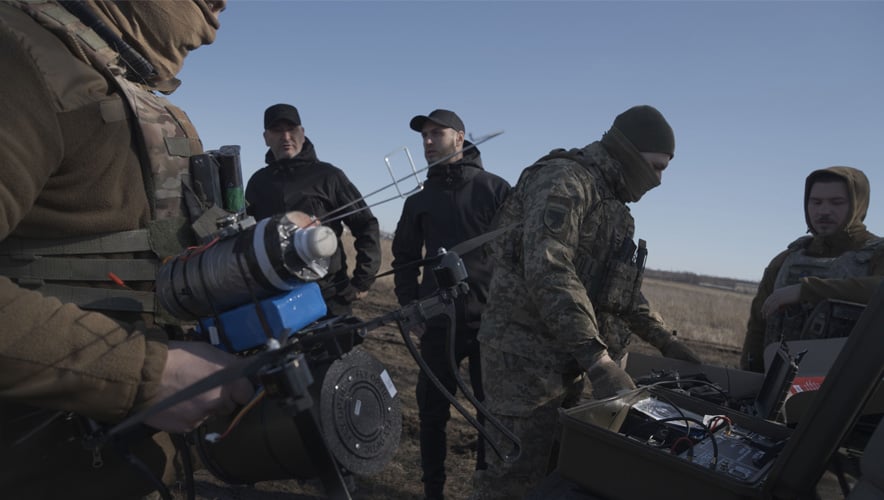
An often-overlooked aspect of drone security is the distinction between awareness and mitigation. In the United States, authorities to disrupt, disable, or take control of drones are generally restricted to a small number of federal and law enforcement agencies under specific circumstances. As a result, most organizations cannot simply stop a drone, even when it is detected.
This reality places even greater importance on early detection, situational awareness, incident documentation, and coordinated response procedures. Effective airspace security is often less about interception and more about enabling operators to assess activity quickly, protect critical operations, coordinate with appropriate authorities, and maintain continuity during an incident.
Recent enforcement actions around major public events, including FAA and FBI operations supporting the 2026 FIFA World Cup, have demonstrated both the growing use of drone-detection technologies and the limited set of entities authorized to take direct action against unauthorized aircraft.
Preparing Security Operations for a Drone-Enabled Future
The growth of drone activity is unlikely to slow. As commercial drone applications expand and autonomous capabilities mature, low-altitude airspace will become increasingly active. Security leaders should view this trend not as a temporary challenge but as a long-term evolution in the operational environment.
Not every organization faces the same level of aerial risk. Effective airspace security begins with understanding the operational environment, the criticality of protected assets, and the likely drone activity in the surrounding area. A risk-based approach helps organizations prioritize investments and procedures based on actual exposure rather than perceived threats.
Regulatory developments are also reinforcing the need for a more deliberate approach to airspace security. Under a proposed FAA rule implementing Section 2209 of the FAA Extension, Safety, and Security Act, operators of certain fixed-site critical infrastructure facilities—including energy sites, chemical facilities, transportation hubs, hospitals, dams, and nuclear facilities—could apply for designated unmanned aircraft flight restrictions around their operations. The proposal reflects growing recognition that some facilities face unique aerial risks and that protecting critical assets increasingly requires consideration of the airspace immediately above and around them, not just the physical perimeter.
Regardless, every organization should be asking several new questions:
- What is the likelihood and potential impact of a drone-related event at this location?
- Do current security assessments account for aerial approaches to critical assets?
- Can operators maintain awareness of activity beyond the traditional perimeter?
- Are airspace events integrated into existing command-and-control workflows?
- Can security teams quickly verify, assess, and respond to aerial incidents using established procedures?
Addressing these questions does not necessarily require a complete redesign of security infrastructure. In many cases, it requires extending existing systems, integrating new sources of information, and adopting a more holistic understanding of risk. The best positioned organizations for the future will be those that recognize security as a multi-domain challenge requiring visibility across physical, digital, and aerial environments.
Location matters, too. Organizations near airports, transportation corridors, ports, and other sensitive facilities often face unique airspace considerations. Understanding nearby flight paths, airspace restrictions, and legitimate drone activity can help distinguish routine operations from activity that warrants closer investigation.
Closing the Airspace Gap
Drones have fundamentally changed the security landscape. They challenge long-standing assumptions about perimeter protection, expose gaps in traditional surveillance models, and introduce new operational complexities for security professionals. But they also present an opportunity. By embracing a three-dimensional approach to security, integrating complementary sensing technologies, and focusing on intelligence-led operations, organizations can move beyond simply detecting threats and toward achieving true situational awareness.
The objective is not to build entirely new security programs. It is to evolve existing ones. As the boundary between ground and air continues to blur, security leaders must ensure that their view of risk evolves as well. The future of effective security will not be defined by what happens at the fence line alone. It will be defined by how well organizations understand, monitor, and manage the increasingly complex environment above it.
Joe Morgan is the business development manager for critical infrastructure at Axis Communications, Inc. Morgan has more than 32 years of experience building market share in the critical infrastructure industry, including prior roles with FLIR Systems, Olympus Industrial, and Everest/VIT where he helped deliver new technology to emerging markets. Morgan has a CFATS certification and is an active member of ASIS International. He holds a B.A. in education from the University of Texas at Arlington.