Short Range, High Impact: How Drone Warfare Is Changing Worker Safety in Ukraine
Russian military troops struck the Zaporizhzhia region overnight on 19 July 2026, causing significant damage with their aerial attack. The assault spurred the Ukrainian Red Cross to respond as humanitarians do after disaster strikes: to gather an emergency response team and head towards the people who needed their help the most.
The Red Cross team of emergency responders drove to Vilniansk in its white van marked with the Red Cross logo, arriving just before 9:00 a.m. on 20 July. They parked the vehicle, got out to begin administering first aid, and then received an alert that a first-person view (FPV) drone was approaching their location. Moments later, the drone struck the van, completely destroying it.
“Fortunately, no Ukrainian Red Cross volunteers or staff members were injured,” the organization wrote in a LinkedIn post, which strongly condemned the attack and called it a violation of international humanitarian law.
“Despite the constant danger and daily attacks, Ukrainian Red Cross volunteers continue to carry out their humanitarian mission by providing assistance to civilians, saving lives, and supporting people in need,” the post continued.
Russia illegally annexed Crimea from Ukraine in 2014, starting a war. But hostilities escalated significantly after Russia invaded Ukraine on 24 February 2022. Now, as the invasion stretches into its fifth year, the UN is tracking a significant increase in the number of Ukrainian civilians who have been killed or injured in the war. The UN estimates that at least 293 Ukrainian civilians were killed and 1,990 were injured during June 2026 alone. The toll marks a 10 percent increase from May 2026 and is 37 percent higher than June 2025.
“The figures show an alarming escalatory trend with a mounting civilian toll, driven by the intensifying use of powerful weapons that are particularly deadly when used in densely populated urban areas,” said Danielle Bell, head of the UN Human Rights Monitoring Mission in Ukraine, in a statement. “This trend should serve as a warning that the risks facing civilians are not only persisting but growing in both scale and complexity.”
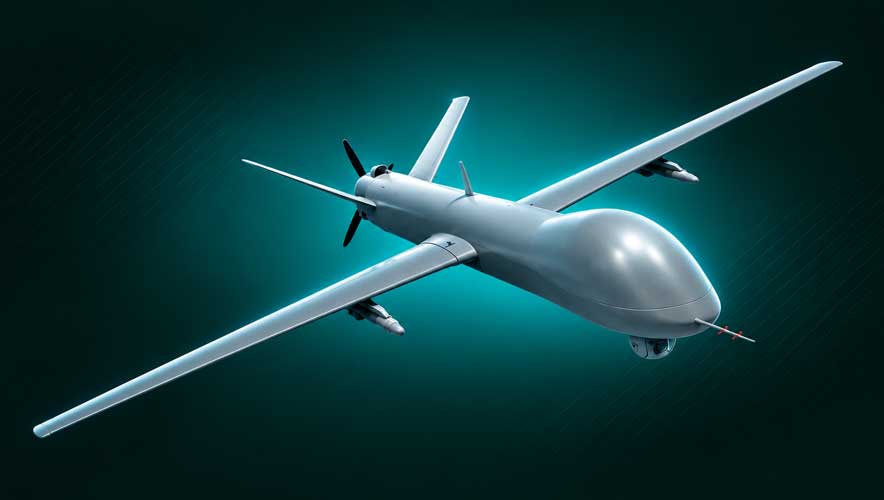
Long-range weapons—missiles with areawide effects and drones—were the leading cause of civilian casualties in June 2026, killing 126 people and injuring 907 others. Most of those casualties occurred in Kyiv and Dnipro. Near the frontline, however, short-range drones killed 89 people and injured 588 others—the highest monthly level the UN has tracked since 2022. These drone attacks are conducted using FPV drones, which are small, commercially available vessels piloted using a live onboard video feed.
“Short-range drones have transformed the environment for civilians living near the frontline. The accounts we hear from civilians displaced from frontline communities are deeply consistent—and terrifying,” Bell said. “Many describe feeling hunted by short-range drones simply for attempting everyday tasks such as shopping for food, walking dogs, cycling, working in the yard, or traveling to safety.”
The Evolution of Short-Range Drone Attacks
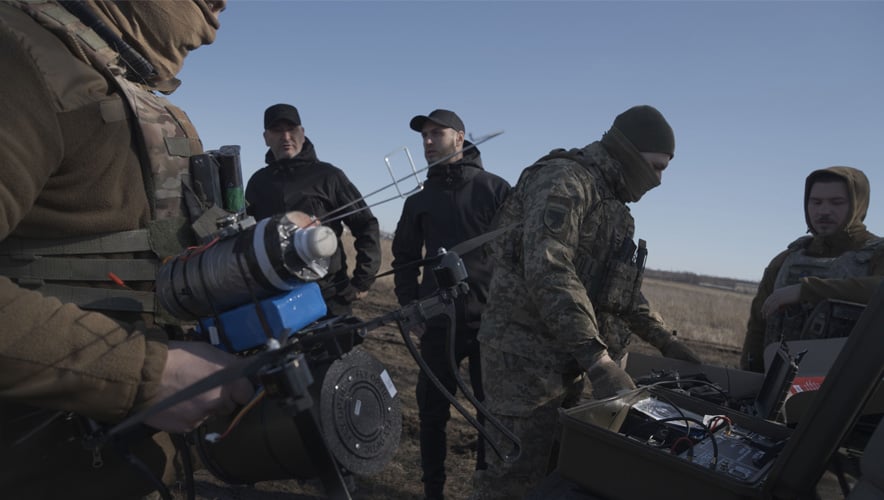
About a year after Russian troops invaded, Ukrainian forces began deploying a new tactic against their formidable opponent: attaching munitions to hobby-style drones, flying them into Russian tanks and armored vehicles, and creating an explosion.
This battlefield ingenuity rapidly became a major cost-saving and force-multiplying attack technique, since for less than about $800 a Ukrainian soldier could fly a small drone into something much larger—and much more expensive—to cause significant damage.
Ukraine ramped up its ability to carry out these attacks, and its Russian counterparts took notice. Both sides invested significant resources to build up their ability to produce millions of FPV drones and train pilots to operate them. That investment led to Russia drastically increasing its use of drones to attack Ukrainian sites, ranging from just one attack per week in January 2023 to more than 40 per week in September 2023, according to tracking from ACLED, an independent conflict monitor. The strikes were used to damage military sites, but they also destroyed civilian infrastructure and harmed people living and working in Ukraine.
In May 2025, the Independent International Commission of Inquiry on Ukraine documented Russian armed forces’ using short-range drone attacks in a 300-kilometer area of Ukraine to intentionally target civilians and civilian objects.
The commission assessed that Russian armed forces have directed drone attacks against civilians’ homes, medical buildings, infrastructure servicing civilians, and first responders, including strikes on ambulances and fire brigades, despite their special protection under international humanitarian law.
“Repeated attacks with short-range drones by Russian armed forces in frontline areas resulted in killing and injuring of civilians, widespread destruction, and a coercive environment that has forced thousands to flee their homes,” the UN concluded in May 2025. “The commission concluded that these drone attacks constitute the crimes against humanity of murder and of forcible transfer of population.”
Christian Poonwah is the managing director of Safer Access, a consulting firm that specializes in security and risk management training for humanitarian groups. He’s been based in Kyiv since before the invasion and says that Russia is “hell bent on a total war approach,” as evident through its use of short-range drone attacks against civilians and aid workers.
“As recently as May [2026], there was a very prominent attack on a UN convoy clearly marked—Land Cruiser vehicles attacked by these drones while in motion and also attacked when they reached their destination,” Poonwah explains.
The UN confirmed that none of its personnel were injured in the attack, but they had to be evacuated by local authorities.
“I do not know who carried out the attack. What I do know is that we were accompanying the local authorities to deliver humanitarian assistance to people in need,” said Andrea De Domenico, head of OCHA in Ukraine, in a statement about the attack. “Civilians and humanitarian workers should never be targets. These constant attacks on civilians and on humanitarians are simply unacceptable.”
Training and Response
This deadly new threat spurred security managers to think about how to prepare and train personnel who might be exposed to short-range drone attacks. The U.S. Institute of Peace (USIP) was sending personnel to Ukraine as part of its peacekeeping mission in 2023, for instance, and then-CSO Colin O’Brien knew he needed to incorporate drone safety into his training program to allow USIP staff to continue operating in the country.
He reached out to a former connection based in Kyiv: Poonwah. The two had met several years prior when working in Burkina Faso and had kept in touch. Poonwah brought O’Brien up-to-speed on the different types of drones, drone threats, and how the threat would change depending on the area of Ukraine you were in.
“So, here’s your no-go zones, here’s your better-be-really-careful zones and exercise a much higher level of caution, and here’s the ones where you’re pretty safe unless the air raid siren goes off," recalls O'Brien, who is now a senior vice president at security firm Global Guardian. “[Poonwah] and I built USIP’s operating procedure for Ukraine collaboratively. And then I took that as a framework to build the protocols across other USIP countries of operation that had drone threats.”
USIP maintained those programs and protocols until U.S. President Donald Trump’s administration took over the organization and shuttered it in 2025, ending its work in Ukraine. Numerous other humanitarian and civil society organizations continued to work in the country alongside Ukrainians, though, while the risk of significant harm from a drone threat grew and expectations around duty of care changed.
“Humanitarian assistance delivery continues in frontline and high-risk areas despite the continued threats of shelling, air strikes, drone attacks, and contamination with landmines and explosive remnants of war,” according to a duty of care report by ACAPS, a non-profit that provides humanitarian analysis. “In these conditions, humanitarian organizations have a moral, financial, and legal obligation to ensure the safety and wellbeing of their staff and their families.”
Yet the report found that duty of care gaps existed, including the need for vehicle maintenance, personal protective equipment, insurance, awareness raising, and capacity building. It also found that volunteer groups and smaller organizations faced barriers to accessing security management and hostile environment awareness training, due in part to a lack of funding and availability.
Short-range drones have transformed the environment for civilians living near the frontline.
Then, in early 2025, the Trump administration shut down the U.S. Agency for International Development (USAID)—cutting off humanitarian programs and millions of dollars devoted to improving safety and security around the world. Many of Safer Access’s clients relied on funding from USAID to operate, so when the agency closed its doors Poonwah says he and his business partner were concerned that they might need to halt their operations in Ukraine.
Instead, they traveled to the U.S. Overseas Security Advisory Council spring conference and ASIS Europe in Dublin, Ireland, and came back prepared to create new training offerings to address the drone threat gap.
“We realized that the sector needed something very specific about short-range attack drones,” Poonwah says. “Humanitarians going to frontline areas generally understood what happens if you’re shot at…but the short-range attack drone, with its maneuverability, precision, and proliferation at the front lines, there needed to be analysis and informed risk mitigation systems to counteract that [for humanitarians].”
In March 2025, the Safer Access team coordinated with some of its humanitarian partners to drive from Kyiv to Kherson, where the short-range drone attack threat was the most significant. They met with residents who described Kherson as a “human safari city” where Russian drone pilot trainees would fly FPVs into the city and chase people down as they were waiting for the bus or just going about their daily activities, Poonwah explains.
They also interviewed business owners, humanitarian security managers, and military personnel about the threat and what would help people be most prepared to respond to it. Those interviews led to the development of a six-module training course focused on teaching students what the short-range drone attack threat is and basic techniques they could use to respond to it.
The training, available as a live course in Ukraine or as a digital course for people anywhere in the world, covers how short-range drone attacks work and are carried out by FPVs, drop drones, scout drones, or fiber-optic drones. Another module is devoted to how pilots typically attack people using drones and the main attack vectors that they use. The module also addresses some of drones’ limitations, including their endurance levels and connectivity weaknesses.
“Those drones are going to have restrictions,” Poonwah says. “If people understand the attack tactic, they can avoid them and protect themselves.”
Other modules go over the dos and don’ts of protecting yourself from a drone attack, how to react to an attack if you’re on foot or if you’re in a vehicle, and how to work with frequency detectors—simple electronics that can be used to detect the signals that drones rely on to navigate.
“With these frequency detectors, the average citizen could identify that a drone was flying at them and take evasive measures to leave the area or go to a shelter,” Poonwah explains.
Safer Access updates the training regularly, with changes informed by interviews with military personnel and civilians who have direct insight into recent drone activity and how pilots are changing their techniques. The firm has also recruited its own drone pilots, individuals who have flown hundreds of missions against Russian targets, to return and provide advice.
Including pilots’ perspectives has “forced a level of humility around staying abreast of the tactics and not making assumptions based on what works well in a traditional security setting,” Poonwah adds.
As of mid-June 2026, Safer Access had trained about 2,000 people on short-range drone attacks through its live course. Completing the training provides students with knowledge that could help protect them from attacks, gives them a feeling of empowerment, and also helps dismantle some of the myths surrounding drone attacks that are perpetuated online.
“People have access to YouTube, to Telegram—a social media app that’s popular here—and they see drone kill after drone kill,” Poonwah says. “In their minds, they’ve created a scenario where if a drone is in your area, it’s going to smell you, come into your bed, and get you. That’s not the case.
“For every video you see, there’s probably 50 to 100 other deployments that have failed,” he continues. “When people start to understand and start to dispel that myth, and employ the tactics on the ground, understand what they can usually do, they’ll come away from that course with a lot more confidence.”
It could also help humanitarian organizations meet their duty of care obligations and retain staff to work in high-risk areas. The governments of Norway and Sweden partnered with the International Renaissance Foundation and East Europe Foundation to survey 201 civil society organizations providing services in Ukraine in 2025 into 2026.
They identified staffing as a significant issue for these groups to continue to carry out their work in 2026, due in part to concerns about safety. The survey also flagged emotional burnout as the next challenge organizations need to be prepared for since “high levels of stress, lack of stability, work overload, responsibility, and fear, which [can] lead to fatigue, loss of motivation, and an unwillingness to stay in the civil society sector.”
The Threat Beyond Ukraine
Most drone strike activity continues to be in Ukraine and Russia, which has accounted for four out of every five drone attacks in the world since 2018, according to the Global Peace Index 2026 published by the Institute of Economics and Peace (IEP) in June. But the threat is spreading to other arenas.
“Drones have become the defining weapon of modern warfare, spreading faster than any government can keep up with,” the index said. “Drone attacks rose roughly 11,500 percent between 2018 and 2025, and 565 different armed groups carried out at least one attack in that period.”
Some of the groups the IEP is tracking include those operating in Colombia, Iran, Mexico, Myanmar, Palestine, South Sudan, Sudan, and Syria.
“Even though Ukraine is the testing ground, it’s where most of the action is happening on that front, it’s proliferated essentially to every continent now,” said Thomas Morgan, IEP chief research officer and author of the index, in a previous interview with Security Management.
While some groups are using drones as an attack method, others are using them to conduct reconnaissance and track movements of people or material goods. New research published by the National Counterterrorism Innovation, Technology, and Education Center (NCITE) at Towson University in August 2026 assessed that terrorist groups and cartels are attracted to using drones in particular because they serve as a novel form of air power.
“Drones provide these actors with new means of coercion through attrition, reputational enhancement, and intimidation of local populations,” the research said. “They also support a wide range of tactical applications, including pre-attack planning, intelligence, surveillance and reconnaissance, kinetic strikes, logistics, and post-attack exploitation. As force multipliers, drones enable greater precision, expand operational reach, and enhance the disruptive effects of violent campaigns.”
If people understand the attack tactic, they can avoid them and protect themselves.
The NCITE assessment also stressed that drones, even though they can be less lethal than other weapon systems, are extremely effective in causing economic harm and fear in targeted populations.
“Multi-drone attacks—including swarms—fit into this framework by enabling terrorists to bypass additional defenses and strike targets deep within adversary territory, much like traditional air strikes,” according to the research. “Even without mass casualties, drones can create a persistent threat environment, without risking operatives, preserving terrorist militants and sustaining campaigns over time.”
The NCITE has tracked cartels, like the Jalisco New Generation Cartel and La Nueva Familia Michoacana, exploring using fiber-optic drones and explosive drones for territorial control, attacks on rivals and security forces, and coordinated paramilitary operations. But they’re also heavily used as surveillance tools.
At Global Guardian, O’Brien says he will brief clients that are operating in Mexico so they understand that a drone might be used to monitor their activity and patterns in a particular location. They will then take precautions to limit the client’s visibility and exposure.
“It’s all about making people smart and educating them about what the actual threat is, with the understanding that yes, drones are scary and can hurt people and are being used with new and creative and devastating effects every day of the week,” he adds. “But what that directly translates to you is the key.”
On that front, the Safer Access team has been creating a version of its short-range drone attack training for Myanmar and is exploring bringing another version to Taiwan. Poonwah adds that they are also in active conversations with the Swedish and Latvian governments to integrate the training into their civil defense training as part of Safer Access’s focus on Eastern Flank countries in Europe.
“Despite the fact that Ukraine is achieving significant gains, Russia has a much more thorough plan for Ukraine and the rest of Europe,” Poonwah adds. “They won’t go down without a fight. They see Europe and the Western world as a combined target.”
For more insights from O’Brien and Poonwah on short-range drones, check out their session “The Close-Range Drone Threat: What Organizations Must Know Now” on 16 September at GSX 2026 in Atlanta, Georgia.
Megan Gates is the editor-in-chief of Security Technology—a publication of Security Management. Connect with her at [email protected] or on LinkedIn.