Prioritizing Patrols: Why a Major Bank Turned to Robotics to Monitor its Campus
Citizens Bank is one of the largest and oldest financial institutions in the United States, with more than 1,000 branches managing about $226 billion in total assets and $183 billion in deposits.
Backing up that frontline support across its branches is the bank’s corporate campus in Johnston, Rhode Island. Citizens Bank constructed it in 2018 as part of a significant partnership with the local community. Sixty acres of the 120-acre campus are devoted to Citizens Bank infrastructure—including 420,000-square feet of office space and parking lots—while the rest of the space contains walking paths, a soccer field, a baseball field, tennis courts, and basketball courts that are open to the public, says Derek Lemire, vice president, physical security systems manager, at Citizens Bank for 13 years.
The bank arranged with the city of Johnston that “we’ll build it, we’ll maintain it, but the Parks and Recreation Department will do all the bookings for the fields for Little League teams and soccer teams,” Lemire says. “It’s just fun to see kids out there, having fun, on something you’ve had a piece in building.”
Citizens Bank has physical security personnel, including security officers who would traditionally conduct patrols of the campus to monitor and report activity. But given the size of the new campus and the desire to be innovative, Lemire says he began exploring how the bank might adopt robotics to meet its security mission.
The bank initially decided to use services from two different companies for robotic and drone patrol services. But the integration was a heavy lift from the bank’s security team, especially with managing pilot’s licenses to legally operate the drone equipment. The robotics also did not meet the climate demands of the campus, Lemire explains.
“We have all different climates, so we were very limited on what we could do with our previous vendors in snow, in wind, in rain, etcetera,” he adds. “Those were definitely crutches for us.”
The bank began exploring other solutions in 2022. At ISC West, Lemire met representatives from Asylon—a robotics perimeter security company headquartered in Philadelphia, Pennsylvania. They impressed him with the company’s technology capabilities that incorporated both a robotic patrol unit and a surveillance drone.
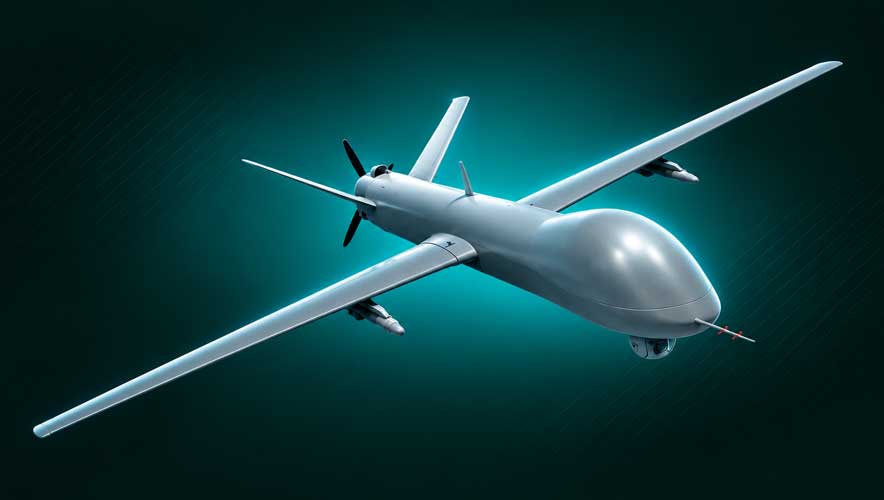
Asylon’s Turnkey Robotic Security solution leverages its DroneDog—built using the Boston Dynamics robotic dog Spot as its base—and Guardian drones. The devices are deployed at a client’s site but are monitored by operators at Asylon’s robotic security operations center (RSOC). Asylon has met Federal Aviation Administration (FAA) requirements to operate drones beyond visual line of sight at some of its client sites; operators for the Guardian drone have also met FAA requirements to be drone pilots.
Asylon’s pilots also complete an in-house training and certification program to better understand how the company’s drones work, says Brent McLaughlin, co-founder and chief operations officer at Asylon. This training covers how to use the Guardian drones as a surveillance tool.
“We talk through how you can discern behavior or anomalies on a threat—if this is an active threat to the air and ground, or if its benign,” McLaughlin adds. “We’ve reported and responded to over 6,000 security incidents and been able to pull on a lot of lessons learned internally on what we’ve seen in the past for best practices for ensuring safety of equipment and safety of people.”
We were very limited on what we could do with our previous vendors in snow, in wind, in rain.
In one instance, a Guardian drone was flying a patrol route along a client’s perimeter fence line next to a train track. Using the drone’s thermal technology, McLaughlin says the drone pilot observed two heat signatures moving back and forth next to a train on the tracks. Closer inspection provided footage that suggested two people were robbing the train.
“We picked it up on the drone, called security, contacted local law enforcement,” McLaughlin adds. The thieves “ended up leaving in a white sedan, and we were able to provide a lot more information to the security team and local law enforcement.”
The drone solution from Asylon was a stronger device, which would allow Citizens Bank to use it in more weather conditions than its previous technology provider’s solution. The Guardian is equipped with high-resolution electro-optical and thermal sensors. It can fly for approximately 30 minutes, with a top speed of 35 miles per hour, and it can operate in winds up to 25 miles per hour. It also has an IP45 weather rating, so it can be used in some levels of rain or snowfall. When it needs to recharge, the Guardian can return and land in its DroneHome—a hardened, all-weather base station that allows for rapid battery swaps.
The DroneDog is equipped with a high-definition camera, thermal imaging, cellular connectivity, and a Nvidia artificial intelligence/machine learning processor. The DroneDog follows programmed patrol routes but can also be deployed on-demand should it need to be used for inspection. It recharges in a dedicated DogHouse, a hardened, weatherproof recharging and protection hub.
The robotic dog was also an advantage, Lemire adds, since it can go up stairs and over speed bumps. The bank’s previous patrol robot relied on wheels to move around, limiting the terrain it could cross. The four-legged robot dog has more flexibility.
While the technology advancements were attractive, Lemire says that what really sold him on working with Asylon was its commitment to customer service. Asylon offered to bring both the DroneDog and the Guardian drone out to the bank’s campus so Lemire and his team could see them in action before committing to the products. The visit also provided the opportunity for other staff members to see the solutions up close, ask questions, and buy into their potential deployment at the site.
“At the time we had about 3,000 people working [on campus], so they’ve got to be comfortable with the technology,” Lemire says. “Introducing it to them and getting their buy-in was paramount.”
The bank decided to deploy the Asylon solution and now uses the DroneDog and Guardian to take alternative patrols of its campus for roughly 16 hours each day. When the DroneDog is on patrol, it’s programmed to look for doors that are ajar, people that appear to be loitering or hiding, and vehicles that are overheating or sitting running. When the DroneDog completes a patrol and needs to return to its recharging unit, a pilot at Asylon’s RSOC launches the Guardian drone to take its turn to monitor for similar activity.
If the devices detect something unusual, they alert the Asylon RSOC analyst, who will call the SOC at the bank’s campus. Security personnel on duty will then decide what the response should look like, such as a security officer going out to investigate a propped door or calling local law enforcement to assist with a significant incident.
One of the more common issues that the DroneDog has alerted Lemire’s team to is early indicators of a fire. The bank’s campus features decorative landscaping that uses mulch, which can ignite if a person throws a cigarette butt onto it or if the mulch is moist and begins to sweat—causing it to self-combust.
The DroneDog has “on several occasions caught mulch fires, where our team was able to get out there and put it out,” Lemire says. “There was one larger incident where we had to have the fire department come out, but it’s stopped damage to the property several times.”
Lemire says that the “extra sets of eyes” from the DroneDog and Guardian have helped deter nefarious activity on the campus.
“When you see these [devices] moving around, lights flashing, or a drone in the air, you know you’re being recorded and being watched,” Lemire adds. “That has really minimized the events we’ve had at the campus. In almost seven years, we have not had a major incident. We have not had a car break-in. We have not had a catalytic converter stolen.”
The technology patrol units have also helped the bank maintain consistent perimeter security monitor while making better use of its human security personnel, Lemire says. Previously, security guards were stationed outside or patrolling the campus in a vehicle for significant periods of time.
“If you think about just the people aspect—people have to use the restroom. People have to take breaks, they take meals, they get sick, they call out,” Lemire adds. “That went away when we were able to bring in the robotic canine and drone to actually do exterior patrol.”
The bank recently renewed its contract with Asylon for another three years. As part of that agreement, Lemire says that Asylon provides maintenance of the robotics—including upgrading their parts so they will last longer.
“Our dog probably has 13,000 miles on it. Things tend to wear out. Things tend to break,” Lemire adds. “So, working with Asylon, who works with Boston Dynamics, they came up with a new design for legs on the dog because they were wearing out.”
Asylon worked closely with Boston Dynamics to identify some problems and failure points on the robot’s legs that were occurring because of the “sheer amount of mileage we put on our DroneDog systems,” McLaughlin says.
Boston Dynamics then redesigned the outer structure of the legs to distribute stress, making them stronger and more robust to cracking and breaks. It also replaced inner electro-mechanical systems with stronger, thicker actuators to better withstand the forces applied during movement, and it improved sealing around some of the joints and electronics to increase robustness against water and dust intrusion. Ayslon partnered with Boston Dynamics and Citizens Bank to deploy a beta release of the new leg hardware in May 2025, which McLaughlin says was then rolled out more broadly to the rest of Asylon’s DroneDog fleet in the third quarter of 2025.
Since the upgrades were made, McLaughlin says Asylon has not seen a single outer structure break on the DroneDog legs; the DroneDog at Citizens Bank also surpassed 14,000 miles of patrols in July 2026.
Asylon monitors the health of the robotic solutions, proactively addressing problems and providing replacements with a quick turnaround time so the bank can continue to meet its security patrol needs, Lemire says.
Trust your people and trust the process—whether it be robots and drones or another system altogether.
Overall, the partnership between Asylon and Citizens has been a positive one. Lemire encourages other security practitioners to think outside the box and try new technology to help meet their mission.
“We’re willing to take that calculated risk to improve security,” Lemire says of Citizens Bank. “Don’t be afraid to take that chance…. And trust your people and trust the process—whether it be robots and drones or another system altogether. You’ve got to trust the people around you and that it’s going to work. Then you adapt and you build policies and procedures around it.”
For more information on Asylon, visit https://asylonrobotics.com/solutions.
Megan Gates is editor-in-chief of Security Technology—a publication of Security Management. Connect with her at [email protected] or on LinkedIn.