U.S. Counter-Autonomy: Closing the Policy and Technology Gap
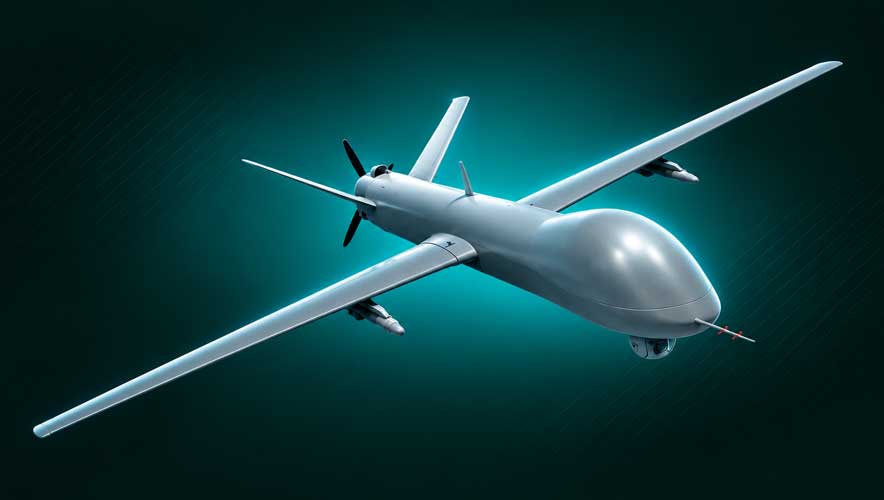
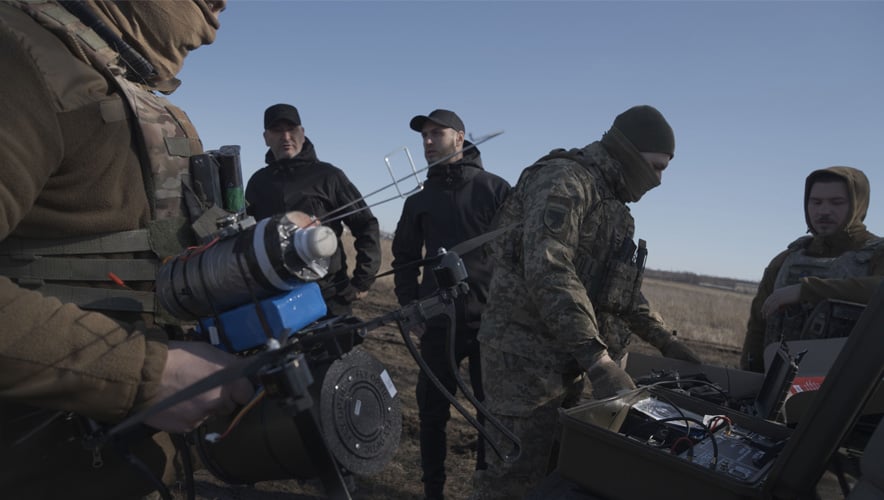
Adversaries are broadcast-testing templates for successful uncrewed aerial system (UAS) kinetic operations. Recent examples, including Ukraine’s June 2025 “Operation Spiderweb” against Russia and the March 2026 kinetic strikes by Iran against data centers in the United Arab Emirates, demonstrate how rapidly autonomous and semi-autonomous systems are changing the character of security operations.
At the 2026 FIFA World Cup—even before it was halfway complete—U.S. federal agencies seized more than 600 unauthorized drones operating near stadiums and event venues despite extensive security measures. These seizures underscore that drone detection systems have become not only a national security concern but also a domestic public safety and critical infrastructure challenge.
Public awareness of the threat is growing, but organizational and governmental readiness to counter this evolving technology remains fragmented. The United States has entered a period of strategic complacency towards uncrewed UAS and autonomous vehicles.
The Commoditization of Autonomy
Autonomous and semi-autonomous technology, once the sole domain of state militaries, is now a commodity for criminal organizations and lone operators, too. Threat actors can use small UAS systems to conduct surveillance, electronic warfare, contraband delivery, and kinetic swarms. They exploit legal and operational seams never designed for persistent, low-altitude threats.
An adversary can easily acquire and modify a capable, hard-to-detect UAS and use it for malicious purposes in a populated area with almost no chance of interdiction. Personally, I live within the no-fly area surrounding a municipal airport. Yet an errant commercial uncrewed aerial vehicle struck my home, causing thousands of dollars of damage.
The multijurisdictional oversight of sea lanes and airspace creates an opening for adversaries who are aware that in the United States, the Federal Communications Commission (FCC) and Federal Aviation Administration (FAA) have not yet provided coherent engagement tactics, techniques, and procedures against autonomous platforms. For example, an adversary employing a commercial drone launched from a pleasure craft in public shipping and boating lanes could launch an attack or interfere with commerce near almost any U.S. port.
You do not have to own or buy a UAS platform to carry out these attacks. Most rental providers offer standard commercial drones from companies such as DJI, Skydio, and Parrot. Historically, many DJI aircraft included geofencing that would automatically prevent takeoff or entry into certain restricted areas. However, DJI significantly changed its U.S. geofencing approach in 2025 and now relies much more heavily on warnings and FAA data rather than hard no-fly locks to restrict UAS movement.
The country continues to struggle to operationalize a coherent domestic framework for counter-UAS (C-UAS). The core issue is not just technology; it is policy inertia, risk aversion, and jurisdictional complexity.
The Policy Hurdles
In this fight, the United States needs to jump more than just technical hurdles. It must also overcome a complex set of legal multiagency policy challenges affecting C-UAS.
The FAA controls where and how aircraft can operate, while the FCC controls what radio frequencies can be used and prohibits most forms of jamming or interference. U.S. federal law generally makes it illegal for private parties, state governments, and even most local law enforcement agencies to jam GPS, command-and-control links, or other communications used by drones.
For autonomous maritime vehicles (uncrewed surface vessels and uncrewed underwater vehicles), the situation is more fragmented. The U.S. Coast Guard oversees navigation safety, waterways, vessel operations, and maritime security in U.S. waters. The U.S. Navy, however, has authority over military uncrewed maritime systems. The FCC still regulates radio transmissions and interference, impacting what can be done against UAS command, control, and data links. And the National Telecommunications and Information Administration manages federal spectrum use.
The U.S. Congress has granted limited counter-UAS authorities to specific federal agencies, including the U.S. departments of Defense, Homeland Security, Justice, and Energy, permitting them to detect, track, and mitigate unmanned aircraft that threaten designated facilities, assets, and missions. New regulations recently expanded C-UAS detection and mitigation authorities to state, local, and tribal law enforcement and correctional agencies. But private-sector operators lack comparable legal authority to employ C-UAS technologies.
These policy related limitations can create disincentives for many private companies to invest in C-UAS alongside the U.S. government despite the billions of dollars that have been promised around counter autonomy programs. If the security community believes there is no codified commercial use or U.S. government commitment to acquire and develop use for counter-UAS technology, it is likely to chill investment in the development of these solutions. Investors are aware that policy via presidential executive orders can change with the next administration. Investors and vendors are looking for predictable and stable spending and policy guidance around counter-UAS.
Policymakers also continue to be paralyzed on acting to address C-UAS due to downstream liability concerns—fearing what happens if a disrupted drone falls into a populated area and harms a person or infrastructure. While legitimate, these concerns cannot justify inaction until a threat matures into a crisis.
The Battlefield of Perception
As we continue another contentious midterm election cycle, the threat is not just physical, it is also psychological. Residents now recognize that small drones can penetrate restricted airspace and disrupt public events with ease. Modern battlefields show that drone warfare evolves faster than procurement cycles or regulatory frameworks. Static defenses will fail against these adaptive threats.
A Layered Defense Strategy
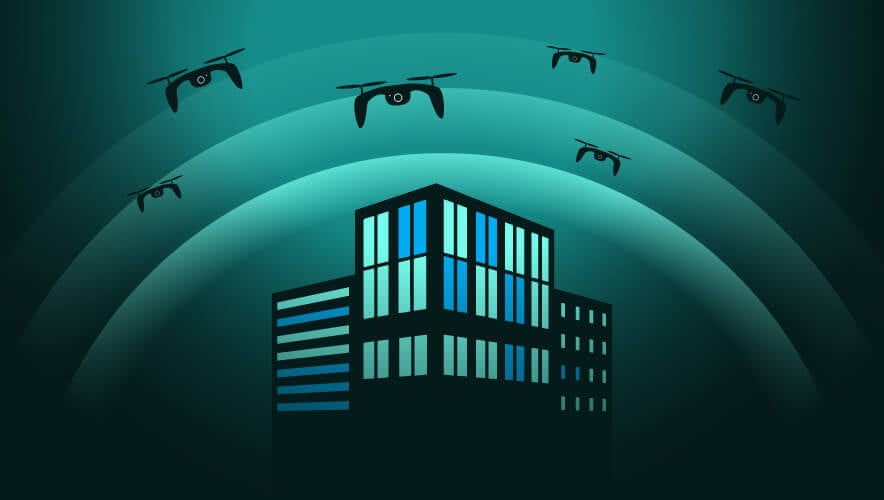
Effective C-UAS cannot rely on a single sensor. We must embrace a Modular Open Systems Architecture to remain agile. Detection must be layered and multi-modal, integrating:
- Radio frequency and acoustic sensing to identify signals and sound signatures.
- Radar and electro-optical/infra-red to track physical presence and heat signatures.
- Artificial intelligence-enabled analytics to distinguish between environmental clutter (birds) and genuine threats.
On June 28, Russia launched an overnight drone swarm attack that used 108 drones—including Shaheds and decoy UAVs—to strike multiple regions in Ukraine, including Chernihiv, Dnipropetrovsk, Kharkiv, Kirovohrad, Mykolaiv, Poltava, Sumy, and Zaporizhzhia. Ukraine reported intercepting or electronically suppressing 82 of the drones, while 25 struck their targets. The assault highlights that adversaries will employ attributable threats and decoys simultaneously, at scale, to achieve superiority. The Russians had a 23 percent success rate in avoiding Ukraine’s near best-in-class drone defense capabilities.
Persistent, scalable detection cannot be achieved by any single vendor or technology. It requires continuous collaboration among operators, government agencies, researchers, and industry to evaluate emerging threats, integrate complementary sensing capabilities, and rapidly adapt to evolving tactics.
Innovation ecosystems such as the Fires Innovation Science and Technology Accelerator (FISTA) in Lawton, Oklahoma, help accelerate that process by colocating technology developers with military stakeholders, researchers, and industry partners. Adjacent to the U.S. Army's Fires Center of Excellence, FISTA provides an environment where emerging technologies can be evaluated against operational requirements, refined through direct user feedback, and connected to complementary capabilities much earlier than in traditional development cycles.
That model has practical benefits. Through participation in FISTA's collaborative events and engagement with Army stakeholders, our team identified evolving operational requirements that helped shape our layered sensing approach and contributed to the expansion of a Small Business Innovation Research (SBIR) effort. More broadly, those interactions reinforced how early collaboration can reduce development risk, improve interoperability, and accelerate the transition of promising technologies from prototype to operational evaluation.
As autonomous threats continue to evolve faster than traditional procurement cycles, innovation ecosystems like FISTA demonstrate the value of bringing government, industry, and academia together to shorten the path from concept to capability.
The Bottom Line
The drone and autonomous platform threat is no longer emerging; it is established. Preparedness requires an integrated approach grounded in layered sensing, operational realism, and rapid innovation.
We must recognize that modern air, sea, and terrestrial security is no longer defined solely by what flies at 30,000 feet, but by what operates silently near the ground, on and under the sea, and on our roads and highways
It will require synchronization between technical investments, policy changes, and public private partnerships to continue.
Paul Maguire is the co-founder and CEO of Knowmadics. He is a former intelligence officer with multiple deployments to the Persian Gulf and Southeast Asia. His expertise lies in specialized areas such as counterterrorism, counter-drug, and personnel tracking and recovery operations.