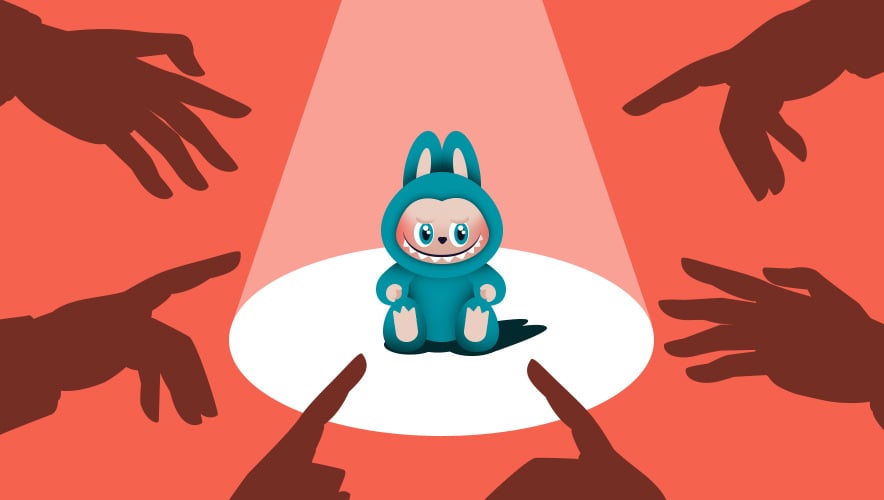
The Lure of Labubu: Why These Creepy Critters are Capturing the Hearts of Consumers, Criminals, and Counterfeiters
They’re cute. They’re creepy. And they’re probably clipped on a bag of an influencer near you.
We’re talking about Labubus—the plush collectibles that are taking the world and Internet by storm as people rush to buy the next set of blind boxes before they sell out. But what exactly makes these critters such a draw for consumers, thieves, and counterfeiters alike?
After a few colleagues purchased a set of Labubus in Las Vegas during a security conference this spring and seeing the uptick in sales over the summer, the Security Management team decided to find out what’s behind the draw of these mythical monsters in this special edition of Strange Security.
What Are Labubus?
Kasing Lung, who was born in Hong Kong and later moved to The Netherlands, released an illustrated book series called The Monsters in 2015 that featured female elves known as Labubus. Lung also released an artistic toy series based on the characters from the book series, according to NPR.
In 2019, Lung collaborated with Chinese manufacturer POP MART to make plush doll and key ring Labubus. But the buying craze didn’t take off until K-Pop superstar Lisa from Blackpink was photographed with one in 2024.
“Since the keyring charms were launched in October last year, followed by a pastel-colored Macaron series, the popstar [Lisa] has been spotted through 2024 with the little guy hanging from her handbag,” Jing Daily wrote in November 2024. “An organic post in April of the pop star hugging one of the large plush designs helped set the madness in motion.”
Other celebrities quickly took note. Cher, Paris Hilton, David Beckham, and the BTS boys all now have a Labubu, just to name a few. Regular consumers also followed suit, getting in on the accessory and blind box experience fun—part of the draw of purchasing a Labubu. POP MART sells Labubus in special releases in blind boxes that contain an unknown version of a Labubu until the customer unboxes it. The individual dolls typically retail for $27.99, but special release versions—like the Big into Energy Series released on Thursday—sell for $114.99. And blind box sets of six retail for more than $150.
Then, there are the customization options. You can have your Labubu tattooed by a professional, don different outfits for the season, or even be styled by designer, a la Marko Monroe who created unique Labubu dolls for Lady Gaga, Marc Jacobs, and the cast of Netflix’s Wednesday.
POP MART has generated more than $670 million in revenue from the Monsters franchise in the first six months of 2025 alone and is on track to make $1 billion from the products by the end of the year, WIRED reported. Demand is so high that on the resale market, individual Labubus can sell anywhere from $30 to nearly $300. On 2 August, a rare Labubu even sold for $10,500 on eBay—setting a record for resale of the collectibles on the platform.
“Labubus follow in the high profile and high value tradition of collectibles such as Ty Beanie Babies, Jem and the Holograms toys, Cabbage Patch dolls, and more recently Squishmallows,” said Lori Verderame, expert appraiser on the History and Discovery channels, in an interview with Forbes. “Their connection to international children’s literature, specifically Nordic folk tales, and their presence in the art market also helps drive the market and attract new and seasoned collectors.”
All of these factors make Labubus a challenging product for retailers to manage and a lucrative target for thieves and counterfeiters who want in on the plush toy profits.
Crowd Control and Heists
POP MART releases new Labubus periodically online and in stores, providing advance notice of drop dates for upcoming special editions that sell out within minutes. People have taken to lining up outside of stores and evening camping overnight to get a chance to buy the novelty products first.
But the massive crowds have created tense situations for retailers. UK POP MART stores even took the unusual step of removing Labubus from their retail selection in May to prevent fights breaking out between customers attempting to purchase the latest release.
“When I got [to the store] there were big crowds of people hovering around the shop and there was this really negative vibe,” a woman told the BBC about a UK POP MART store experience. “People were shouting, basically saying there were no more Labubus left. I even witnessed a fight between a worker and a customer.”
Then there are the resellers who aren’t interested in obtaining the product through legitimate means. In California, for instance, police recovered roughly $30,000 worth of stolen Labubu collectibles taken from warehouses in multiple trips over several days.
“Chino Police Department detectives recovered the Labubus after serving a search warrant at a home in Upland, California, where they found 14 boxes of the stolen merchandise, along with evidence indicating the items were about to be resold and shipped across the country,” ABC News reported.
Days before discovering that set of stolen Labubus, One Stop Sales in La Puente, California, reported $7,000 worth of Labubu dolls and accessories stolen from its store at about 1:29 a.m. on 6 August. The shop's owners captured the heist on their video surveillance system and have since put the video online to ask the public for help in identifying the thieves who only stole the Labubu dolls in inventory.
Joanna Avendano, co-owner of the store, told the local ABC News affiliate that she “had noticed a suspicious truck parked near the store before closing Tuesday night and suspects the burglars had been watching the shop’s social media account, where she had recently posted a video announcing a new restock.”
Where do these stolen Labubus go? Most likely for sale via an online retailer or social media as part of the organized retail crime economy.
Enter Lafufu
The Chinese Communist Party has credited Labubu with helping to move the country away from “Made in China” to usher in a new era of “Created in China,” according to The People’s Daily—the party’s official messenger.
“China has long been the world’s toy factory, producing goods for global giants like Disney, Marvel, and Gundam,” The People’s Daily explained. “The explosive popularity of Labubu not only signifies China’s growing design capabilities but also marks the entry of Chinese brands into the arena of super IPs.”
Because of this, China and POP MART are taking some significant steps to protect that super IP. In August, POP MART’s Singapore subsidiary sued 7-Eleven in California for allegedly violating IP laws by offering counterfeit versions of POP MART products—including fake Labubus. The convenience store chain has until September to respond to the lawsuit, The New York Times reported.
These aren’t the only fake Labubus popping up on the marketplace. These imposters, often referred to as lafufus, are often eerily similar to Labubus and have own fan community.
How can you tell the difference between a lafufu and a Labubu? It’s becoming more difficult, but a few general rules apply. First, keep an eye out for a great deal—the initial sign that the product is not a genuine Labubu. Authentic Labubus also feature holographic POP MART stickers—scannable QR codes linking to the official POP MART site—or a subtle UV stamp on one foot. Lafufus also tend to be more brightly colored with the wrong number of teeth (true Labubus have just nine).
Many of these lafufus are being manufactured in China, so customs officials there are making a significant effort to intercept them. The Guardian reported that Chinese customs officials confiscated in April a batch of 200,000 goods suspected of infringing on Labubu’s IP. In June, they obtained another 2,000.
“China has never been so determined to fix IP thefts, thanks to Labubu’s contribution not just as a global bestselling toy but as a soft power tool,” said Yaling Jiang, a Chinese consumer trends analyst, in an interview with The Guardian. “Defending Labubu’s IP is no longer just about business interest, but [about] national interest.”
Elsewhere, Dutch customs officers have intercepted about 400,000 fake Labubus since March—including 250,000 lafufus at Schiphol Airport alone, according to NOS. Seizures have also occurred in Cyprus and Ireland.
The Better Business Bureau (BBB) also sent out a notice to warn consumers about scammers selling lafufus through TikTok livestreams and fake websites. The BBB’s Scam Tracker tool had logged 71 reports of these scams at the beginning of August.
“It seems like everyone is trying to get their hands on the latest trending toy, the Labubu,” the BBB said. “Scammers are taking notice and selling counterfeit merchandise or creating fake websites with no real products to sell.”
The warning included guidance for consumers to shop from reputable retailers, use caution when clicking on sponsored ads, read customer reviews, and to use secure and traceable payment methods.
Along with IP and fraud threats, lafufus also come with safety concerns. The U.S. Consumer Product Safety Commission (CPSC) and the UK Chartered Trading Standards Institute released an urgent warning on 18 August to notify consumers about the serious risk of choking and death that lafufus pose to young children.
“These fakes, sold both as plush figurines and plush keychains, are small enough for a child to fit the doll in their mouth and block their airway,” according to the alert. “CPSC has also received reports of fake Labubu dolls that break apart easily, releasing small pieces that can become choking hazards.”
Many of the lafufus are entering the U.S. market through shipments from China, and CPSC has requested the seizure of thousands of lafufu units after confirming violations of federal regulations for toys with small parts.
The UK’s Chartered Trading Standards Institute has also seized thousands of lafufus from stores in England and Scotland. It’s investigating the counterfeits in connection with organized crime groups, and it urged consumers to avoid buying Lafufus.
Meanwhile, POP MART continues to release new Labubus for consumers to add to their ever-growing collections. A new drop goes live on its website today at 10 p.m. local time, featuring its Macaron vinyl face blind box option and a chance to add Soymilk, Lychee Berry, Green Grape, Sea Salt Coconut, Toffee, or Sesame Bean to cart and soon to your favorite bag for fall.