School Violence Study: Attitudes on Active Shooter Drills and Site Hardening Can Shift. On Arming Teachers, Not So Much
Columbine. Sandy Hook. Stoneman Douglas. Uvalde.
No additional context is necessary to convey the absolute tragedy of mass shootings in schools.
It’s safe to say everyone in society wants to avoid another tragedy like the ones that unfolded in the schools named above. Prevention is one goal, and is a heavy focus of ASIS International’s School Security Standard. Another goal is to reduce the harm caused during an active assailant incident.
For this second goal, researchers developed a clever project to assess the public’s appetite for particular interventions. James Densley and Jillian Peterson, the brain trust behind the Violence Prevention Project Research Center run out of Hamline College in Minnesota, and colleague David Pyrooz, studied how the public perceived three different interventions for schools: active shooter drills, arming teachers, and target hardening.
The topline findings are that there is wide public support for drills and target hardening while arming teachers is more split, with more people viewing policies aimed at arming teachers unfavorably. But that’s not the interesting part of this research. The interesting part for those considering how to approach these interventions from a policy perspective is how public attitudes about the interventions could change.
A Study Designed to Ascertain How Pliable Attitudes About Active Shooter Interventions Are
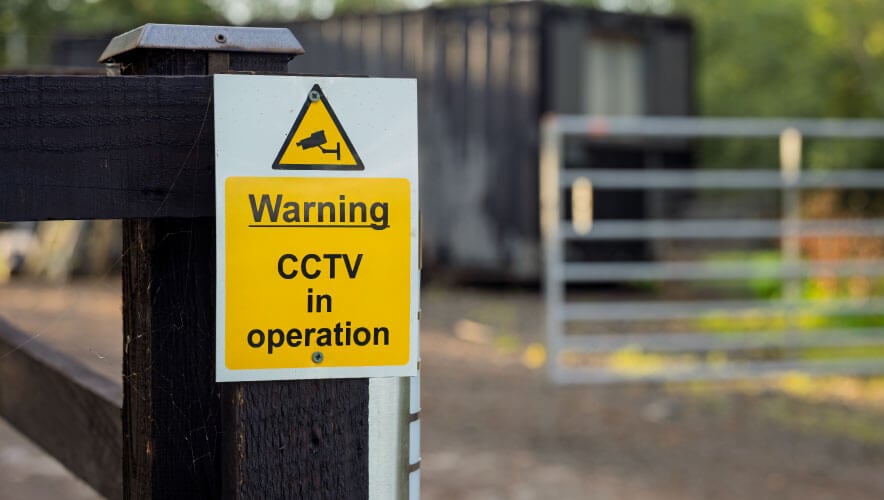
Experts have theorized about the efficacy of active threat interventions, and the impact, limitations, and drawbacks of the interventions have been studied by social scientists. The end result is that each intervention has pros and cons associated with it. For example, active shooter drills can have negative consequences on the mental health of children, and they can increase feelings of preparedness and reduce panic during an incident. The effectiveness of target hardening—including such things as bulletproof doors, metal detectors, and security cameras—may be limited because most school shooters are familiar with the ecosystems they attack and are therefore also aware of the security measures in place. At the same time, locked doors have proven to be a capable way to prevent a shooter from entering an occupied classroom.
In the study, some participants were asked for their opinion on the intervention and received no extra information. Others received a small piece of additional information that either supported or opposed the intervention. Because the study had massive participation—more than 10,000 people in the United States—the researchers could compare the support level of each cohort to see if the extra information made a difference in how much the public supported the intervention.
“We wanted to know if those numbers hold up once people learn something new,” Densley, one of the researchers, tells Security Management in an interview on the study. Densley is professor of criminal justice at Metro State University in Saint Paul, Minnesota, and co-founder of the Violence Prevention Project Research Center. “So, some people heard about a benefit, such as ‘drills can reduce panic during a real incident,’ and then others heard about a risk, like ‘drills might help the shooter, since most school shooters already know the building and how to get around security.’ And because we assigned that extra information at random, we can tell whether it actually changed people's minds, not just whether it happened to line up with what they already thought. …We were interested in this because there's been research in the past that has shown that public opinion can shift once you learn more about a subject.”
What they found is that attitudes toward drilling and site hardening were pliable; however, attitudes about arming teachers were hardened and the extra information did not make a difference.
Attitudes on Arming Teachers Differs from the Other Interventions
Examining the arming teachers intervention first, the survey asked several demographic questions including if the participant leaned toward the Democratic or Republican Party. Unsurprisingly, the arming teacher intervention had pretty clear splits along party line.
“I think why that matters is that it suggest that for two of these three policies [drills and site hardening], they are things people are still thinking through. They’re weighing pros and cons. Arming teachers isn’t like that anymore,” Densley says. “It’s become more of a partisan identity marker than a policy people are evaluating on its own merits, which is also why facts alone probably won’t change many minds [about arming teachers] going forward. …When an attitude works that way, presenting more information isn’t going to help. People aren’t weighing those costs and benefits. They’re just saying which side they’re on.”
If policymakers want to enact policies about arming teachers—whether for or against—their best approach is not to try to persuade people that the policy is important. As the research paper says, they should work on “structural and legal approaches.”
The opposite lesson applies to active shooter drills and site hardening. Public attitudes on these interventions are more susceptible to influence. For both, providing a small piece of information that reinforced the effectiveness did little to increase support. This is likely because support was so high to begin with, there was simply not room for improvement. However, when given negative information about the intervention, support decreased in relatively small but statistically significant ways. There was still broad, overall support—just a bit less once negative information was introduced.
Additional Findings on Active Shooter Drills
In addition to the finding that attitudes about active shooter drills in schools can shift depending on what information people are exposed to, another interesting finding is that people who had experienced active shooter drills were less likely to support such interventions than people who had not experienced drills.
Densley notes that there are limitations to what can be studied in a social survey such as this one. “It tells you what the public believes works. It doesn’t tell you what actually reduces casualties,” he says.
He cautions, however, that support from people who have experienced drills is still strong, and that the finding does not necessarily signal that support overall will continue to slide as more people are exposed to drills.
“I suspect it will have an impact more on how the drills are conducted versus whether or not the drills will be conducted at all,” Densley says, noting that the survey also asked participants if their opinion on the intervention differed when considering it for high schools versus elementary schools. Support for drills in elementary schools, while still strong, was lower than support for drills in high schools.
He says active shooter drills may very well continue to receive broad public support, but the approach schools take could change. “I suspect they will be conducted in a more age-appropriate and trauma-informed way.”
More on Site Hardening
Taking a closer look at the site hardening intervention, it’s notable that the peace-of-mind element to site hardening likely had significant influence over respondents with school-age children. As a group, they were 42 percent more likely to support target hardening than people in households without children.
However, a major aspect of site hardening is the cost involved. Once again, the limitations of what a single research study can cover come to bear.
The research tested the effect of knowledge about positive and negative outcomes on attitudes. Like with drills, a strong majority of the public is in favor of site hardening when faced with arguments about effectiveness.
But would they support it as strongly if presented with the economic tradeoffs rather than effectiveness pros and cons? The researchers noted the cost element of site hardening in the paper they wrote about the study, signaling that the topic might be valuable for future research.
“In many ways our study is one of the first to do this,” Densley explains. “And that's in some ways what its contribution to the literature is and to the debate is. But as with anything in social science, the impact is always incremental. And so we see this as the floor, not the ceiling for this conversation. I think there's room for other experimental designs to survey and do exactly what you've just talked about, add additional variables … and see whether that moves the needle.”
What Should School Security Leaders Do with This Information?
One lesson, already explained, is not to put effort into trying to convince people of the efficacy for or against arming teachers—new attempts at persuasion through information sharing are likely to fail. But with the other two intervention types, public attitudes are more malleable, and school security leaders should build communications planning into their efforts.
“If districts want informed buy-in rather than default buy-in,” Densley says, then it’s important to put all the information available—pros and cons—in front of parents “up front and not after the fact.”
“I think what this survey is telling us is that you just want the facts to be presented so that people can make informed decisions,” he continues. “That probably will result in 85 percent support dropping to support in the high 70s, but it's not necessarily going to change the overall consensus. I think it is important to have a transparent debate about some of these issues, as opposed to just taking for granted that active shooter drills save lives, period, and that's the end of the conversation.”
He also points out that this study covers interventions primarily designed to limit the damage a shooting incident causes. If you look at the evidence, he says, upstream prevention is not nearly as expensive as some of these interventions and has proven more effective.
“We don't seem to invest much time or effort on the prevention side," Densley says. "So, where is the training around 'if you see something, say something?' And who do you report to? And what are the warning signs that someone's on the pathway to violence? And can students within a school trust the process if they are concerned about one of their peers? …[Will reporting] that information be dealt with appropriately? If we spent as much time doing that as we did with the active shooter drills, I feel like we'd prevent even more violence.”