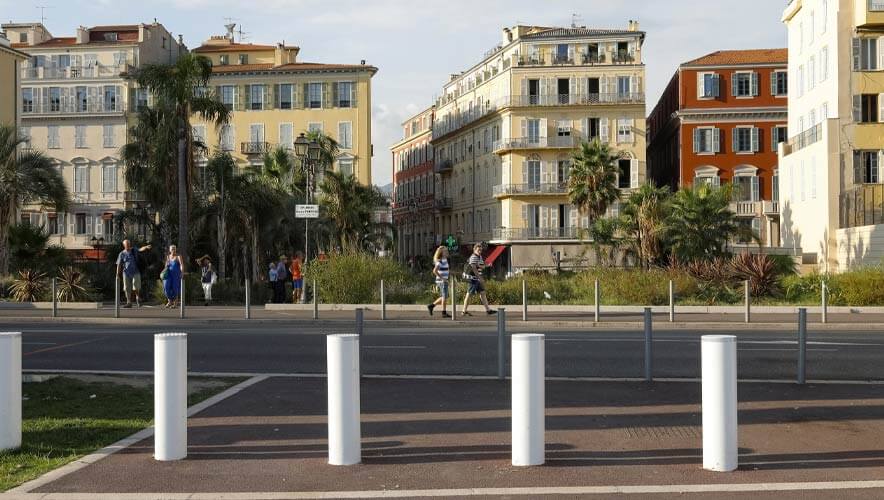
Fast Facts: 4 Core Types of Bollards
You’ve probably walked by them on the way into a convenience store or an office building. On the other hand, you may have mistaken them for overly large planters. Maybe you even stopped to smell the flowers. When bollards are placed within the cultural context of a site, it’s easy to miss their strategic placement in front of a museum or on a campus.
But bollards aim to stop threats to pedestrian sites, protecting people, assets, and experiences. They are a valuable tool to control vehicle traffic, and those that meet certain crash-ratings have enough stopping power to prevent cars from reaching a building’s façade, protecting assets and people. While some will present an upfront investment, they can prevent damage and save an organization the time and money otherwise demanded for repairs.
But not all bollards are made equal, with different types providing different benefits, from aesthetic appeal to solid security.
Additional Resources
“Into the Crowd: The Evolution of Vehicular Attacks and Prevention Efforts,” CTC Sentinel, March 2025 Vol. 18, Issue 3, Combating Terrorism Center at West Point
“Vehicle Borne Improvised Explosive Device (VBIED): Preparedness, Recognition, and Response,” Office of the Director of National Intelligence, 2018
“Ramming attacks, pedestrians, and the securitization of streets and urban public space: a case study of New York City,” Urban Design International, 2022