3 Tools Providing Privacy Protections in Video Systems
When organizations deploy a video surveillance system today, the topic of privacy comes up fast. But the conversation has often been too narrow, focused on a single capability or a compliance checkbox rather than a genuine understanding of how privacy protection actually works across a modern system.
The privacy tools for video systems are now more sophisticated than most people realize, and many of them leverage artificial intelligence (AI) to work. Three capabilities generally form the foundation of privacy protection in video systems. While they are often used interchangeably, they serve distinct purposes.
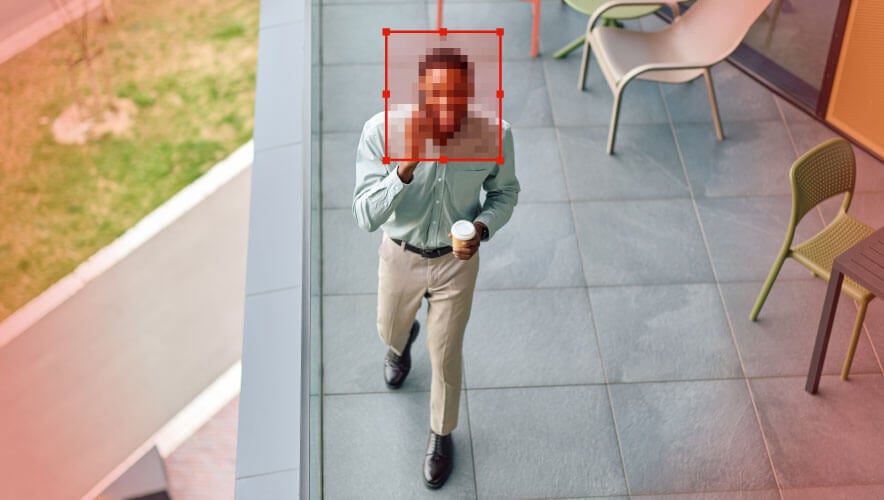
Blur, or privacy masking, is an operational tool. It obscures people, faces, or defined areas in live and recorded video. It can be used either as a fixed geographic mask or as a dynamic layer that follows individuals through a scene. The goal is oversight without exposure. An operator can monitor a healthcare corridor, a logistics hub, or a public space without being able to identify everyone in it.
Redaction steps in when video needs to be exported. Whether for an insurance claim, a legal proceeding, or a public records request, redaction removes or obscures individuals not relevant to the incident before the file is shared. Modern AI-assisted tools now handle in just minutes what once required hours of painstaking frame-by-frame work.
Anonymization goes further still. Rather than obscuring an identity, anonymization replaces it by substituting a synthetic face that preserves realistic characteristics but belongs to no actual person. This approach has become increasingly important as video data takes on a second life in training AI models and powering analytics that inform everything from retail operations to public safety planning.
When AI Enters the Picture
Each of these privacy tools delivers real value, but AI is elevating all of them in meaningful ways, making privacy protection faster, more accurate, and far more scalable than earlier rule-based approaches could manage.
Dynamic blur now tracks individuals in real time across complex scenes. Redaction that once took an analyst half a day now runs automatically in the background. Anonymization has become sophisticated enough to produce synthetic identities that are indistinguishable from real ones to the human eye. That progress is genuinely significant, and it also comes with a new set of responsibilities.
When AI systems power these privacy tools, the integrity of those systems depends entirely on how they were built. The training data behind an anonymization model, a redaction engine, or a live-blur algorithm must be ethically sourced, properly documented, and free from the biases that undermine both fairness and trust.
Responsible AI development means being transparent about how models make decisions and includes rigorous, ongoing testing for bias before and after deployment. It also means designing privacy and security into the product from the beginning rather than layering it on at the end.
Done right, AI does not replace the privacy discipline that good security teams have always practiced. It extends it, giving those teams more capability, more consistency, and more confidence that the public is genuinely protected.
Tim Palmquist is vice president, Americas, at Milestone Systems.