Public Health Update: What We Know About the Hantavirus Outbreak
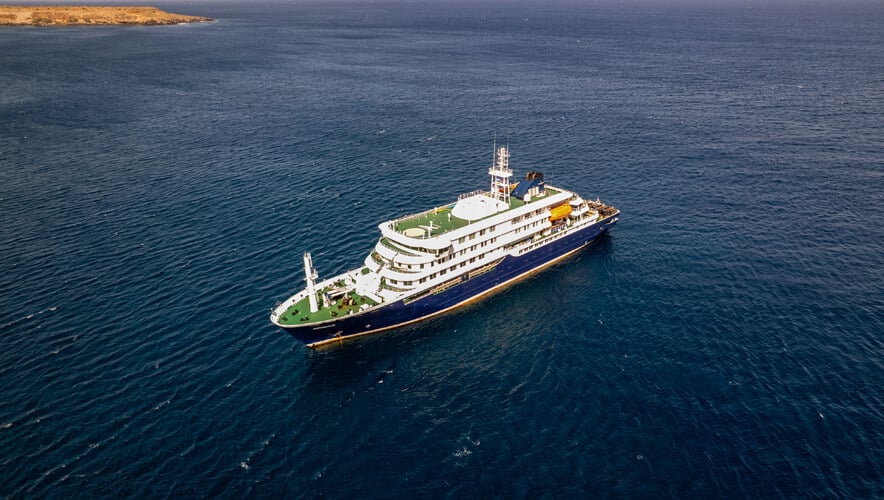
More than 100 passengers and crew from the MV Hondius cruise ship were evacuated on 10 May one month after a passenger died onboard from a hantavirus outbreak. Around 30 crew will remain onboard to move the ship back to The Netherlands for docking and disinfection.
The vessel anchored off Spain’s Canary Islands, where health officials boarded the vessel to check passengers for symptoms. Spain’s health minister, Mónica García, told reporters that everyone on the ship was asymptomatic at the time.
Passengers and crew disembarked in small groups, taking only essential items such as phones and documentation with them, the New York Times reported. Evacuations on chartered or military flights continue today.
Since 11 April, three passengers died, and five others fell ill, after showing hantavirus-related symptoms.
Some passengers developed symptoms during their flights home, including one French citizen. All five French passengers were immediately placed in strict isolation and will undergo more health assessments.
U.S. cruise passengers were transported via U.S. State Department airlift to the Regional Emerging Special Pathogen Treatment Center at the University of Nebraska, according to a post from the U.S. Department of Health and Human Services.
Everyone who was onboard is considered a “high-risk contact,” said Maria Van Kerkhove, the World Health Organization (WHO) director of epidemic and pandemic preparedness and prevention. However, she added that the risk of the virus to the general public is low, emphasizing that “this is not coronavirus.”
Five years after the COVID-19 pandemic began, public health is facing a mounting crisis that could pose significant ramifications for national security. https://t.co/JZYovU8zse
— Security Management (@SecMgmtMag) March 12, 2025
What Is Hantavirus?
Hantavirus is a rare family of pathogens primarily carried by rodents and that can be spread through contact with rodents, their urine, droppings, or saliva. The virus can become aerosolized if those rodent secretions are disturbed, such as during cleaning, according to a National Geographic explainer.
Most of these viruses are not spread between humans, but the Andes virus—the one at the heart of the cruise ship infections—is one important exception. It can spread human-to-human, albeit inefficiently. It is spread by close, prolonged contact.
Infections from hantaviruses, typically hantavirus pulmonary syndrome (HPS) can cause serious illness, lung damage, or death. Symptoms of HPS typically occur from two to four weeks after the initial exposure, but in some cases symptoms can appear as early as one week and as late as eight weeks following exposure, the WHO said. Non-HPS infection can also occur, where patients experience nonspecific viral symptoms but no cardio-pulmonary symptoms, according to the U.S. Centers for Disease Control and Prevention (CDC).
Infections are relatively uncommon globally. In 2025, only eight countries in the Americas reported a total of 229 cases and 59 deaths. While there are no specific treatments or vaccines for hantavirus infections, early supportive care and immediate referral to intensive care facilities can improve survival, the WHO noted.
The Cruise Cases
The MV Hondius departed on 1 April from Argentina and followed its itinerary across the South Atlantic, stopping in remote and ecologically diverse regions, the WHO reported. The extent of passenger contact with local wildlife remains undetermined.
On 6 April, one adult male passenger developed symptoms of fever, headache, and mild diarrhea onboard the ship. By 11 April, the man developed respiratory distress and died. A close contact of the first case—an adult female—developed symptoms and was flown to Johannesburg, South Africa, where she later died. Both individuals had traveled in South America for a bird-watching trip before boarding the cruise ship, although it is unclear if that was linked to the initial infection, the Associated Press (AP) reported.
The third case, another adult male, presented to the ship’s doctor on 24 April with shortness of breath and signs of pneumonia. After his condition worsened, he was medically evacuated to South Africa, where he is currently hospitalized. Laboratory testing confirmed a hantavirus infection.
A fourth case, an adult female, presented with pneumonia and died on 2 May.
Multiple nations coordinated response measures, including engagement with the WHO, to share information and advise ship passengers and crew. Passengers were advised to remain in their cabins as much as possible to reduce contact with others, and sample collection teams started testing and tracing infections.
Some passengers, including the second case, had disembarked from the ship early, and health officials are working to conduct contact tracing to monitor for the possible spread of infections.
“Further investigations into the potential exposure of the first case and the source of the outbreak are ongoing in collaboration with authorities in Argentina and Chile,” the WHO said. “The outbreak is being managed through a coordinated international response, including in-depth epidemiological investigations, case isolation and clinical management, medical evacuations, laboratory testing and international contact tracing and monitoring.”
The WHO recommended a 42-day quarantine for cruise passengers.