Terrorism Incidents and Deaths Dropped in 2025, But Border Region Activity Continues to Proliferate
While terrorism incidents and the deaths they caused dropped markedly in 2025, the outbreak of war in Iran suggests that the decline might be a brief moment of reprieve before numbers trend upwards again, according to new analysis from the Institute of Economics and Peace (IEP).
The institute released its annual report, The Global Terrorism Index, on 19 March, which found that while terrorism remains a significant global threat, deaths from terrorism fell from 2024 figures by 28 percent to 5,582. Terrorism incidents declined by 22 percent to 2,944—the lowest figures since 2007.
The year 2025 was also marked by the absence of a global, large-scale terrorist attack. Instead, terrorism continues to be highly concentrated with just under 70 percent of deaths occurring in five countries: Burkina Faso, the Democratic Republic of the Congo, Niger, Nigeria, and Pakistan. Six of the 10 countries that are most impacted by terrorism now are in sub-Saharan Africa.
The Islamic State (IS) and its affiliates continue to be the world’s deadliest terrorist group—responsible for attacks in 15 different countries in 2025, down from 22 in 2024—followed by Jamaat Nusrat Al-Islam wal Muslimeen (JNIM), Tehrik-e-Taliban Pakistan (TTP), and al-Shabaab.
TTP was the only group to record an increase in the number of deaths from terrorism in 2025. Its activity significantly impacted Pakistan, which became the country most impacted by terrorism after years of being ranked in the top 10.
The three countries previously most affected by terrorism (Burkina Faso, Mali, and Niger) all improved last year. Burkina Faso, which was the most impacted by terrorism in 2023 and 2024, recorded the largest decrease in the number of deaths from terrorism—a drop of 45 percent compared to 2024. Niger also recorded a major decline—703 deaths in 2025 compared to 944 in 2024. Mali saw a 42 percent drop in deaths and a 47 percent decline in attacks compared to 2024.
“The fall in deaths in the Central Sahel reflects the shifting nature of the conflict in the region, with JNIM now targeting supply chains to undermine state economic capacity,” according to the index.
Despite that positive direction in Africa, Western terrorism fatalities rose sharply in 2025 to 57. The institute assessed the attacks that caused these deaths were driven by anti-Semitism, Islamophobia, and political terrorism.
This juxtaposition is just one example of how the fragmentation of the global international order is playing out, says Steve Killelea, founder and executive chairman of IEP. Over the last 20 years, the institute has tracked the rise of middle-level powers and a loss of influence by the world’s great powers, especially those in Europe.
“With this fragmentation, these rising middle-level powers are now starting to exert control,” Killelea says.
Countries like Indonesia, Israel, Turkey, Saudi Arabia, and the United Arab Emirates (UAE) are becoming more assertive in their respective regions, including funding proxy wars that are creating more unrest around the globe.
IEP is watching the widening conflict in the Middle East, which could significantly impact the terrorism risk landscape if Iran becomes a failed state. The institute even released a special supplement to this year’s index focused entirely on the Iranian conflict and the terrorism threat it poses.
“Iran’s recent retaliatory strikes against U.S. bases and civilian infrastructure across six Gulf states, its closure of the Strait of Hormuz, and the mobilization of proxy networks from Iraq to Yemen signal a regime fighting for survival, one that has historically turned to terrorism as a tool of asymmetric warfare,” according to the supplement. “Early indicators suggest the [Iranian Revolutionary Guard] intends to sustain a prolonged campaign, leveraging global economic disruption as strategic pressure on the United States.
“This will likely be accompanied by a pattern consistent with Iran’s long-standing deterrence model: broaden the battlefield, escalate through proxy partners, and complement conventional military action with covert operations and possibly cyber activity,” the supplement continued.
Border Weaknesses
One trend highlighted in this year’s index is how terrorism activity continues to proliferate in border areas where weak states have less control. The index assessed that terrorism in border areas has more than doubled during the past 15 years with 76 percent of attacks now occurring within 100 km of an international border—up from under 60 percent in 2007.
“If you’ve got weak governments, they have issues controlling their territory,” Killelea says. “The further you move out from the center of power, the harder it is to control the territory.”
Border region hotspots include the Ecuador-Colombia-Venezuela frontier, the Central Sahel tri-border area, the Lake Chad Basin, and Afghanistan-Pakistan. While geographically distinct, the index highlighted these regions share common features: porous borders, under-governed territory, and connected communities that span national boundaries.
“Local populations often span both sides of a border, and in areas with difficult terrain, they may be largely self-governing simply because the state cannot reach them,” according to the index. “This creates opportunities for terrorist groups to build alliances with local communities, whether through coercion, financial incentives, or cultural or ideological alignment. It can also become self-reinforcing: heavy-handed counterterrorism operations that target communities perceived as sympathetic to armed groups can themselves become powerful recruitment tools.”
In West Africa, for instance, an insurgency in Mali spread to its neighbors Niger and Burkina Faso before moving into Togo and Benin. Now it poses a threat to Côte d’Ivoire, Ghana, Guinea, Senegal, and Mauritania. Terrorist groups in Nigeria, meanwhile, have moved across borders into Cameroon, Chad, and Niger to evade government intervention.
Zooming in on the Cameroon-Nigeria border, nearly 90 percent of Boko Haram’s attacks have occurred here. The index found that the group acts as if “national borders are largely irrelevant” and exploits the Lake Chad Basin’s jurisdictions and difficult terrain to carry out attacks.
“The inability of states to effectively manage multi-state, cross-border counterinsurgency may be one of the key factors driving the spread of terrorism across entire regions,” the index assessed.
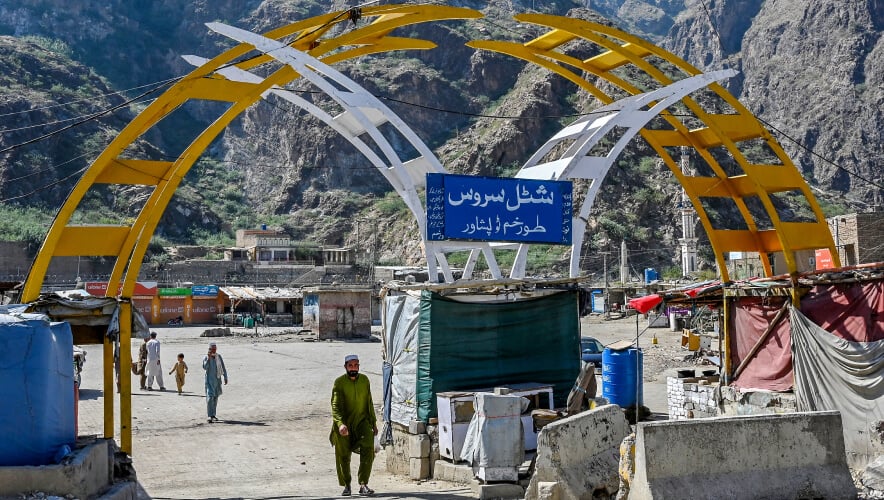
Cross-border militant activity in the Afghanistan-Pakistan borderlands is the primary driver of an escalation to open conflict between the two countries in February 2026. Border area terrorism in Pakistan has been driven by the Taliban’s return to power in Afghanistan in 2021 that’s resulted in increased cross-border militant activity by the TTP and the Balochistan Liberation Army. The index estimates that the TTP now has between 6,000 and 6,500 fighters based in Afghanistan, who enjoy greater freedom of movement in the countries eastern provinces that border Pakistan.
This activity highlights another issue with border zones: When neighboring nations’ governments dislike one another, it creates opportunities for terrorist groups to use a border area as a staging ground to attack their targets.
Afghanistan’s and Pakistan’s governments have long been hostile towards one another. Their inability to get along makes it “likely for one side to accommodate terrorists or militias” that target the other side without “actually cracking down” on the activity, Killelea explains.
The fallout has been especially hard in Pakistan, which saw a sharp rise in activity with 1,045 terrorist incidents and 1,139 deaths in 2025, the highest the institute has tracked since 2013.
The ongoing conflict between Afghanistan and Pakistan is likely to exacerbate the terrorism situation in the region because it will displace people, further weaken border controls, and create security vacuums where terrorist groups have thrived, the index assessed.
The View from Iran
Looking at the trend of border instability through the lens of Iran: As the Iranian Revolutionary Guard (IRGC) loses power, it creates an opportunity for insurgencies to rise up along Iran’s borders, such as the Balash in Pakistan, separatist groups in the Kurds, terror groups in Uzbekistan, and militias in Iraq.
The Iraqi militias have between 160,000 and 230,000 fighters loyal to the IRGC that so far have mostly been sitting the conflict out. But that could change as the IRGC loses control and these groups start to act—making an unpredictable situation even more volatile.
Iran is leveraging its geographical position on the Strait of Hormuz to disrupt oil and gas shipments and create economic pressure.
— Global Peace Index (@GlobPeaceIndex) March 20, 2026
The effective closure of the Strait has significantly reduced tanker traffic and disrupted a major global energy transit route. The effects extend… pic.twitter.com/bnT9Dhv2rA
Killelea says that over the next few weeks, he’ll be watching to see if proxy wars funded by various groups or militias inside Iran begin to break out in an internal uprising or along the border. U.S. President Donald Trump has already said his administration has been in talks with the Kurds to create such a situation.
Airstrikes by Israel and the United States have also avoided targeting Iran’s Army—outside of killing its leader in an early strike. Killelea says this is important because the army is much secular and could be able to assert control of Iran if the IRGC continues to weaken.
What Control Looks Like
Tamping down terror activity in border regions requires a functioning government that is steady and can provide an appropriate level of security in those volatile regions.
Killelea adds that governments can a partner with governments across their borders to achieve this stability and push out terrorist groups, but that only works if both parties get along.
Then, governments also need to focus on providing people who live in border regions what they want. One great example is from the Philippines, which has been working to address conflict that impacted access to healthcare. This meant that many women birthed their children at home, so they did not have birth certificates that would allow the children to attend school. As part of its approach to reassert control in those regions, the government created the Birth Registration Assistance Program. It has helped more than 30,000 people secure birth certificates, including by using mobile registration units in remote areas, so children have access to education, healthcare, and government benefits.
Governments and aid groups can also work in these regions to establish health clinics and job opportunities, which create economic stability in the area—making extremist groups less attractive to potential recruits.
“A lot of people join militias because it gives them a steady job and income, which means they can actually afford a life,” Killelea says.
This dynamic is especially important to understand because the Sahel has the world’s youngest and fastest-growing population, with a median age of 15 in several countries.
“In these contexts, the majority of the population has grown up in conditions of active conflict, with limited access to education, healthcare, or formal employment,” according to the index. United Nation’s research “found that 83 percent of voluntary recruits to violent extremist groups had either no formal education, or had not progressed beyond primary school, and that the average recruit had been unemployed for extended periods before joining.”