Police Arrest Hundreds During French ‘Block Everything’ Protests
French police arrested nearly 300 people in the first few hours of a planned day of nationwide protests on Wednesday.
Protesters, who had declared an intention to block everything, caused hot spots of disruption across France, defying a deployment of 80,000 police and gendarmes, according to the Associated Press (AP).
The protests were launched in response to budget cuts, government dysfunction, the proposed elimination of two bank holidays, and other complaints. The “Bloquons Tout” or “Block Everything” movement gathered momentum online during the past few months, calling for a day of blockades, strikes, boycotts, and demonstrations. The group has no clear identified leadership, similar to the Yellow Vest protest movement that started in 2018 but lacking the same organization and impact.
Unlike the Yellow Vests, which claimed to be apolitical, “Block Everything” supporters lean heavily to the left and they focus on rising inequality, environmental issues, and health system complaints, according to a recent survey. But both the Yellow Vest movement and Block Everything participants are united by hostility toward French President Emmanual Macron and his government’s recent actions, France24 reported.
The latest protests occurred the day France’s newest prime minister, Sébastien Lecournu, took office—less than 48 hours after the French government lost a confidence vote and collapsed. The political turmoil exacerbated frustration among the protesters.
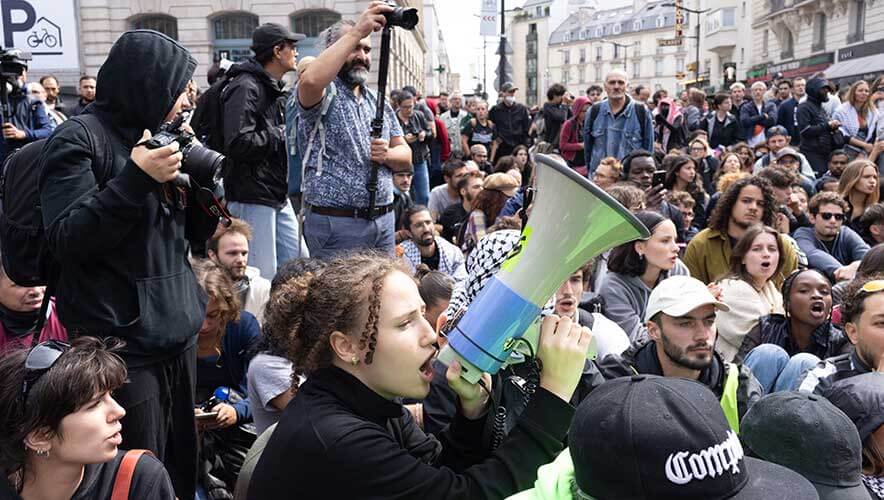
Tens of thousands of demonstrators gathered for largely peaceful protests across France, including in Lyon, Marseille, and Montpellier. But some demonstrations became disruptive and tense.
Protesters tried to block the beltway around Paris during the morning rush hour, and other protesters piled up trash cans and hurled objects at police. Law enforcement stopped protesters from blocking traffic or tramways. In response to protests around the Gare du Nord train station, police closed access to the building and used tear gas to disperse a group of 1,000 demonstrators, according to EuroNews. Paris police reported 159 arrests this morning.
Elsewhere in France, around 100 others were arrested for protest activity that blocked traffic or caused damage.
Organizations often participate in marches and rallies for causes that align with their values. Security leaders need to leverage a different set of diplomatic skills to keep those activities safe. https://t.co/7EYQXLzvMM
— Security Management (@SecMgmtMag) May 2, 2025
French authorities deployed extra security and police forces to guard against attempts to block essential infrastructure, including airports, public transit, power plants, and water treatment centers, The New York Times reported.
Overall, the goal to block everything was only partly achieved. Most trains and metros ran on schedule, but access to infrastructure and many schools was blocked, according to the BBC. Individuals set a bus on fire in Rennes, and sabotaged electric cables near Toulouse. Protesters also occupied roads and railways stations across the country, The Guardian reported.
Two major unions—CGT and SUD—backed today’s actions and said broader strikes are planned for 18 September. Healthcare and pharmacy workers are set to protest next week about cuts to medical reimbursements.