Gen Z Protests Upend Parts of Africa, Signal Potential Wider Upheaval
Gen Z protests are spreading across parts of Africa and Asia, with youth-led coalitions demanding change. While conditions change from country to country, the spark is the same: stagnant prospects for young people, widening inequality, and an easy window into the lives of the elite and privileged through social media, according to reporting by DW.
Generation Z—people born between 1997 and 2012—is increasingly frustrated by their governments’ perceived lack of effort to develop opportunities and spur change, especially in Africa, where the median age is 19. In many places, such as Botswana, this influx of youth is changing the outcomes of elections, but in others, it highlights the lack of clear career opportunities, The New York Times reported. The African population is projected to nearly double to 2.5 billion in the next 25 years, but many young Africans are worried that their governments and economies are not keeping up.
“Young Africans are better educated and more connected than ever: 44 percent graduated from high school in 2020, up from 27 percent in 2000, and about 570 million people use the Internet,” the Times reported. “But finding a good job, or any job, is another matter.
“Up to one million Africans enter the labor market every month, but fewer than one in four get a formal job, the World Bank says. Unemployment in South Africa, the continent’s most industrialized nation, runs at a crushing 35 percent.
“Frustration feeds desperation,” the article continued.
These issues—especially when layered with limited resources, allegations of widespread corruption, and restricted social and economic mobility—have pushed some Gen Z Africans toward militant groups, others into dangerous migration schemes, and still more into political protests.
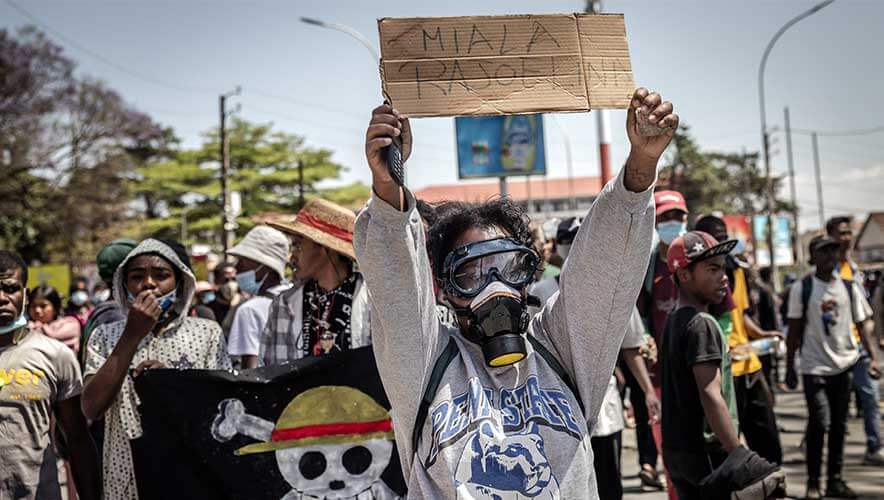
Gen Z is the first digital-native generation, and their social media savvy has made it easier for them to orchestrate demonstrations on the fly and organize protest coalitions and clear demands. Many of the recent protests even share a common symbol—versions of a cartoonish pirate flag from the anime television series One Piece, used by protagonists who rebel against an unjust world and defy corrupt powers.
“In Africa, people under 30 make up over 70 percent of the population, with a median age of 19.3,” wrote Charles A. Ray for the Foreign Policy Research Institute. “This young population contends with high unemployment, rising cost of living, and an aging and entrenched political leadership. Gen Z, however, is rising and changing the face of protest. Equipped with smartphones, social media, and no reluctance to challenge authority, they are disrupting economies, impacting government policy, and, in all too many cases, provoking violent crackdowns that are only further fueling their movements. With access to the Internet, they are influenced by events worldwide and, through social media and other high-tech communications, can mobilize large crowds throughout a country on a moment’s notice. In 2025, a wave of mass protests swept across Africa: From Nairobi to Lagos, Accra to Dakar, tens of thousands of angry young people faced tear gas and live bullets to speak out against hunger and inequality, and the movement shows no sign of abating.”
In June 2024, young Kenyans took to the streets to protest a proposed finance bill that would have taxed a variety of essential goods, potentially worsening a cost-of-living crisis. A mass mobilization of Gen Z Kenyans took to social media to educate each other about the finance bill and organize coordinated demonstrations nationwide. Security forces violently cracked down on protesters after they breached the walls of Parliament, killing 60 protesters, according to a report by the Journal of Democracy. The violence has not quelled Gen Z’s dissatisfaction, however. In June 2025, thousands of youths took to the streets in 27 of Kenya’s 47 counties in more demonstrations.
In Madagascar, chronic water and power cuts spurred weeks of youth-led protests that escalated to reflect wider dissatisfaction with the current government’s efforts to address high unemployment, rampant corruption, and a cost-of-living crisis, the BBC reported. Madagascar is one of the poorest countries in the world; 75 percent of its 30 million people live below the poverty line, and only about a third have access to electricity.
The protests grew after labor unions and civil society groups joined in, with protesters demanding the Malagasy president’s resignation and justice for the dozens of people killed during protests.
Now, an elite military unit, CAPSAT, seized power from President Andry Rajoelina, who fled the country this week. The military will form a government and hold elections within two years, but in the meantime most key democratic institutions have been suspended.
Gen Z protesters will play a large part in the changes to the country’s government because “the movement was created in the streets, so we have to respect their demands,” said CAPSAT chief Col. Michael Randrianirina.
In Morocco, youth are demanding social justice reforms and public services improvements, especially as the country invests billions of dollars into hosting the 2030 FIFA World Cup. Healthcare and education are particularly in crisis in Morocco, and the protesters say that government investment in these areas sharply contrasts with the spending on the World Cup, Al Jazeera reported. According to the World Health Organization, Morocco has fewer than eight doctors per 10,000 people—well below the recommended 25.
The GenZ 212 protests, named after Morocco’s international dialing code, were met with a strong response from police, with more than 500 arrests reported within the first six days of protests, and several deaths, according to The Guardian.
Africa isn’t the only region where youth-led protests are challenging governments. Earlier this year in Nepal, anger about corruption and nepotism boiled over into a nationwide protest leading to the resignation of the Nepalese prime minister.
Protests in Indonesia in late August—triggered by fury over legislators’ generous perks—left at least 10 people killed and thousands detained.
One in seven young people in China and Indonesia is unemployed, according to a World Bank update, and much of the region’s job creation has shifted from factories to power-paid services, eroding the pathway into the middle class, DW reported. This makes young workers particularly vulnerable to poverty.
Youth-led protests have also emerged in Indonesia, Paraguay, the Philippines, Peru, and Serbia, CBC News reported. The common thread is frustration over poor governance, lack of opportunity, and rampant inequality. But although youths are providing much of the energy, digital infrastructure, and name recognition for the protests, the issues resonate across generations, giving staying power to many of the movements. Analysts expect the protests to grow and expand to new regions in the coming months.