Significant Wildfires Spread in Colorado, California, and Canada
Peak wildfire season in North America has begun.
While the wildfire season technically stretches from May through November in parts of North America, the highest risk is in August and September. This year, conditions are exacerbated by large areas of severe drought in swaths of northwest Canada and more than 30 percent of the United States, according to a multinational seasonal fire assessment issued in mid-July.
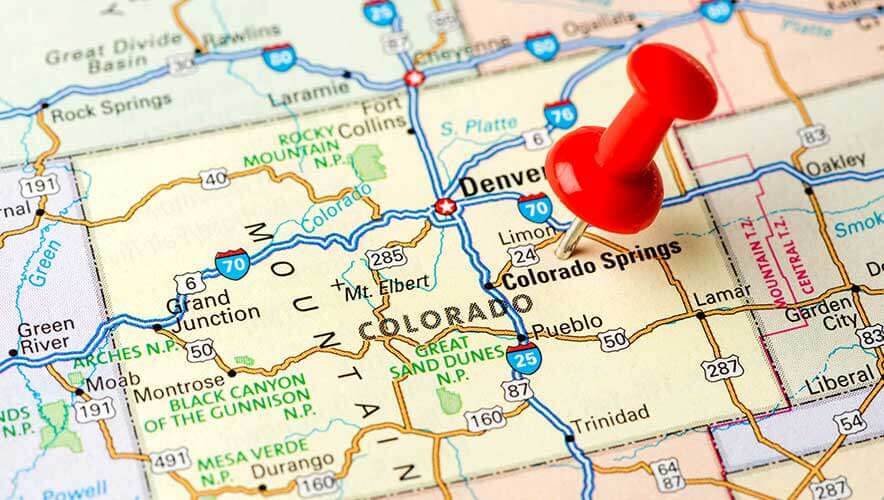
In western Colorado, two lightning-caused wildfires have consumed more than 120,000 acres so far. The Lee Fire—now the fifth largest wildfire in Colorado history—forced evacuations in two counties, including at a prison. Data from the Coloradoan estimated the fire’s cost to date at $4.8 million and growing.
“This is the kind of fire that is really driven in part by the significant drought-stressed fuels that are out there,” said Bethany Urban, a fire information officer with Rocky Mountain Area Complex Incident Management Team 3, in an NPR article. “It doesn't actually take that much of a wind to get this fire up and moving in these kinds of fuels.”
First responders have had to retreat from dangerous and fast-moving fires made worse by hot temperatures and strong winds.
Meanwhile, Californian firefighters are battling a new blaze near Santa Barbara and San Luis Obispo—the Gifford Fire—that has spread across nearly 120,000 acres.
Canadian officials called in military and Coast Guard forces last week to help respond to a set of wildfires and related disruption, The New York Times reported. Canada’s national fire level has been at the highest danger rating since late May, and about 27,000 square miles of forest have burned so far this season. As of 10 August, there are 710 active fires in Canada, including 168 that are rated “out of control” by the Canadian Interagency Forest Fire Centre.
This wave of wildfires has resulted in significant smoke spreading across parts of Canada and down into the eastern United States.
The seasonal fire assessment for August and September predicted “above normal significant fire potential” for much of the northwestern United States, including all of Oregon and Washington and most of Idaho and Montana.
In Canada, “regions of sustained dry and warm conditions will intensify the fire hazard over already dry ground,” the report said. “In comparison to July, the risk for wildfire not only grows, but it also increases in extent over western Canada. The southern Yukon, much of the Northwest Territories, and all of British Columbia, Alberta, and Saskatchewan are expected to have above normal risk.”
Mexico, on the other hand, is predicted to have minimal wildfire activity this season, except for the state of Baja California, which is projected to have above-normal wildfire activity this quarter.