How Adidas is Preparing for the Biggest World Cup Tournament in History
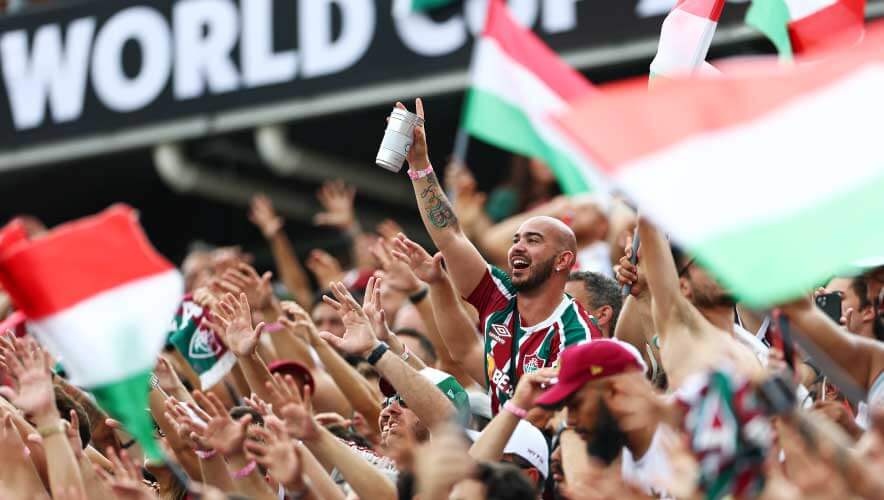
The FIFA World Cup is arguably the largest sporting event in the world, with millions of fans traveling from nearly every corner of the planet to attend matches and billions more watching from home as their national teams compete for the coveted championship.
The 2026 tournament, though, will be raising the already monumental stakes. Forty-eight teams—up from 2022’s 32 teams that competed in Qatar—will play 104 matches in 16 cities in Canada, Mexico, and the United States. The tri-nation host approach means that the biggest tournament in FIFA history is being held across the largest geographic footprint in tournament history, too.
The scope of the 2026 World Cup is creating new complexities for security practitioners, says Siôn Archer, global lead for event risk, travel risk, and crisis management at apparel and footwear giant adidas. Archer runs an agile team from adidas’s headquarters in Herzogenaurach, Germany, and he began having conversations with his regional counterparts in the United States about World Cup preparations toward the end of 2024.
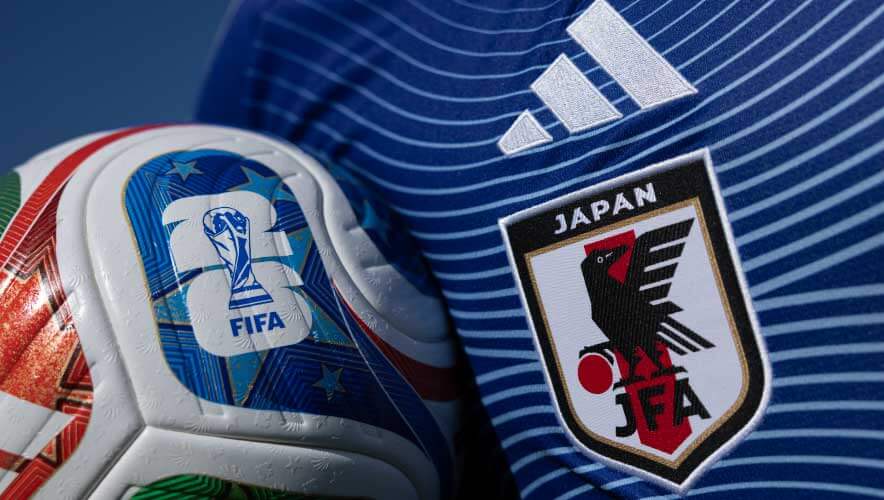
These discussions needed to begin early because adidas is a premier partner and official supplier of the 2026 World Cup. The company has supplied match balls for all World Cup games since 1970, as well as shoes and attire for FIFA officials, referees, volunteers, and the youth program (player escorts, ball crews, and flag bearers). Adidas—along with Nike and Puma—is also providing the player kits for teams competing at the tournament:14 nations will wear jerseys and shorts provided by adidas.
Additionally, Archer estimates that about 10,000 people from adidas—staff and guests, including prominent athletes, brand ambassadors, and executives—will attend and work at the 2026 World Cup and the company’s events and retail locations around it. Given the breadth of the tournament’s footprint, Archer says adidas quickly recognized that it would need to take a new approach to risk management: empowering its regional North American teams to be the decision makers and escalate up the chain to his team when needed.
“With the tournament spread across multiple countries and cities, the biggest shift for us is moving from a host nation-centric model to a genuine distributed risk architecture,” Archer explains. “We tried to really spread it out compared to previous World Cups, so it now relies much more on a regional command structure and global protocols that can be adapted locally.”
Adidas has worked to create regional command structures that will utilize global protocols to respond to issues and to escalate them as necessary. Archer says the goal was to create a consistent security structure across the three host countries.
“The reality is that we can’t be everywhere, all the time,” Archer says of the global team in Germany. “So, what we’ve done is create very clear, and simple, escalation processes for every setting. So, whether there’s an issue at a retail store, whether there’s an issue at a stadium, whoever’s dealing with that said issue, they know who to escalate it to and why and what that support looks like.”
This approach includes identifying the core team that should manage the initial response. Adidas then identifies show-stopping individuals—the people who would respond to change course if an incident occurred that was going to affect the viability of the event. Through his time at adidas, Archer says he’s learned that identifying these team members early, briefing them, and ensuring that they know their roles and responsibilities is critical to enabling them to respond effectively when an incident or crisis occurs.
“We often try and avoid being a fun sponge or the fun police,” he says. “We try and really enable the business to be its brilliant self. It’s our job to deliver the security structures that are needed to make that happen.”
Adidas is also leveraging Healix International, a global health and risk management business, to support the company at a site level. Healix began working with adidas in 2017 as its medical services provider for the company’s travel risk management program. Adidas then expanded its partnership with Healix at the beginning of 2026 to gain access to its global security operations center (GSOC).
Archer says this expansion was necessary because, while adidas is a large company—just shy of 65,000 employees according to its 2025 annual report—it does not have a regional distribution of security experts across the globe.
“Wherever there’s an issue in the world, indirectly we will in some way feel an impact—whether it’s on a supply chain, retail, or office safety,” Archer adds. “The reality was that we needed a force multiplier, and the Healix GSOC gave us that.”
Additionally, the expansion included Healix’s assistance in conducting risk assessments, venue assessments, and city assessments. The risk assessments have been especially pivotal in the lead-up to the World Cup, Archer explains, to better understand the risk landscape and measures adidas will adopt in response.
“We will be operating in several cities across the three [host] countries,” Archer says. “From a resource perspective, we can’t conduct risk assessments on all of them. We don’t have the means or the local knowledge to do so. We often lean on Healix and its GSOC to provide us with the oversights of geopolitical issues, crime, and planned protests, and that relationship becomes much more pivotal as we get closer to the games.”
We try and really enable the business to be its brilliant self. It’s our job to deliver the security structures that are needed to make that happen.
Archer explains that adidas uses these insights to prepare for employee travel. It takes the risk assessment information from Healix and considers it, along with adidas travelers’ expectations and needs during travel, to determine what security assets are required. This workflow will help guide adidas’s approach toward security for its employees and VIPs when they travel for the World Cup since each of the host countries presents a different risk landscape and requires varying support.
The GSOC support has also been imperative to ensuring adidas has as full a risk picture as possible, Archer explains.
“From there, we can amend and change our decisions to fit that environment,” he says. “That’s something that the GSOC’s supported us with as we’ve run up to the World Cup.”
Meanwhile, Archer explains that adidas is working to better collaborate between its different security functions and external partners to share threat intelligence, dissect it, and release only relevant information to business partners to avoid overwhelming them.
“I think providing that clear alignment and clear information to our decision makers is really crucial to succeeding,” he adds.
Another important component of success has been conducting tabletop exercises with regional teams to ensure they understand how the escalation structures work as part of the World Cup preparations. Archer says these exercises are extremely valuable because they help teams understand how individual members operate around one another and what guidance they might need to interact more effectively.
“Reacting to the size of this World Cup has not been a challenge, but it’s been an adjustment," adds Archer, re-emphasizing the massiveness of the tournament, which will again occur in 2030 when the World Cup is spread across Morrocco, Portugal, and Spain, to help share the cost of the event.
“We hope to learn a lot from this World Cup, and I think collaboration between global and local has really helped us get to where we are today,” Archer says. “We’re not there yet—we’re still two months out. There’s still lots of work to learn from, and the ideas and brilliance are often driven by the local market. It’s our job to enable it and support it however we can.”
For more information about Healix, contact Jacob Painter, director, risk programs advisory for Healix, at [email protected].
Megan Gates is the senior editor at Security Management. Connect with her at [email protected] or on LinkedIn.