A Small but Mighty Problem: Tracking Down Mini Cellphones in Prisons
In nearly all prisons, the ability to monitor and control communication into and out of the facility is a critical security and safety need.
To maintain control of phone communications, most prisons provide incarcerated people with access to a phone that corrections staff monitors. They will listen in to ensure people inside the facility are not plotting criminal activity or an escape.
Most prisons also prohibit inmates from having personal cellphones, implementing stringent security screening measures to prevent these devices from being smuggled inside.
Those screening measures, however, have been put to the test during the past several years as technologists produce smaller cellphones and online storefronts make them easily available to the public for purchase.
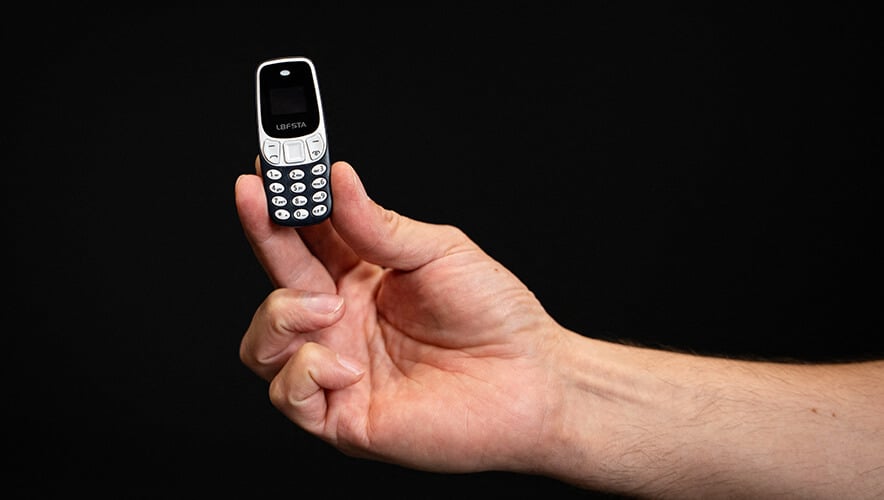
Just how small are these cellphones? Right now, you can buy a miniature cellphone that is about 2.5 inches (6.35 cm) tall online, says Andre Gunther, owner of DTI Security, a leading distributor of metal detectors and baggage screeners in Germany.
“The amount of metal used inside of that little unit is very, very small,” he adds. “Which makes it much more difficult to detect in a metal detector.”
Inmates or visitors have been able to smuggle the devices into prisons by carrying them inside of their body cavities while going through a walk-through metal detector, which might not alert on that small of an amount of metal masked inside a human. Inmates would then use the devices to engage in criminal activity.
One high-profile instance of this was in 2023. Europol’s Operational Task Force—which targets criminal networks in the Balkans—had identified an organized crime group’s leader as a high-value target. Law enforcement cracked down, arresting 37 members, but the criminal network remained active, led by a national of Bosnia and Herzegovina who was incarcerated at the time.
“The ringleader orchestrated the network’s criminal activities from his prison cell, regularly issuing orders and instructions on matters related to the trafficking of drugs and firearms,” Europol said.
The ringleader was released from prison in 2024, after which he allegedly organized and coordinated a professional assassination of a witness in a court case. Europol worked with Slovenian and Bosnian-Herzegovinian law enforcement to rearrest him and his associates in December 2024.
The ringleader’s actions are just part of a broader pattern of activity that Europol has been tracking. In its 2025 European Union Serious and Organized Crime Threat Assessment, the agency wrote that one form of remote coordination of organized crime that has evolved “involves criminal leaders directing operations from prison—orchestrating illicit activities across the globe, including violent actions.”
Europol has found that organized crime networks are highly agile, capitalizing on developments in the online environment to adapt their modus operandi and expand their portfolio.
“Criminal networks are able to sustain their criminal activities over a long lifespan, resilient amid changes in the criminal landscape, violent disputes with criminal rivals, law enforcement pressure, and imprisonment,” according to the report.
Measures to Fight Back
In the past, people had to go to a physical store to buy a cellphone—including the mini devices popular in prisons. Authorities would track storefronts that sold these miniature phones and intercept the devices before they could be smuggled into a prison environment.
But with the rise of online marketplaces like Amazon and Alibaba, people can now purchase the phones online, have them delivered to their location of choice, and then smuggle them into a secure facility, all without attracting notice.
Recognizing this gap, security practitioners are taking a variety of approaches to address the problem.
Security technology. A few years ago, corrections clients started coming to Garrett Metal Detectors with a new request: They needed a metal detection product that was sensitive enough to detect miniature cellphones.
Other screening technologies could potentially be used to find these devices. But systems like X-ray body scanners use ionizing radiation, which can have negative health effects when used regularly on people—especially people who are pregnant, says Leo Zelenkevich, director of international sales for Garrett Metal Detectors. Millimeter wave scanners wouldn’t work well for detecting small devices since they cannot detect objects inside a person’s body or skin folds.
So, the company worked to develop a few new products, including a walk-through metal detector that debuted in 2024 that can detect extremely small objects, from razor blades to SIM cards to miniature cellphones.
“They don’t use ionizing radiation, so they’re safe to use on pregnant women and people with pacemakers,” Zelenkevich says.
A correctional facility client in Germany was immediately interested. It had a security screening system, including a walk-through metal detector, but the system was never able to detect miniature cellphones—especially in body cavities—without causing a high number of false alarms.
The facility decided to test one of Garrett’s new solutions for a week and had promising results. Corrections staff recovered about a dozen miniature cellphones hidden on visitors and inmates passing through the walk-through metal detector.
“Some of them were hidden, concealed internally in the body, including in the mouth of a person going through,” Zelenkevich says. “As a result, they were really happy.”
The institution ended up buying 10 of Garrett’s devices. One reason that the Garrett walk-through metal detectors are effective is that they have 66 zones that are used to alert security screening personnel where a detected object is on a person’s body. That helps personnel not only to locate the object in question but also provide a faster and more effective secondary screening process.
While prisons will often install these solutions at the entrance to their facilities, they also sometimes place walk-through metal detectors inside the prison near laundry facilities to detect objects that might be smuggled inside the facility that way. Gunther of DTI Security adds that some prisons also install walk-through metal detectors outside of workshop areas where inmates have access to metal tools. Corrections staff wants to ensure that those metal tools—which could be used as weapons—remain in the workshop and do not enter other areas of the prison.
As they screen for weapons in these interior locations of the prison, the walk-through metal detectors can also be used to screen for miniature cellphones, making it increasingly difficult for inmates to continue concealing them.
Government response. What do you do if you’re fairly certain a portion of the incarcerated population is using mini cellphones while in custody? If you’re the French government, you launch a massive raid to find the devices, remove them, and shut down the supplier.
France’s National Jurisdiction for the Fight Against Organized Crime cybercrime unit launched Operation Prison Break on 20 May 2025. Police simultaneously raided 66 detention facilities across France to search nearly 500 prison cells and seize mini cellphones distributed by a Chinese company and resold in France by the supplier OPORTIK. They ultimately seized 164 cellphones, including 88 miniature phones.
At the same time, French authorities seized the domain name of OPORTIK and questioned three suppliers, since it is illegal in France to provide incarcerated people with cellphones. Through the discussions, French authorities identified 5,000 miniature phones in circulation that would be affected by the operation. The Paris prosecutor’s office also shared information with its partners for locating the phones so they could conduct similar operations.
Following the operation, French Minister of Justice Gérald Darmanin announced in July 2025 that he would move 100 inmates into a maximum-security prison to stop them from facilitating criminal activity from behind bars. At Vendin-le-Vieil, the inmates are housed in a section for combating organized crime that has enhanced security measures, including systems to block mobile phone signals and drones.
“Prison visiting rooms have also been equipped with security glass dividers, to prevent physical contact between inmates and visitors,” according to the Associated Press. “Darmanin says this will prevent mobile phones and other contraband from being smuggled in. The new Vendin-le-Vieil inmates also won’t have the rights accorded in other prisons of intimate time with partners and family members.”
Six months later, Darmanin announced in November 2025 his “zero mobile phone” plan to make six French prisons cellphone free. The prisons—La Santé, Arras, Dijon, Toulouse, Toulon, and Rennes—will install new security screening measures, millimeter wave gates, and jamming systems to disrupt cellphone signals, Le Monde reported.
“The enclosure of exercise yards to prevent the throwing of cellphones will also be completed in 2026,” according to Le Monde. “The goal is then to extend this system to all prison facilities.”
Megan Gates is senior editor at Security Management. Connect with her at [email protected] or on LinkedIn.