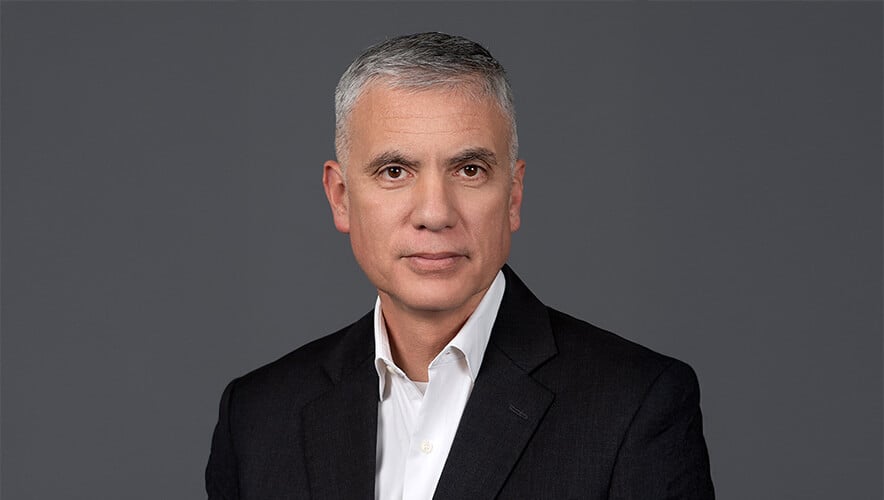
Setting the Tone for Success: Nakasone Shares Skillsets of Effective Security Leaders
During a 37-year career in the U.S. Army, you’ll interact with a wide variety of formative leaders. But one in particular stands out to General (retired) Paul M. Nakasone: his first battalion commander.
At the time, Nakasone was serving as a director of intelligence and was one of the 600 U.S. Army soldiers the commander was responsible for. In a meeting, Nakasone says the commander asked him, “What are you going to do next?” Nakasone was honest and admitted that he was thinking about leaving the Army.
The commander pushed back on that idea. He told Nakasone that he was good at what he was doing, and should consider going to grad school, going overseas, and doing another tour in the Army.
“It was the first time that someone had provided that type of feedback to me,” Nakasone recalls. “I never lost that idea of providing feedback or engaging people. I think we as humans really want to understand how well we’re doing and what our opportunities are. I think that that’s a key piece of leadership that I learned early on from one of my first bosses.”
Nakasone applied that lesson and many others gleaned from his military career, including command and staff assignments in Afghanistan, Iraq, the Republic of Korea, and the United States, to be an effective leader. He served as the director of intelligence, J2, for the International Security Assistance Force Joint Command in Kabul, headed the Cyber National Mission Force at U.S. Cyber Command, and ultimately retired in February 2024 after six years leading U.S. Cyber Command, the National Security Agency (NSA), and the Central Security Service.
At GSX 2025, Nakasone will share some of the lessons learned from his leadership experience in a keynote on Wednesday, 1 October, in New Orleans. Ahead of his remarks, he sat down for an interview with Security Management to discuss the characteristics of great leaders and the skillsets that the next generation of security leaders will need to develop.
Leadership Experience
Great leaders are people of character that have developed the science and art of leadership through classroom learning, on the job experience, and self-development, Nakasone explains.
His tenure in the military put him in contact with other great security leaders with strong critical thinking skills, capable of understanding and defining problems, and an understanding of the facts and assumptions, as well as how to solve those problems.
“You have a problem, and you’ve got to be able to describe it to someone in a position of power that can do something about it,” Nakasone says, adding that security leaders must be great communicators. “How you describe that problem is really important.”
Nakasone notes that good security leaders are also “doggedly persistent.” They are the people who see something, explain it, and when action is not taken to address it, they don’t give up on the idea.
“Those are the people that I think are really successful in the security field,” Nakasone says. “I saw it over three decades wherever I worked in the security field. If you can think critically, if you can communicate problems, and you’re doggedly persistent, normally you’ll be successful.”
Beyond communication and persistence, security leaders know how to effectively manage a diverse group of people to further a mission. Nakasone says that as a leader, you must accomplish the job that you’re given while balancing the need to develop your team.
Leaders set the context for success based upon the atmosphere they develop.
“I think sometimes we forget about that,” he adds. “Sometimes we have leaders that are just fantastic at accomplishing the mission, in spite of their people, or we have people that are just great leaders who develop their people but really can’t get at the mission. You have to do both as an effective leader.”
Such leaders know the members of their team—their name, their role, their family, and some of their interests or background. They also know what motivates their team members.
“What motivates a Gen Xer versus a Millennial? What motivates a Baby Boomer versus someone else? What is it that really ties people together?” Nakasone says. “I think that those are things that leaders have to be able to pull together.”
Nakasone adds that strong security leaders keep in mind their competitive advantage—the traits that set them apart from the field. While managing risks, effective security leaders will grow their capabilities and organizational capacity to address the needs of today and of the future.
They also approach their work with a degree of humility.
“I like the leaders that I follow that are humble leaders,” Nakasone adds. “I think that it goes to show that there are people out there that can do this without necessarily having to show that all success is generated by myself, or they speak in the terms of ‘us’ and ‘we,’ and not ‘I.’ I think that’s important.”
All of these attributes were put to the test during Nakasone’s career when the COVID-19 pandemic broke out in the United States. He had to stand in front of NSA and U.S. Cyber Command leaders, who typically always worked in person with their colleagues, and instruct them to bring office staffing levels down to a minimum level to continue operating safely. Leading during this time was a novel experience, Nakasone recalls, and he leaned on the fundamentals mentioned previously.
“How do you communicate? How do you describe a situation? How do you remain positive? How do you offer a solution?” Nakasone says. “Those are all things that I had to go back and really think about.”
Being transparent with his team, maintaining a positive attitude, and clearly defining the problems that the organization was facing during the pandemic helped to successfully protect the workforce while continuing to achieve on its mission. It also laid the groundwork so that later in 2020, when employees needed to return to the office to support securing the U.S. general election in November, he was able to clearly communicate that they were doing this because it was safe and essential to do so.
A positive attitude is not always easy to maintain in the security profession, but Nakasone says that “leaders set the context for success based upon the atmosphere they develop.”
Great leaders can also see opportunity in spite of great challenges, he adds. When there’s a challenge, security leaders can ask themselves if there’s an opportunity for them to grow, for the organization to be better, and for other leaders to step-up.
“Being able to frame it in those words, I think, is important because it sends a message to those that you work with or work for or who work for you about how you’re going to lead,” Nakasone says.
And if you’re struggling to find the right words to frame your thoughts? Consider upping your regular reading practice, adds Nakasone, who is a voracious reader.
“I can’t emphasize it enough. If you want to be a better speaker, be a better reader. If you want to be a better thinker, be a better reader. If you want to be a better communicator, be a better reader,” Nakasone says. “This idea of being able to broaden your horizons, that comes with the perspective of doing a lot of reading.
“Whether or not it’s on a daily basis with your periodicals, whether or not it’s on a focused self-development approach, it begins with the idea of being able to expand your brain,” he continues. “You expand your brain through reading. That’s, I think, one of the critical skillsets, self-development wise, that I always emphasize to those that I work with and am friends with.”
Developing Future Leaders
You might think that Nakasone would have ended his work developing security leaders after retiring from the U.S. Army. You’d be wrong.
Instead, he’s taken up the mantle in the private sector by becoming a founding director of Vanderbilt University’s Institute of National Security. His new mission is to support the development of the next generation of national security leaders, ensuring they are prepared to act when their moment comes.
“After three-plus decades in the United States Army, I’m on Paul M. Nakasone 2.0, just to put it in software terms,” he jokes. “What motivates me today is this idea of developing the next generation of leaders for our country that have the critical thinking skills, that have a bit of tech savvy, that have a policy background to solve our nation’s most challenging problems.”
Nakasone adds that he finds it energizing to be around college students at Vanderbilt.
This idea of being able to broaden your horizons, that comes with the perspective of doing a lot of reading.
“I recall as I was starting out my career, I was thrilled to be able to do important things and to work with other people,” he adds. “I want to inject that idea of, ‘Well, you can make a difference wherever you’re going to work—the security field, within government, or any other place.’ I think that that’s an important piece of what I’ve learned about leadership.”
After retirement, Nakasone also joined the Board of Directors of OpenAI—the groundbreaking artificial intelligence (AI) firm responsible for ChatGPT—and WitnessAI. Nakasone says that this disruptive technology will have an impact on the future of select jobs in different industries. What’s incumbent upon security managers is identifying the tech savvy that the next generation of leaders will need, as well as the experience—whether from the military service, government service, or the private sector—that hones skills into competitive advantages.”
“The human relations aspect of what we’re going to need to do in the future is not going to change a lot,” Nakasone says. “We need those people that can work with other humans. I think that comes with experience.”
U.S. General (retired) Paul M. Nakasone will keynote at GSX 2025 on Wednesday, 1 October, in recognition of the conference’s Military and Law Enforcement Appreciation Day. His remarks, “Lasting Leadership Lessons from the World’s Second Oldest Profession,” will be open to all-access pass attendees.
Megan Gates is senior editor of Security Management. Connect with her at [email protected] or on LinkedIn.