Rashidi on Remembering the Need for Human Critical Thinking in the AI Age
We are surrounded by a plethora of artificial intelligence (AI) tools today, ones that process more information about our world everyday more than a single person can hope to learn in a month. But these AI platforms are very different from what was originally imagined.
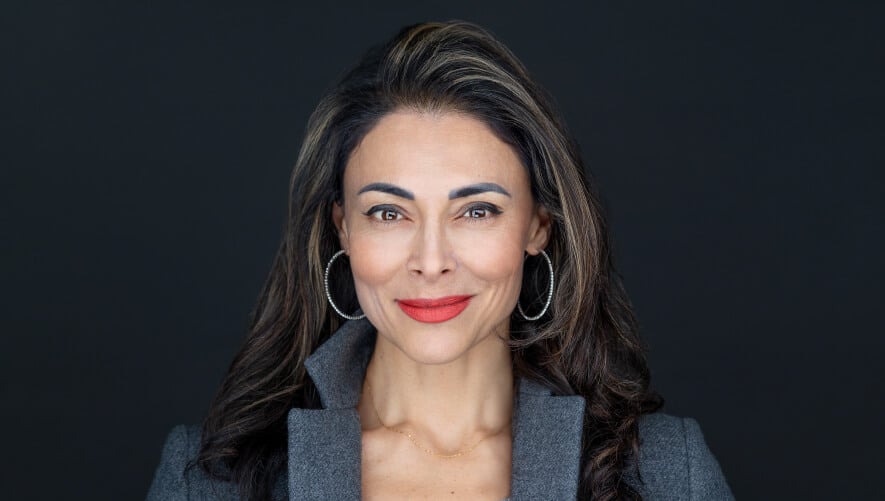
Author, self-described techno-functional executive, and GSX 2025 keynote speaker Sol Rashidi remembers the original intention for AI from when she was part of the team helping develop IBM’s Watson.
“In 2011, the intention of commercializing artificial intelligence was really focused on the four Ds,” Rashidi says in an interview with Security Management for the GSX Daily. The four Ds were what the team planned for their AI to tackle: saving humans from the dull (mundane or repetitive tasks), the dangerous (for example, dealing with hazards in chemical or manufacturing supply chains), the difficult (such as complex data processing tasks), and the dirty (like having robotics handle tasks that are in heavily polluted areas).
“The goal was to commercialize artificial intelligence to handle this, and we had great aspirations,” Rasidi says.
But today’s goals for AI are fundamentally different, according to Rashidi. She’s come across an uncomfortable sentiment, hearing CEOs of unnamed startups say that their goal isn’t to complement a human workforce with AI, but to use AI to replace humans in the workplace.
“It’s jaw-dropping to even think that people would be advocates of that,” she says. It’s a call to arms for anyone in the workforce to evolve.
For Rashidi, who consults organizations on AI, much of her efforts focus on teaching about common sense approaches when relying on technology. Although AI puts incredible processing power at users’ fingertips, the tools could undercut some critical thinking skills, especially if users accept the AI’s answers at face value instead of doing extra legwork to vet the algorithm’s responses.
“Our roles always evolve with new technologies and new capabilities. …But the goal was always to outsource critical tasks, not critical thinking. It was supposed to amplify you, not deteriorate your ability to think independently, think critically, think deeply,” Rashidi says.
Another point of vulnerability with AI is its access to sensitive data. When it comes to data security, organizations need to protect against both bad actors and AI platforms gaining sensitive information of individuals and organizations, such as medical records, credit card information, or other personal or proprietary information. AI’s access to such data calls for proactive security, education, and literacy, Rashidi says, so that organizations can develop and implement buffers against data leaks.
While these concerns may traditionally fall under the umbrella of a CISO, Rashidi notes that security is becoming less siloed, and data security will be impacted by threats outside of the digital world.
Our roles always evolve with new technologies and new capabilities. …But the goal was always to outsource critical tasks, not critical thinking.
“I think that in terms of security, you’ve got to be able to look at data at rest, data in transit, prompt provenance, prompt security, incident management response, AI-based classification, and data observability,” she says. Catching any threats or attacks against the data in real time requires multiple experts. While a CISO may understand the risks posed against an organization’s user data, a CSO will have better insights into the physical components of an attack, such as social engineering, access control, and holistic risk management.
In fact, Rashidi sees that security’s role in organizations has shifted and is no longer a “back-end function,” she says, pulling a phrase from her time as a coder early in her career. Instead of providing services in the background that other employees likely never see or notice, security teams have become “the architects of the future,” Rashidi says. “They’re front-end functions because the protection of the information and data—confidential, sensitive, toxic, whatever it may be—securing that and re-fencing it is very important.”
A significant aspect in these protection efforts is how a team relies on AI products. Here’s where Rashidi stresses the need for security to determine and promote clear rules, models, and security measures in how an organization governs its AI use, protects its data, and whether or not to even use AI at all. At the very least, having these elements established means that when a new product, especially one leveraging AI, is introduced and deployed, it would take weeks—not months—to determine how the new product would fit into the organization’s environment.
While seemingly arduous upfront, the decisions security teams and their leaders make often have lasting positive impacts that become visible in the near future.
Sol Rashidi will keynote at GSX 2025 on Tuesday, 30 September. Her remarks, “The AI-Powered Security Paradigm,” during the general session sponsored by Allied Universal, will be open to all-access pass attendees.
Sara Mosqueda is associate editor for Security Management and the editor-in-chief of the GSX Daily, which is published by Security Management. Connect with her at [email protected] or on LinkedIn.