The Need for Security Risk Management at Live Events
Live events are increasingly becoming a large component of modern society. For many, these occasions offer rewarding professional, financial, cultural, and social connections. However, there are always security risks when large groups of individuals congregate together for a common purpose. In fact, event organizers and security practitioners need to be able to identify, analyze, and respond to a wide spectrum of threats at live events.
There are four distinct categories that apply to live events, each with its own unique set of challenges and security risks.
Firstly, professional events encompass occasions usually connected to business interests, such as conferences, trade shows, and business conventions. One example of a security incident in this setting occurred in May 2023, when security personnel shielded and protected the CEO of Shell while climate activists tried to storm the executive stage at the company’s annual general meeting in London, England.
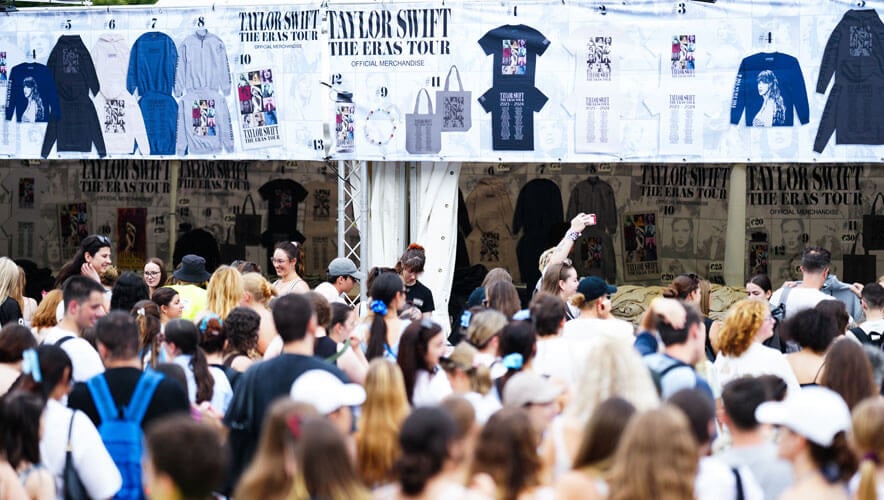
The second type of events involve entertainment interests, like sporting competitions, music festivals, and fan expos. While these events may be focused on fun and entertainment, that doesn’t make it less of a target—such as in August 2024, when three male teenagers, inspired by the Islamic State, were arrested for their involvement in a terrorist plot to kill attendees at a Taylor Swift concert in Austria.
Social events are the third category, consisting of celebrations highlighting family, ethnicity, or cultural origin. A recent hostile vehicle attack in Vancouver, Canada, at a Filipino cultural festival in April 2025 that resulted in 11 deaths is an example of the risks that these events can face.
Lastly, common cause events—which include organized rallies, summits, and religious gatherings—are where people congregate together for a shared purpose and ideology. Like the other categories, these events also face risks, including those posed by fellow participants. More than 30 pilgrims died in January 2025 due to stampeding and overcrowding on the riverbanks of India’s Kumbh Mela religious festival.
These examples illustrate how live events around the world are vulnerable to disruption, and attendees can be exposed to physical risks from a myriad of threats that event industry stakeholders must consider, including threats unrelated to individuals’ actions.
Technological hazards are failures of infrastructure and innovation, which can negatively impact crowded spaces where people gather for events. In April 2025, the roof collapse at a nightclub in the Dominican Republic killed more than 200 people and injured hundreds more.
Environmental hazards such as flooding, forest fires, and extreme weather also endanger events. With increased weather fluctuations due to climate change, many outdoor events are experiencing increased cancellations.
When these types of hazards materialize, security personnel associated with the event need to have the necessary preparedness and response training to effectively manage such emergencies. Event organizers and security practitioners can take effective steps to mitigate these risks and ensure rapid response and recovery when they happen.
Physical Security Measures
No matter the type of event or whether it takes place indoors or outdoors, protecting the integrity of a venue space is paramount in mitigating the threats to the security of people and property. It is helpful to view the perimeter of the space as concentric rings of protection, where physical, technical, and administrative controls are used to protect event assets.
Starting from the outermost layer, consideration and protection of public walkways and roadways that event attendees traverse to arrive at the venue is required. Coordination between law enforcement, event organizers, and other stakeholders like commercial landlords is critical to develop holistic protective concepts given that vehicle attacks are the most likely type of incident to occur in this zone. Solutions such as horizontal deflections (e.g., chicanes or sharp curves in the road), vertical deflections (e.g., speed bumps), or barriers like bollards are just some examples of physical measures to mitigate the possibility of vehicle ramming.
Another threat to consider is that of an active attacker wielding firearms or bladed weapons, which requires an effective and sometimes lethal response from law enforcement. There is also an aerial perspective to consider. Hostile drones are increasingly becoming an emerging threat that government agencies must be able to proactively address.
Event types also make a difference. At a free, un-ticketed event like a parade, attendees can easily ingress and circulate throughout the event space. This makes the ability to keep out weapons almost impossible. For events requiring attendees to pay for admission or register prior to the event, access control will need to be funneled at a demarcated perimeter envelop. This will allow organizers to uniquely validate attendees and authorize their ingress into the event space. Based on the risk assessment of an event, access control measures provide security with an opportunity to screen and search individuals during the admission process.
Access to interior zones designated as controlled areas (for example, back of house operations) and restricted areas (such as a green room or backstage) will need to be effectively managed with the use of a robust credentialing system and uniformed and trained security personnel.
For high-value individuals, such as executives or celebrity talent, close protection personnel will need to provide immediate security support for these individuals as they traverse through the different zones and their varying levels of control within an event.
Crowd Management Techniques
Crowd management theory is one of the least understood aspects of event management. It involves understanding how to design and plan spaces to limit bottlenecks, congestion, and high density of attendees. Crowd management is essentially a combination of the psychological behaviors of people in congested spaces along with the physics of compressed bodies against one another. Event managers need to learn and apply the best practices in queueing theory and controlling flow rates of crowds during ingress procedures, circulation, and egress stages to effectively control the density of their spaces to avoid both physical and psychological injuries.
Emergency Response Capabilities
Despite all the best planning, bad things still happen. Therefore, it is necessary for event stakeholders to be prepared to react decisively during emergencies to safeguard lives and properties. Conducting a proper risk assessment before the event identifies probable risks, which will inform event managers about which preparation and training investments are needed to address these risks. For organizations that have the time and resources, conducting tabletop exercises or even full-scale simulation exercises can ensure that event staff have the knowledge and competencies to execute their responsibilities during a real-life emergency.
Dr. Sean Spence is a senior security consultant with Aon, a global firm specializing in commercial risk management consulting. Spence consults with clients in both the public and private sectors on critical infrastructure protection and counterterrorism security solutions, as well as with those in the hospitality industry across all spectrums of live events. He is affiliated with several academic institutions and teaches and develops courses related to security risk management. Spence is the author of a forthcoming textbook, Security Risk Management for Live Events, published by Taylor & Francis.