Stadium Screening Runs on Partnerships, People, and Technology
Five minutes into the match between Dutch soccer clubs Ajax and Gronigen, the November 2025 game at Johan Cruyff Arena took a drastic turn. Fans ignited fireworks and flares behind one of the goals, and a referee rushed players off the field to safety—postponing the match.
When officials attempted to restart the match 45 minutes later, fans once again set off fireworks. Referee Bas Nijhuis abandoned the game, which was ultimately rescheduled for a later day in a stadium without fans.
Ajax released a statement afterward calling the fans’ behavior “utterly outrageous” and saying that fireworks should not be at games, the BBC reported. The club confirmed to the BBC that part of the stadium where the fireworks were set off was searched by K9 teams earlier that day. It also pledged to review camera footage of the perpetrators, attempt to identify them, and then penalize them—including fines and bans from stadium entry for up to 60 months.
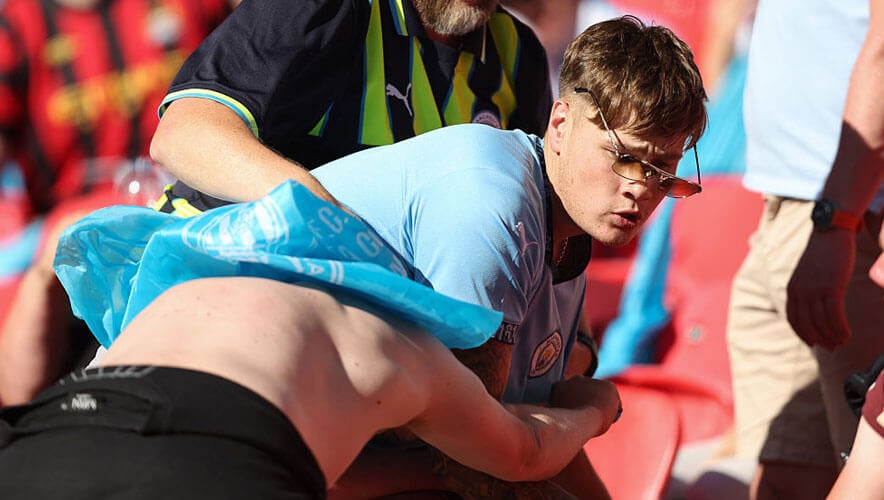
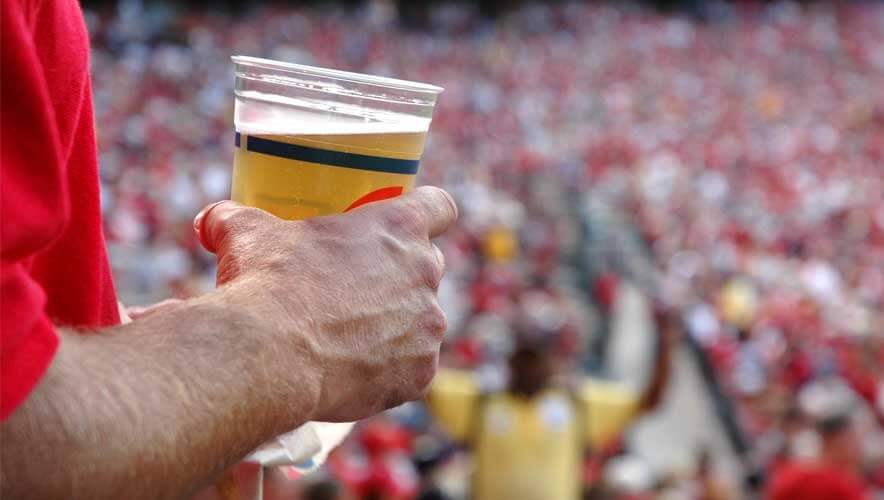
While sneaking in fireworks and pyrotechnics is a bit extreme, getting a prohibited object past the initial security screening is not. There are numerous instances of fans bringing in alcohol, drugs, and even sex toys past security screenings.
This means that the pressure is on for security teams to conduct thorough initial and secondary screenings to limit the chances of these items making their way into the stadium.
One security team that is up to the challenge is that of the Superdome—the iconic New Orleans, Louisiana, venue that can host more than 70,000 fans for New Orleans Saints football games. It has a robust security screening process in place, including pre-event screening, visual search, and full search to prevent patrons from accidentally or intentionally bringing in prohibited items that range from glitter and fireworks to projectiles and weapons.
“Our number one resource is our human capital—our manpower, our employees—because on Saints game day we surge to probably 3,000 employees at the Superdome,” says Joseph Frank, assistant chief of public safety at Caesars Superdome and Smoothie King Center. “That’s a lot of people to make sure were briefed correctly, that they’re screened, and, most importantly, that they provide a good game-day experience for the 70,000 patrons that come into the building.”
Screening Guidance
Effective security screening relies on three main components: trained personnel, appropriate equipment, and established process.
The U.S. Cybersecurity and Infrastructure Security Agency (CISA) released guidance in 2021 to assist public venue security—such as teams working at stadiums—with their screening measures to mitigate the risk of terror attacks and other acts of violence. CISA notes that everyone who enters the stadium during event preparations and the event itself—including staff members, teams, and performers—should be required to complete the screening process before entry.
The guidance lays out recommendations for practices security screening personnel should be familiar with before reporting for duty, equipment and technology that can be used to assist screeners, and best practices for creating screening processes.
CISA does not prescribe specific equipment that venue management should have in place for the security screening process, but it does recommend some broad types of technology to use: walk-through metal detectors (WTMDs), X-ray scanners, and handheld metal detectors.
CISA recommends considering WTMDs that have multizone capabilities, meaning the device can transmit and receive more than one indicator to assist screeners in assessing where exactly an object of interest might be, such as a person’s left or right arm.
Venues should also consider whether they want their WTMDs to screen for ferrous and nonferrous metals. Ferrous metals are rich in iron and have magnetic properties—like alloy steel, carbon steel, and cast iron. Nonferrous metals, such as copper and aluminum, have an iron content of less than 50 percent, are not magnetic, and tend to be lighter.
Some WTMDs screen only for ferrous metals because most weapons and threat objects contain them, says Steve Novakovich, CEO of Garrett Metal Detectors.
“But you find different alloys in small handguns, so I believe it’s important to be able to detect both ferrous and nonferrous items,” he adds.
One of the perceived benefits of using a WTMD that does not detect nonferrous items is that it speeds up the security screening process by not alerting on common items—such as car keys, watches, or cellphones. But Novakovich says that some WTMDs have software features that allow venues to turn off certain types of alerts—like for smartphones—while still providing alerts on nonferrrous metals.
“The detector still sees the cellphone because it’s metal, but we can suppress the alarm for that detection so you don’t have to divest your cellphone and you can walk through without having to stop and take it out of your pocket,” he adds.
Features like that are extremely popular for the event space since nearly everyone entering the facility will have a cellphone and high throughput is important, Novakovich says.
Being able to suppress or increase the alarm sensitivity for the WTMD also allows venues to adjust their security screening based on the threat level to their venue either generally or for a specific event. Whichever level the venue chooses for the WTMD, Novakovich adds that it’s extremely important to have appropriate secondary screening processes in place that take into account the multizone detection alerts of the WTMD.
He presents the scenario of a fan going through the WTMD with a cellphone, a metal water bottle, and a small firearm. The WTMD would alarm, and the screener would then be prompted to conduct a secondary screening. The fan would likely take the cellphone and water bottle out of his pockets, and the screener might accept that those innocuous items set off the WTMD alarm and allow the fan through.
“Now you’ve got an uncontrolled weapon in the venue. That’s a bad situation,” Novakovich says. “That’s where secondary screening can fail. The primary screening device saw something, but it didn’t tell you how many targets were there.”
Using screening equipment displays that show the locations of multiple alarms from the WTMD can help prevent this—such as showing an alert at the fan’s waist and ankle. CISA’s guidance also recommends conducting handheld metal detection screening of the fan’s entire body—outline, front, and back—and rescreen or pat down areas where an item has been removed, since there could be more than one reason for the alarm to go off.
For this process to work, screeners need to be trained on how to use the screening equipment and what to do if they find an illegal or prohibited item. Every time a new screener is hired, Novakovich says that individual should go through an onboarding process that includes training on how the equipment works and how to use it properly. This training is especially important, he adds, because screeners and frontline security personnel have a high turnover rate.
CISA also provides guidance on how to generally use screening equipment and best practices for handling a situation where a fan attempts to bring an illegal item into the venue, like a firearm. Screeners would notify a security supervisor to escort the fan and his or her possessions to a separate screening area to further inspect them. The supervisor can then alert law enforcement to take appropriate action.
How do these policies and technologies get put into practice at different event types? Let’s revisit New Orleans to find out.
Screening in Action
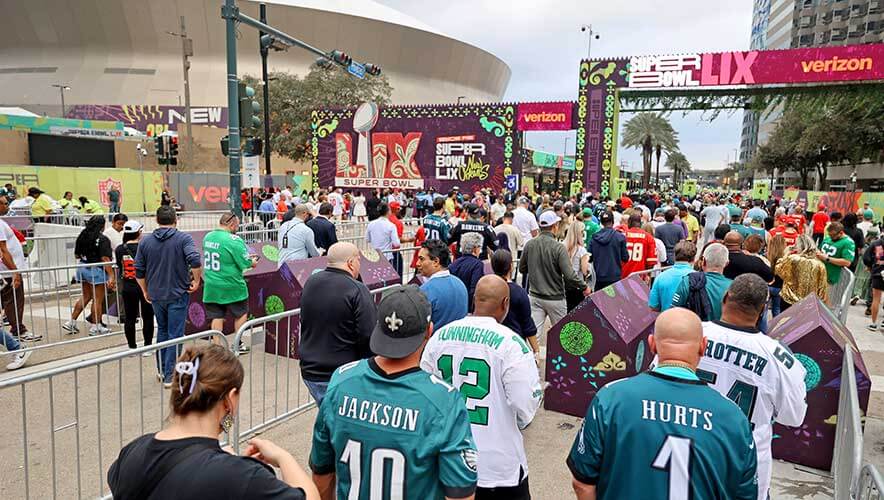
Along with 10 regular season NFL games, the Superdome also regularly hosts the Sugar Bowl, the occasional Super Bowl, Professional Bull Riding, Monster Truck rallies, and concerts throughout the year—including Taylor Swift’s huge Eras Tour of 2023‒2024 for three nights. Effectively screening all of the fans and personnel is a complex but critical process.
It starts with understanding the threat level for certain events and the time of year. Frank says his team assesses this through its own work and in partnership with the FBI, the Louisiana State Police, and the New Orleans Police Department (NOPD). He is in daily contact with representatives from each of these agencies and has regular meetings to review threat intelligence, the weather, and maintenance projects.
“It’s a very good, fluid working relationship because we cannot do our job without our federal, state, and local partners—not just from an intelligence perspective but also from a manpower perspective,” Frank says.
On NFL game days for the New Orleans Saints, there will be 150 to 200 armed, uniformed NOPD officers at the complex. This presence includes officers for traffic enforcement, internal foot patrols, exterior foot patrols, an interior SWAT team, and a K9 team.
“Basically, every resource that NOPD has, they’re going to be with us on campus on game day to help make sure it’s a safe environment for our fans and our team while they’re there,” Frank says.
In the lead-up to special events like concert tours, Frank says he’ll receive a security rider from the tour’s management that enumerates expectations for public safety, law enforcement, and venue management, as well as show-stop protocols. For smaller events, the rider is usually received about two weeks out; for large events like Swift’s tour or a Paul McCartney concert, the rider will come in several months in advance. And for Saints games and other NFL events, the NFL has a specific list of security practices that the Superdome must follow.
Frank will often reach out to industry peers at other stadiums that have recently hosted the same event—such as the security director at the State Farm Arena in Atlanta, Georgia—about what security measures worked well for them to meet the rider expectations.
The expectations laid out in those documents—combined with the threat level information and experiences at other stadiums—help the Superdome team determine what types of security measures are needed.
Once those measures are decided, it’s time to get ready for game day and the two-hour window that security screeners will have to process fans between when the stadium doors open and kickoff. Frank starts his day at the stadium at 8:00 a.m. with a meeting with the security screening supervisors to review the threat level for the day, messages from law enforcement partners, screening protocols, drone mitigation measures, and the anticipated weather. New Orleans can be extremely hot and humid, so portions of the meeting will go over the hydration plan for employees, the foul weather plan, and where paramedics will be stationed.
Many fans travel to the stadium complex via Amtrak—which has a station nearby—so Frank also reviews what time trains are expected to stop and when to expect influxes of fans for screening.
After concluding the meeting, Frank then meets with the law enforcement officers who are supporting the Superdome team. He briefs them on the quick reactionary force in place at the event, as well as forward observers (personnel who spot threats from a high view point) stationed in the high-rise buildings nearby. This discussion typically ends around 9:00 a.m., which is around the time some fans begin arriving in the Champions Square area, to move toward the stadium entrance that opens at 10:00 a.m.
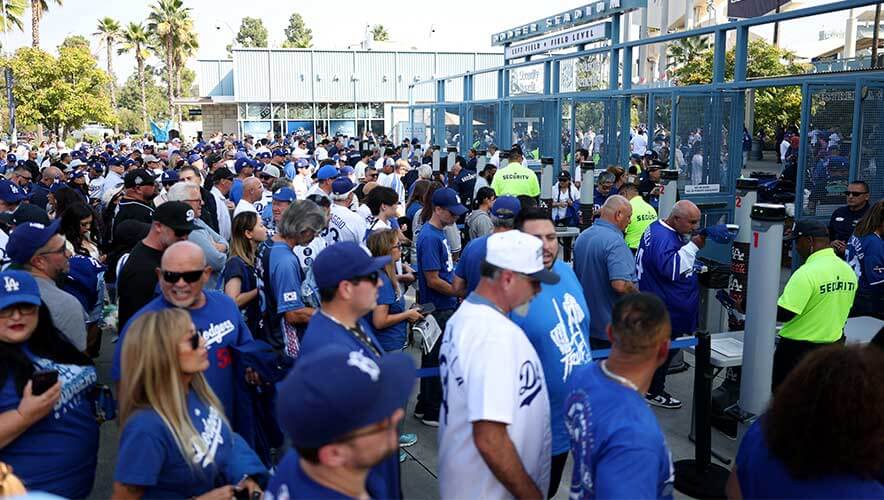
Nearly 40,000 fans will use this entrance, so Frank says it is critical to be vigilant. Security personnel are stationed in the square to scan the crowd and look for prohibited items, such as large bags or odd bulges indicating a concealed weapon. Fans carrying those items will be intercepted and escorted to an alternative screening area where highly trained officers can conduct a screening.
Other fans will go through the main screening process, which uses an open-gate solution, with the sensitivity adjusted so that fans do not need to divest certain objects before going through the metal detector.
“Meaning you can keep your belt on, you can have change in your pocket, you can have your car keys in your pocket, and you can have your cellphone in your pocket,” Frank says.
Taking this approach allows the Superdome to efficiently process more people while still detecting prohibited items, like firearms and knives. Frank adds that for certain events, such as concerts or events where there is a higher threat level, the Superdome will use a more traditional WTMD because it is the industry standard.
Continuous Improvement
One way Frank assesses whether these security screening measures are working is to have 10 plainclothes Transportation Security Administration (TSA) inspectors go through the checkpoints during an event and audit their experience. Frank says that this has provided him with constructive criticism after game days regarding what is working well and what needs improvement.
Frank developed this collaboration after his peer at the Denver Broncos’ stadium mentioned a similar effort with the TSA at the NFL’s 2025 spring security conference. When he returned to New Orleans, Frank connected with his local TSA representative, shared details about the Denver experience, and suggested adopting something similar.
The partnership was especially beneficial at the beginning of the 2025‒2026 NFL season, since TSA representatives came out to the Superdome to give an educational presentation to security screening supervisors about best practices.
“When it comes to consistency and SOPs, [TSA] is really good at what they do because they’re in all the airports,” Frank says. “It was great to have them come in and train all of us on what they look for.”
After the presentation, the TSA representatives also did a Q&A session with the supervisors and a site survey of the facility on a nonevent day. Frank says that provided him with valuable feedback on how the screening area was positioned and where more space might be needed for equipment or secondary screening.
“That site survey that TSA did with us to look at these locations before an actual game day was huge because, come game day, [the supervisors] knew where they were going to stand, they knew what our tables were going to look like, they knew how many metal detectors would be set up,” Frank says.
All of this plays into a philosophy that Frank shares with his colleagues: Communication and knowledge sharing make events safer and more enjoyable for fans.
“All these stadium directors around the country really put in a lot of time and effort—and man-hours—to make sure when game does happen, that there are no big hiccups. That we have contingencies in place, and we can roll with the punches if something happens,” Frank says.
Megan Gates is senior editor of Security Management. Connect with her at [email protected] or on LinkedIn.