What Does AI for Critical Infrastructures?
What does AI for critical infrastructures?
In times of evolving threat scenarios for critical infrastructures, protecting physical assets such as power plants, data centers, governmental buildings such as embassies, and even hospitals remain paramount. These critical infrastructures face risks ranging from vandalism and theft to widespread destruction, often caused by concealed objects such as weapons or electronic devices. Conventional security measures such as metal detectors and sniffer dogs have their limitations and are also invasive, inefficient, and expensive. However, advances in AI-powered millimeter-wave scanning technology are set to change this situation.
A technological leap
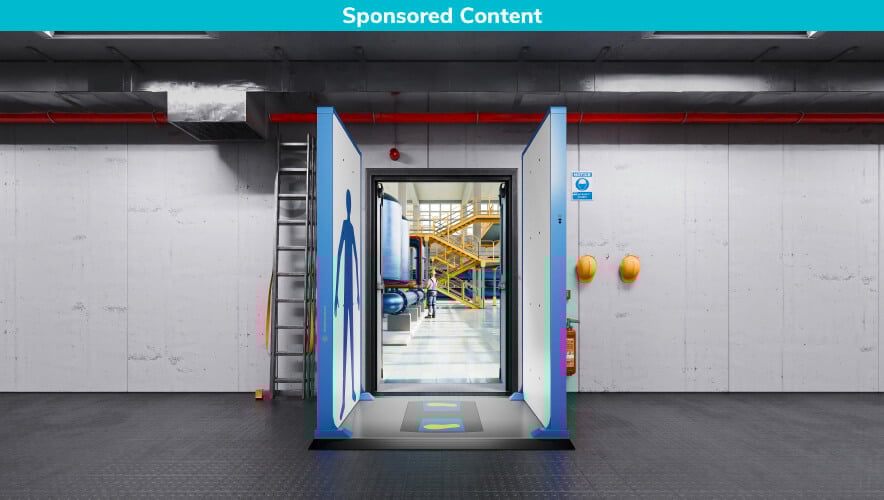
The R&S QPS (Quick Personnel Scanner) from Rohde & Schwarz uses millimeter-wave technology combined with AI to detect hidden objects with high accuracy and minimal false alarms. Originally used in airports for passenger screening, the latest version, the QPS Walk, now enables seamless millimeter-wave walk-through scanning. It is designed for high-traffic areas such as shopping malls, sports and entertainment venues, and corporate buildings.
The scanners emit electromagnetic waves — thousands of times less intense than mobile phone signals — that reflect off the skin without being absorbed. AI algorithms analyze these reflections to identify anomalies, staff only need to intervene if an unusual result is flagged. Unlike imaging systems, the technology ensures privacy by displaying results on an avatar, highlighting suspicious areas without revealing personal details.
Protecting critical infrastructure
Now, the development team has moved the design another step forward by introducing a gating system capable of protecting entrances to critical infrastructure and other sensitive buildings. If the scanner detects an unusual result, automated doors guide the subject safely to an area where security staff can perform further checks.
The system detects a wide range of materials, including metals, ceramics, plastics, and even organic substances such as liquids or powders. This versatility strengthens defenses against both simple and complex threats. For example, the technology can identify hidden memory cards, electronic components, and improvised explosive devices (IEDs).
AI at the core
The scanner’s AI models are trained on vast datasets, learning to differentiate between potential threats and benign objects like clothing zippers. Regular software updates ensure the system adapts to emerging risks and changing detection requirements. Minimizing the resulting false alarms is just as important as maximizing threat detection to ensure personnel remain alert and are not fatigued by unnecessary manual searches.
Future prospects
Recognizing the broader potential of this technology, Rohde & Schwarz has joined a consortium to establish the Human Centered Security Lab in Berlin. Opened in 2024, the lab allows organizations to test the R&S QPS alongside other security tools, such as government grade access identity checks based on biometric systems, in realistic scenarios. This initiative underscores the increasing importance of physical security as a key element in protecting critical infrastructure.
In a world where threats are increasingly complex, the integration of AI-powered scanning represents a significant advancement. By balancing efficiency, privacy, and safety, technologies like QPS are poised to redefine the standards for safeguarding physical spaces.