Fear, Conflict, and Misinformation Complicate Ebola Outbreak Treatment in DRC
The Democratic Republic of the Congo (DRC) has grappled with waves of armed groups for decades, especially in its eastern region. Regular clashes and waves of violence decimated state services in rural areas and pushed people into crowded camps to escape the fighting—which has serious ramifications for efforts to treat an ongoing Ebola outbreak.
“Eastern DRC now faces a catastrophic collision of disease and conflict with the Ebola outbreak in Ituri province outpacing the response,” said World Health Organization (WHO) Director-General Tedros Adhanom Ghebreyesus in a post on X today. “The Ebola Bundibugyo virus has no approved vaccine nor treatment. Stopping this Ebola transmission depends entirely on humanitarian access. Yet ongoing clashes are driving mass displacement, pushing exposed contacts into overcrowded camps, and severing critical containment corridors. Frontline workers are risking everything, while attacks on health facilities make tracking cases and their contacts nearly impossible.
“We cannot build community trust or isolate the sick while bombs are falling,” he added.
The Ebola Outbreak Status
The WHO confirmed an Ebola outbreak eariler in May in DRC and neighboring Uganda, declaring it a public health emergency of international concern on 17 May. The risk for DRC is “very high” and “high” in Uganda, the WHO assessed.
The outbreak has already caused a suspected 220 deaths and 900 cases in DRC, and seven cases in Uganda.
Ebola spreads through contact with the bodily fluids of an infected sick or dead person. People are contagious when they begin showing symptoms of the disease, including aches, diarrhea, fatigue, fever, pains, unexplained bleeding, and vomiting, according to the U.S. Centers for Disease Control and Prevention (CDC). The virus is not airborne. Symptoms can emerge anywhere from two to 21 days after contact with an infected person, but on average, symptoms begin eight to 10 days after exposure.
Contact-tracing for people who may have been exposed to the virus is moving slowly, hampered by funding cuts, the U.S. withdrawal from the WHO, and the isolation of the Ituri province where most cases are located, Reuters reported. The area is wracked with conflict and has poor health infrastructure.
As of last week, only 7 percent of the 1,261 people identified as contacts of suspected Ebola patients had been found and followed up with, according to documents from a virtual coordination meeting.
This specific Ebola strain—Bundibugyo—is also part of the problem. The outbreak took weeks to detect because tests used in the outbreak zone were designed for the more common Zaire strain. Medical supplies have been dispatched to help fight the outbreak, but the deliveries come long after they were first needed.
During the two previous Ebola disease outbreaks caused by the Bundibugyo strain, the estimated case fatality rate ranged between 25 and 40 percent, according to Doctors Without Borders.
Backlash in DRC
The Ebola outbreak is causing more conflict in DRC, sparking tensions between patients, families, healthcare providers, and government officials.
Preventing the spread of Ebola requires forgoing certain traditional funeral rites in DRC. Traditional funerals are multiday affairs when relatives wash the deceased person’s body and might sleep beside the corpse. Bodies of Ebola victims are highly infectious after death, though, and unsafe burials are a leading driver of transmission.
In an official order on 22 May, Ituri’s provincial government said burials must now be conducted only by specialized teams. It prohibited the transport of dead bodies by nonmedical vehicles, Reuters reported.
But disinformation and disbelief are sparking more conflict in the region.
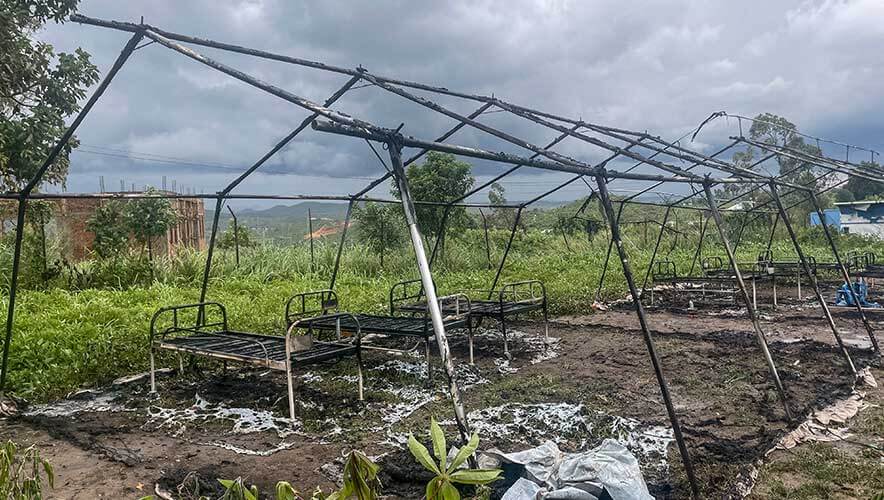
Last week, a group of people attacked a hospital in Rwampara to forcibly take back the body of their friend who had died from Ebola. In an attack on Mongbwalu General Hospital, assailants demanded the return of their family members’ bodies. Eighteen patients with suspected Ebola cases ran away from Mongbwalu General after a group of people set fire to a Doctors Without Borders tent set up for suspected and confirmed Ebola cases. Those 18 people are now unaccounted for.
Disinformation and distrust are making outbreak treatment more complicated. Funding cuts and aid changes have fueled confusion about the role of the West—sparking skepticism about the influx of money allocated to treat Ebola. Some believe that nonprofit workers brought the disease into the area to get more funding, and others say the outbreak has been fabricated to frighten people and gain access to key minerals, including gold from the mines around Ituri, The Washington Post reported.
DRC’s reserves of metals and rare earth minerals have incentivized external actors and militant groups to get more involved in the Congo, fueling skirmishes and territorial clashes to access and sell resources, according to the Council for Foreign Relations.
Superstition and misinformation around Ebola—as well as serious stigma and social isolation for those who contract the virus—has led some people to refuse testing or treatment. People have also attacked aid and healthcare workers, pelting them with stones, NPR reported.
Travel Restrictions
Nations worldwide are taking steps to mitigate the risk of Ebola entering their borders.
The United States is preparing to send U.S. citizens exposed to the Ebola virus to Kenya for observation and treatment. This marks a major change in U.S. policy, which traditionally allowed U.S. citizens to be transported back into the country to be treated in specialized medical units.
The United States has also banned green card holders who have recently been in Ebola-affected areas (DRC, Uganda, and South Sudan—which has not had any cases so far) from reentering the United States. International flights to the United States carrying passengers who have recently traveled through DRC, Uganda, or South Sudan must land at Washington Dulles International Airport, Hartsfield-Jackson Atlanta International Airport, or George Bush Intercontinental Airport in Houston for enhanced screening and CDC public health resources, CBS News reported.
DRC’s eastern neighbor Rwanda said it will deny entry to all foreign nationals who had traveled through or to DRC in the last 30 days. It's also requiring quarantines for Rwandan nationals or residents who had been in Congo during that period.
The Bahamas and Canada announced yesterday that they will temporarily ban residents from DRC, Uganda, and South Sudan from entering. Citizens or permanent residents in Canada or the Bahamas could face quarantines and enhanced health screenings.
These travel restrictions will likely complicate Congolese travel to see World Cup matches in North America starting next month. Despite demands from the United States that the Congolese World Cup delegation isolate for 21 days before traveling to the States or risk being denied entry, a team spokesperson said that there was no change to the team’s schedule. The schedule includes two friendly training matches against Denmark and Chile—both in Europe—in the next two weeks.
The entire squad of players is based outside DRC—mostly in Europe—although a few team officials arrived at the training camp in Belgium from the DRC earlier this week, Al Jazeera reported. The team had planned a three-day trip to Kinshasa, DRC, next week, but the trip was canceled.