10 Percent of TSA Agents Call Off Work During Partial Shutdown
U.S. Transportation Security Administration (TSA) officers have had a rough few months when it comes to paychecks. A government funding impasse for the U.S. Department of Homeland Security (DHS) means that around 50,000 TSA airport security officers have been working without pay for the past month. As a result, hundreds of TSA employees have quit, and 10 percent did not report for work on 16 March.
The absentee rate was much higher at some major airports, including 30 percent at New York’s JFK, 35 percent at Houston Hobby, 37 percent in Atlanta, and 39 percent in New Orleans, according to numbers from DHS. The highest single-day call-out rate was on 14 March in Houston, with 55 percent of TSA officers absent. Typically, less than 2 percent of TSA workers call in sick or do not report to work, Reuters reported.
If the partial government shutdown continues much longer and TSA absentee rates keep climbing, some small U.S. airports may need to close, said Adam Stahl, TSA acting deputy administrator, during a Fox News appearance.
Stahl said that the TSA had exhausted any sources of available workers and resources, and that many officers are facing financial trouble just getting to work. Some TSA workers are living paycheck-to-paycheck, sleeping in their cars, or having blood drawn to cover their expenses, he said.
Government employees will receive full back-pay after the shutdown ends, but they could face a long wait.
Funding for DHS expired on 14 February amid a fight in Congress over immigration enforcement policies and other contentious issues. So far, lawmakers have failed to find a compromise.
In October and November 2025, a 43-day government shutdown led to widespread flight disruptions. After such a long time without pay, 1,100 TSA officers left the agency—a 25 percent increase from normal separations in the same period in 2024, according to an oversight hearing statement from senior TSA official Ha Nguyen McNeill in February before the shutdown started.
“During the recent 43-day shutdown, the TSA frontline workforce valiantly reported to work and kept our operations running smoothly, ensuring millions of passengers arrived at their destinations safely and securely,” McNeill said. “At the same time, they all felt the financial strain and stress of not knowing when paychecks were coming. Many in our workforce were subject to late fees and penalties for missed bill payments, eviction notices, loss of long-term childcare arrangements, and more. Some are just now recovering from the financial impact of the 43-day shutdown, while many are still reeling from it. We cannot put them through another such experience.”
So far during this shutdown, 366 TSA officers have quit their jobs.
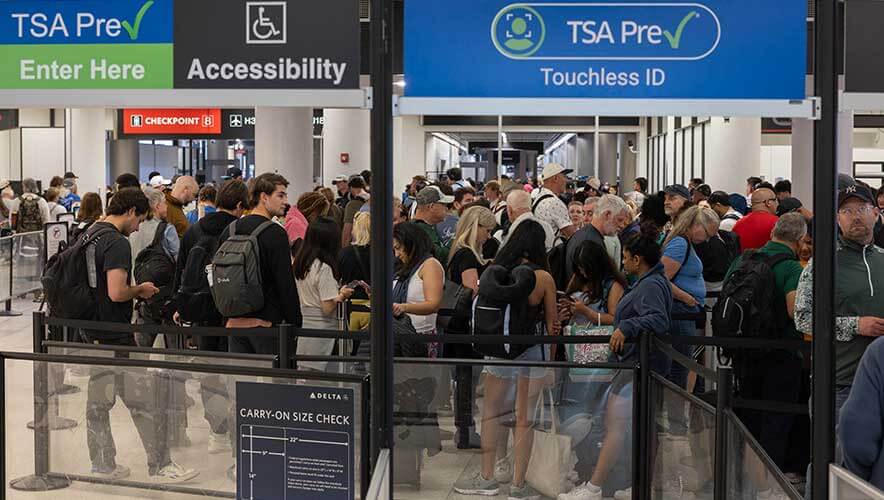
Depending on the airport and time, travelers have reported waiting in hours-long lines. At Hartsfield-Jackson Atlanta Airport, wait times surpassed 75 minutes on 16 March, and in Austin, Texas, airport officials urged travelers to arrive at least two and a half hours before their scheduled departure to avoid missing flights due to long lines, The New York Times reported.
Airlines, which expect a record-breaking spring break season with 171 million anticipated passengers, have criticized the impasse, and other industry leaders have noted concern about the potential effects on their operations, Reuters reported.
“If the shutdown remains unresolved, expect operational friction rather than immediate shutdown of commerce,” said a 12 March policy alert from The Conference Board. “Businesses will need to evaluate and prepare for incremental slowdowns across aviation, cargo, and possibly border systems. Contingency planning for disaster response gaps will become more important as will anticipating unpredictability in regulatory coordination across Federal agencies. The economic risk is less about immediate paralysis and more about cumulative strain—especially if an external shock intersects with already constrained DHS capacity.”