Geopolitcal and Economic Tensions Rachet Up as Iranian Protests Continue
Protests in Iran quickly spread from shopkeepers to students to the public at large during the past two weeks, driven by anger over economic issues, political repression, social unrest, and overall complaints about the nation’s clerical leadership.
What Started the Protests?
Protests broke out on 28 December 2025 because of soaring prices and plummeting value for Iran’s currency, the rial, which was trading at more than 1.4 million to $1 today. In January 2025, it was trading at around 700,000 rial to $1. The failing currency triggered significant inflation, with food prices an average of 72 percent higher than last year and annual inflation at 40 percent, Al Jazeera reported.
In December, Iran also introduced a new tier to its national fuel subsidy system, raising the price of fuel for most households. Officials will reassess fuel prices every three months—which could potentially lead to more price hikes.
Initially, shopkeepers in Tehran’s Grand Bazaar shuttered their stores and started demonstrating. Their protest spread swiftly, and chants changed from focusing on the ailing economy to general opposition to clerical leadership in Iran. Demonstrations in Iran have spread to 186 cities and all 31 provinces.
How Has the Government Responded?
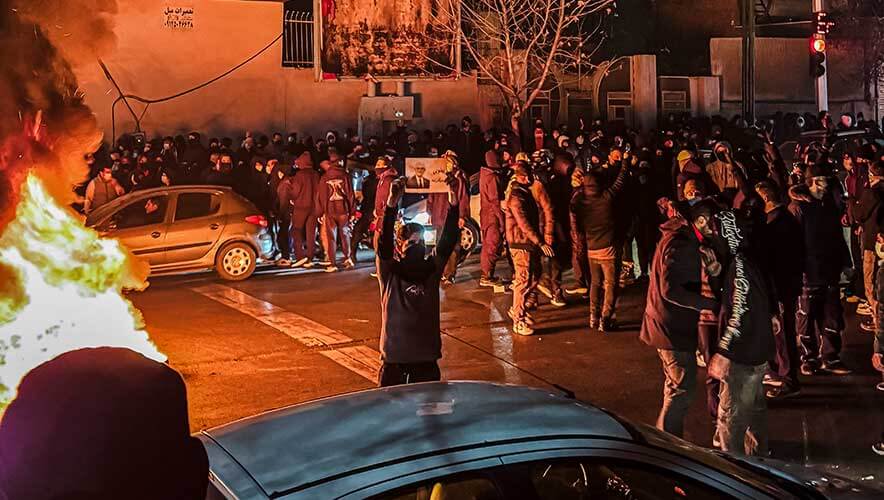
Iranian leaders have threatened swift and harsh punishment for protesters. Security forces moved in to break up some gatherings, sparking violent conflict between demonstrators and state security.
Protests have become increasingly violent. Videos from demonstrations show protesters using fireworks and pointing green lasers at security forces, setting up barricades, throwing stones, and lighting fires. Security forces reportedly responded with gunfire and tear gas.
Iranian authorities have blamed the unrest on “rioters” who are being encouraged by foreign powers to disrupt the country. State television presenters are increasingly referring to dead demonstrators as “terrorists,” according to the Associated Press (AP). Supreme Leader Ayatollah Ali Khamenei signaled that a clampdown is imminent, warning that protesters could face severe legal charges, including ones that could involve the death penalty.
More than 100 security personnel have been killed in the conflicts, according to state media. Opposition activists say the overall death toll is much higher, including hundreds of protesters, the BBC reported. At least 10,600 people have been arrested, according to the Human Rights Activist News Agency.
The state of the protests and violence has been hard for news and government agencies to independently verify because there is an Internet blackout in Iran. The only way to reliably connect to agencies outside Iran is through Starlink satellite connection, but researchers warn that such connections could be traced by government forces, according to the BBC. Early reports today claim that security forces are raiding homes that might contain satellite equipment, CNN reported. It has not been confirmed that the Iranian government ordered the blackout, but it seems likely, analysts say.
State media reported that the government would begin paying 80 million Iranians a monthly allowance equivalent to $7 to ease economic stressors. The new payments are unlikely to be enough to appease Iranians’ broader discontent about their future, analysts told The New York Times.
Meanwhile, U.S. President Donald Trump has weighed in on the situation, threatening Iranian leaders with military action if protesters are killed by security forces.
Iran said today that it is keeping communications open with the United States, but Parliament Speaker Mohammad-Bagher Qalibaf warned Washington against a “miscalculation,” adding that if Iran is attacked, it will target occupied territories (meaning Israel) and U.S. bases and ships in retaliation, Reuters reported.
How Have Protests Affected Spaces Beyond Iran?
Protesters gathered in major cities elsewhere in the world in solidarity with ongoing demonstrations in Iran. This weekend, thousands of people in The Hague, Berlin, Chicago, Los Angeles, London, and other cities rallied to show support for the Iranian protesters. In London, a protester climbed onto the balcony of the Iranian embassy to tear down the Iranian flag, the BBC reported.
In Los Angeles, a peaceful protest was disrupted after a person drove a U-Haul truck toward hundreds of demonstrators. Police officers pulled the driver from the truck, and protesters surrounded the driver, attempting to strike him with objects and chasing him as police escorted him from the scene, according to an ABC7 news report. Demonstrators tore political messages from the truck as tensions escalated. One protester received minor injuries.
Los Angeles Mayor Karen Bass urged demonstrators to express themselves peacefully, saying, “Even though we’re in this highly charged environment, it's always important for Angelenos to remember that our protests have to be peaceful, regardless of how charged the issue is.”
Beyond demonstrations, the Iranian unrest has had some business operations ramifications so far. Airlines canceled some flights into Iran because of the demonstrations, and businesses have been unable to transfer funds into, around, or out of Iran because of the Internet outage.
What Comes Next?
What would it take for the Iranian regime to be overthrown? A lot, according to analysis from BBC security correspondent Frank Gardner.
“For the regime to be genuinely in severe danger of collapse it would take large and significant numbers of the security forces to change sides and join the protesters,” Gardner wrote. “That hasn’t happened yet.
“The Islamic Republic has one of the deepest, most pervasive, and most effective security apparati in the world. It has informers, eavesdroppers, online content monitors, and a whole army of Basij enforcers whose job it is to safeguard the regime and its repressive values,” Gardner continued.
“It has succeeded in crushing every protest movement so far—by killing and arresting large numbers of people, in many cases torturing them in jail and then releasing them, battered and traumatized, so they can warn others of what happens if you are caught.
“It is a policy of deterrence through fear,” he explained.
But that does not mean the protests are likely to fizzle out after government action. Dr. Sanam Vakil from London-based think tank Chatham House told the BBC that the protests became political so quickly because of deep-seated anger among a public that sees no prospects for the future other than more hardship caused by economic conditions, corruption, government mismanagement, and international sanctions.
“If there is more momentum and if more people come out, [the protests] will be more serious and, of course, there the government response becomes more violent,” she said.
The unrest could spur additional risk for businesses and travelers, depending on what happens next.
“For foreign businesses and investors, this environment significantly elevates political and operational risk, with increased potential for disruptions to commercial activity and currency volatility,” according to a report from Crisis24. “Travelers and expatriates face heightened risks stemming from civil unrest, sporadic violence, transportation disruptions, and the potential for sudden security restrictions or border closures, particularly if internal instability coincides with regional military escalation.”
Economic conditions within Iran will likely inform the next stages of the conflict, pushing government forces increasingly toward repression, which would deepen long-term instability.
“For businesses, this could translate into sudden supply chain interruptions, forced closures of offices or factories, difficulty accessing banking and currency markets, and heightened exposure to property damage or civil liability. Clients and investors may face delays in contracts, payments, and legal enforcement, while foreign travelers could encounter sudden transportation disruptions, curfews, restricted movement, or temporary closures of airports, ports, and hotels, particularly in urban centers where unrest is concentrated.”