Brazen Thieves Steal Priceless Jewels in Louvre Raid
In a lightning-fast heist, a four-person crew stole eight priceless, historical pieces of jewelry from the Louvre in Paris, France, before making off in broad daylight.
At around 9:30 a.m. on 19 October—only 30 minutes after the world’s largest museum had opened to the public that Sunday—the masked thieves used an electric ladder on a truck to climb up the outside of the building to access the Apollo Gallery. The trucks are a common sight in Paris, where they are used to move heavy furniture to upper levels of old houses through windows and balconies.
Two thieves used an angle grinder to cut open a window on a balcony, then entered and made for two display cases inside the museum that contained jewels owned by French royalty, including the imperial families of Napoleon and Napoleon III. Within 7 minutes, the thieves stole diadems, necklaces, earrings, and brooches before heading back down the ladder and escaping the scene on mopeds with two other members of their team.
Before fleeing the scene, the robbers tried to burn the basket of the motorized ladder that had carried them up to the window, but museum personnel disrupted that attempt. In their rush to flee, the thieves apparently dropped and left behind a crown worn by the Empress Eugénie, wife of Napoleon III. Eight other pieces of jewelry are missing, including those made up of more than 7,000 diamonds, as well as emeralds, pearls, and sapphires.
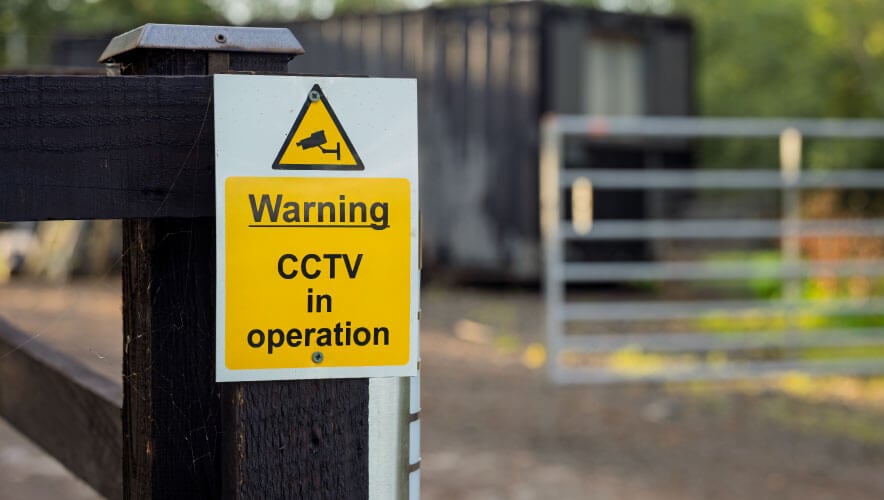
The museum’s security system worked during the robbery—alarms immediately sounded upon the robbers’ assault on the exterior windows. Five museum staff who were in the gallery or nearby followed protocol by immediately contacting security forces and protecting visitors, according to a statement from the French Ministry of Culture. The attackers appeared unarmed except for the power tools they used to access the gallery, which they reportedly used to threaten museum security staff. No one was injured in the attack.
The Louvre was evacuated after the theft and closed for the day. It remains closed to the public today as the investigation continues.
“This morning, the French people, for the most part, feel as though they have been robbed,” Gérald Darmanin, the country’s justice minister, told France Inter radio. “In the same way that when Notre-Dame burned, it was our church that was burning—even if you weren’t Catholic—such an incredible jewelry robbery at the Louvre looks bad.”
“We cannot completely secure all locations,” Darmanin added. “But what is certain is that we have failed.”
French media outlets reported that a preliminary assessment by the Court of Auditors said a third of the rooms in the wing of the Louvre where the robbery took place have no surveillance cameras. Louvre workers have recently complained that there are too many visitors (up to 30,000 a day) to manage with current staffing levels; they even went on strike in June to protest staff shortages that they said compromised security.
“The recent heist has once again underscored the critical importance of a layered approach to museum security,” says ASIS Cultural Property Community Steering Committee Chair Glenn Dowd, MBA, CPP, in a statement to Security Management. “This includes comprehensive perimeter surveillance, reinforced physical barriers, and the seamless integration of both interior and exterior technologies, all supported by a well-trained security team capable of detecting, reporting, and responding swiftly to threats.
“While the investigation is still in its early stages, much is already known about how this heist was carried out. The prior report of staffing shortages may be a contributing factor; however, it is important to clarify that security personnel were allegedly on-site during the incident and were directly threatened by the assailants. Additionally, initial assessments confirm that the alarm system functioned as designed.”
Dowd says that the level of planning and precision that the thieves exhibited strongly suggests they were part of a highly organized and well-resourced group.
“This was not a case of opportunistic crime but rather a calculated act by professionals with intimate knowledge of both the museum and the value of the collection items targeted,” Dowd explains.
“Museums with rare and priceless collections must constantly be thinking critically about the worst case scenarios and have periodic independent security assessments conducted. Reviewing case studies of previous security breaches allows museums to incorporate the lesson learned to enhance their operations,” he concludes.
Stolen treasures, a crown in the gutter - and serious questions for Louvre security https://t.co/tEQhDbVkvG
— BBC News (World) (@BBCWorld) October 19, 2025
Investigators are scrambling to track down the thieves and the jewels before France’s cultural property is further damaged. The jewelry is unlikely to be sold as is—unless the theft was specifically commissioned by a buyer—but it could be broken up, melted down, and sold off as precious metals and jewels, like a 3,000-year-old bracelet was earlier this year after it was stolen from Cairo’s Egyptian Museum. Even the jewels can be recut and resold.
Art conservators and museums recently warned that thieves are getting more brazen. In September, thieves stole raw gold worth about $700,000 from the National Museum of Natural History in Paris; they used a blow torch and a grinder. Thieves also stole two porcelain dishes and a vase worth approximately €9.5 million ($11 million) from the Adrien Doubouché museum in Limoges, The Guardian reported. They smashed a window to gain entry. Last November, armed robbers snatched jewels worth millions out of a piece of artwork at the Hiéron Museum in central France.
Jewelry, fine art, and antiquity sales are a frequent tool for money laundering, which could be why the thieves targeted these pieces in particular—they can be turned into cleaner cash, using the privacy of art sales and the use of third-party intermediaries to disguise transactions. Generally, it is easier to offload illicit jewels than stolen artwork, since jewelry is easier to break down into unrecognizable components.