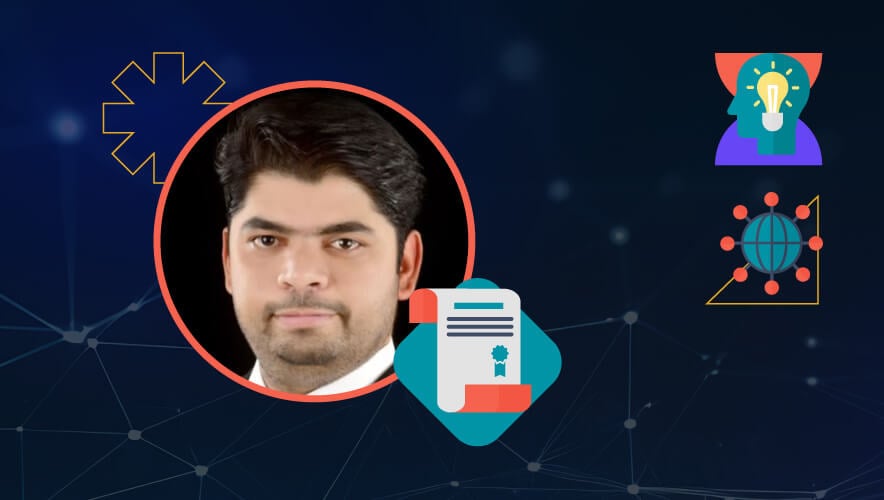
Certification Profile: Rahul Gopal, CPP, PCI, PSP
Entering the security profession through a commission in the Indian Army, Rahul Gopal, CPP, PCI, PSP, built a strong foundation in leadership, discipline, and complex risk management long before stepping into the corporate world. His early exposure to multidimensional security challenges—where physical threats, human behavior, and logistical realities converged—sparked a lasting interest in security as a structured and strategic profession.
After transitioning from the military into the corporate realm, his curiosity drew him into high-risk extractive industries across Africa and Latin America. There, Rahul (who requested that Security Management refer to him by his first name) applied military principles to design resilient, intelligence-led security systems. He found particular purpose leading security operations for large-scale gold and gemstone mining projects, which lie at the intersection of operational continuity, community relations, regulatory compliance, and asset protection.
“I found my motivation reinforced by the challenge of building systems rather than just guarding assets,” he says.
He quickly recognized that success required more than tactical expertise. It demanded a clear understanding of corporate risk, governance, and global security standards. Rahul joined ASIS in 2010 and began formalizing that knowledge.
“Through my ASIS membership, I gained access to globally recognized security frameworks, best practices, and professional standards, which helped me translate military leadership and operational skills into corporate-relevant security solutions,” he says.
Today, Rahul has achieved the ASIS Triple Crown. For him, pursuing ASIS certifications—including the CPP, PSP, and PCI—was not just about earning credentials but about strengthening his professional foundations and aligning operational experience with board-relevant strategy.
“Pursuing ASIS certifications was about structure and validation,” he says.
This commitment to continued learning has enabled him to contribute to the broader professionalization of security, helping shift the discipline from a purely reactive function to a strategic driver of business resilience.
“Certification did not change what I stood for as a security professional, but it significantly strengthened how I articulate value, influence decision-making, and operate at the highest levels of an organization,” Rahul says.
Working in such high-risk, often volatile environments demands precision, consistency, and defensible decision-making. ASIS guidelines, standards, and research helped Rahul move beyond site-focused security into enterprise-wide program design. These resources enabled him to take informed recommendations and engage confidently with boards and executive committees, grounding his approach in globally recognized best practices.
"ASIS helped me translate military leadership and operational skills into corporate-relevant security solutions,” Rahul says. This combination of technical rigor and strategic insight has been central to his success.
Equally influential has been the ASIS professional community. “Engagement with fellow practitioners—across industries and geographies—broadened my perspective and allowed me to benchmark my approaches against global peers,” Rahul says. He credits this diverse exchange of ideas with shaping his thinking and enabling him to design and lead successful security programs in some of the world’s most demanding mining environments.
Certification did not change what I stood for as a security professional, but it significantly strengthened how I articulate value, influence decision-making, and operate at the highest levels of an organization.
Today, Rahul serves in a group-level security leadership role based in Dubai, United Arab Emirates, overseeing security strategy and operations for high-risk extractive industry projects, particularly in the gold and gemstone mining sector. Across his international assignments, Rahul has continued to lean on the ASIS community, collaborating with practitioners from diverse industries and geographies. These interactions challenged assumptions and provided benchmarking against global best practices—tools he considers vital for success in complex operational environments.
Rahul has successfully applied his military leadership and operational discipline within a business-aligned security framework. He is particularly proud of transforming fragmented guard-based models into intelligence-led, technology-enabled security programs.
“Some of my most meaningful achievements include significantly reducing theft and security incidents, establishing centralized command and control capabilities, and strengthening collaboration between private security, government authorities, and local communities,” he says.
Taken together, these accomplishments reflect more than just career progression, they reflect a professional commitment to elevating security, building resilient systems, and mentoring future security leaders.
Rahul encourages other in the field to invest in their professional foundation early.
“Operational experience is critical, but it must be complemented by recognized standards, ethical leadership, and a strong professional network,” he says. “Security today is about influence, foresight, and trust, and those who embrace that broader responsibility will shape the future of the profession.”
Lexi Tiffany is a communications manager at ASIS International. She holds a master’s degree in strategic and organizational communication from USC's Annenberg School for Communication and Journalism.