3 Emerging Trends for SOCs
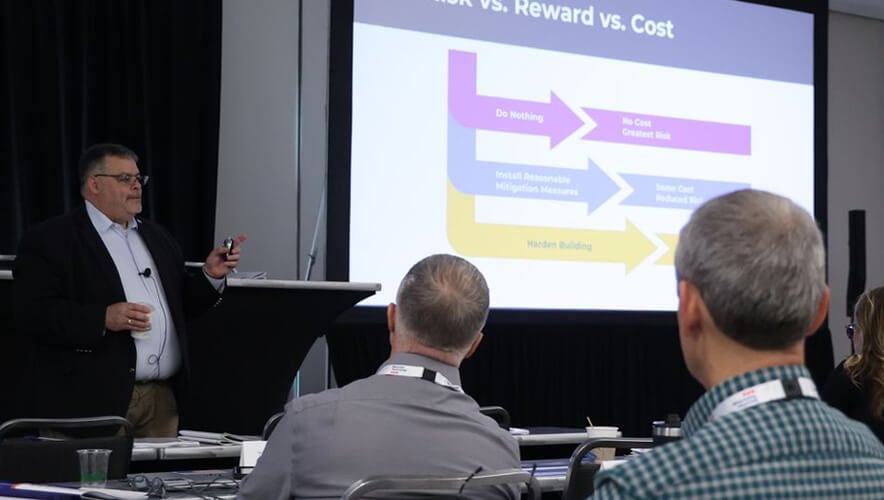
Attendees at a GSX 2025 pre-conference workshop held on 27-28 September gleaned some insight into current trends and challenges facing security operations centers (SOCs).
Security experts Rene Reider Jr., CPP, PSP, security practice leader, Burns Engineering; Mark Schreiber, CPP, president, Safeguards Consulting Inc.; J. Kelly Stewart, principal and head of security, Buro Happold; and Danielle Tabachnick, PSP, senior security consultant, Stantec led workshop attendees through a two-day course that covered nearly every aspect of where facilities design intersects with security. They encouraged attendees to question and apply lessons to their own organizations and experiences. Nearly all the instructors provided a fair warning to attendees: that by the end of the two days, it would feel as though they had tried to drink from a firehose, with the breadth of information delivered.
The following focuses on one particular topic—security operations centers (SOCs)—from the workshop “Facility Security Design: A Strategic Approach.”
Emerging Trends
Cyber threats. These threats against organizations are escalating, meaning that SOC teams must be ready to support their cybersecurity peers to prevent, mitigate, and respond to them. These cyber threats can leverage new or clever attacks, such as ransomware, Internet of Things botnets, and supply chain attacks.
Increasingly sophisticated artificial intelligence (AI) tools are also helping threat actors, often faster than they can help security professionals, says Schreiber. “We’re very, very concerned about how the cyber threat landscape is evolving. We have many, many incidents of cyberattacks being successful for a lot of large organizations, and unfortunately, it’s not decreasing,” he adds.
Hybrid work environments. Remote work doesn’t work for every professional setting. Much like operating rooms, restaurant kitchens, and professional sports, SOCs rely on face-to-face collaboration and communication. This can be harder to achieve in a hybrid SOC. However, some organizations are testing the waters to determine whether new tactics can offer SOC team members additional flexibility while still successfully supporting operations.
It’s worth noting that a more physically dispersed team can present security challenges involving secure access to data, device management, and risk monitoring, so security leaders should consider the hybrid SOC option with caution.
Talent. Like other sectors, SOCs are dealing with a shortage of cybersecurity and physical security talent.
“It is forcing us not only to invest in younger professionals and invest in maturing their knowledge and improvement of the profession, but also invest in technologies that aim to support employees,” Schreiber said.
While tools or other solutions leveraging AI can supplement some of these talent gaps, AI should not replace humans but instead make the people using it “superhuman,” Schreiber said. “It allows us to actually do more than we can today.”
Sara Mosqueda is editor-in-chief of the GSX Daily, which is produced by Security Management. If you don’t see her at the show, you can still connect with her on LinkedIn or send her an email at [email protected].