Two Juries Hold Social Media Companies Liable for Harming Minors
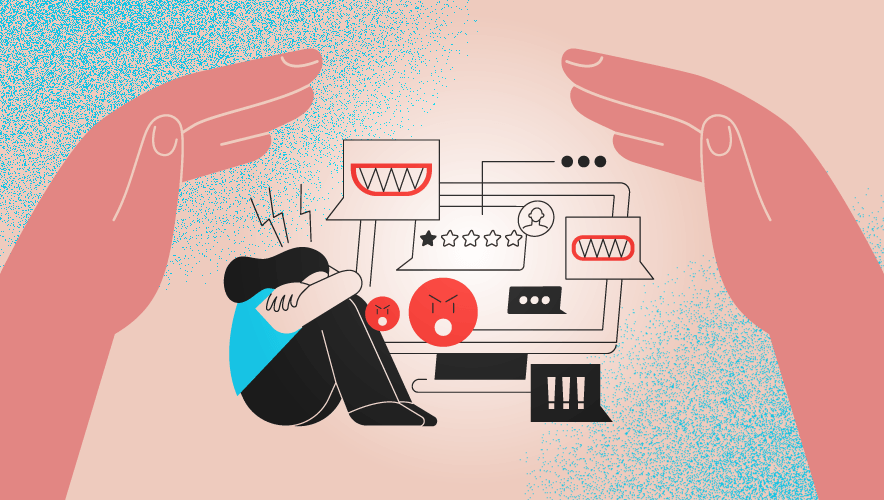
On Wednesday, 25 March, a California jury found that the addictive properties of Meta- and Google-owned social media companies had harmed the mental health of a young user. Meta, which owns Facebook and Instagram, was ordered to pay $4.2 million in compensatory and punitive damages, and Google, which owns YouTube, was ordered to pay $1.8 million.
One day earlier, on 24 March, a New Mexico jury ordered Meta to pay the state $375 million because the company knowingly harmed children’s mental health and concealed what it knew about child sexual exploitation on its platforms.
Both Meta and Google are expected to appeal the verdicts.
The cases are significant because both juries rejected the idea that U.S. Section 230 of the Communications Decency Act shielded the companies from responsibility in the issues being raised. That law, which is being challenged in cases the U.S. Supreme Court heard in February (the Court has not issued rulings in the cases yet), says “no provider or user of an interactive computer service shall be treated as the publisher or speaker of any information provided by another information content provider.” Courts have broadly interpreted this to mean social media companies are not responsible for what users post on their platforms, that they are passive providers of technology and the users themselves are responsible.
The California jury case accused social media companies of intentionally creating an addictive product and hiding what they knew about the addictive properties and potential harms that could result, rather than specific content. The New Mexico jury case centered around child sexual exploitation.
In the California case, a woman identified as K.G.M. in the case and as “Kaley” in court filed suit in 2023 when she was still a minor saying that she first used social media when she was six years old, became addicted to sites owned by Meta, Google, TikTok, and Snap. She said the sites led to mental health harm, including body dysmorphia and thoughts of self harm. TikTok and Snap settled the case, while Meta and Google took it to trial.
“During opening arguments, one of K.G.M.’s lawyers, Mark Lanier, presented the jury internal company documents from Meta and YouTube that showed tech executives knew of and discussed the negative effects of their products on children,” The New York Times reported. “Mr. Lanier argued that features like infinite scroll, algorithmic recommendations, and autoplay videos were designed to entice and hook young users to compulsively engage with the platforms.”
In the New Mexico case, state investigators posed as underaged users to build the state’s case against Meta. The investigators showed how easy it was to lure online predators seeking to knowingly engage in sexual exploitation of minors. The jury found the evidence contradicted how the company described the safety of its products.
“The jury agreed with allegations that Meta made false or misleading statements and also agreed that Meta engaged in ‘unconscionable’ trade practices that unfairly took advantage of the vulnerabilities of and inexperience of children,” the Associated Press reported.
The $375 million penalty assessed by the jury was less than prosecutors were seeking. The AP interviewed a juror who said the jury had arrived at the figure by awarding the maximum penalty for each violation, which was $5,000, but determined that fewer minors were likely affected than what the state had argued.
A second phase of the trial that will be decided by a judge rather than a jury will determine whether Meta must make changes to its platforms to reduce potential harm to minors.
An AP article explaining the significance of the two cases said that pending the outcome of the second phase in New Mexico, the California case may be the more consequential because it involves an individual, whereas in the New Mexico case, the state was the plaintiff. There are currently thousands of cases similar to the California case in courts across the country, and many more could be brought as a result of the California outcome.
“The California verdict has much broader legal and financial implications,” the AP reported. “The case was designated as a bellwether test that might guide the resolution of other lawsuits.”
Dozens of states, localities, and school boards have lawsuits similar to the New Mexico case, which is also considered a bellwether. Taken together, the cases are reminiscent of the legal environment that humbled and drastically reformed the tobacco industry in the 1980s and 1990s.
The issues brought up in the lawsuits are not confined to the United States. Many countries have begun to address the influence social media companies have on children. Australia became the first country to ban social media accounts for minors under 16 years of age.
The country put the onus on social media companies; there are no penalties to minors who have social media accounts that should be banned, or their parents or caregivers. Beginning in December 2025, social media companies were required “to take reasonable steps to prevent [underage people] from creating or keeping an account.”
A survey by YouGov took an early temperature reading of the effects of the law. Overall, nearly twice as many people think the law will be effective in such areas as reducing cyberbullying, reducing exposure to harmful online content, improving privacy, and reducing social comparison or negative mental health impacts as those who think it will be ineffective in those areas.
Encouraging findings include 61 percent of parents who have children 16-years-old or younger said they have observed between two and four positive behavioral changes since the ban, in areas such more in-person social interaction, being more engaged, and improved parent-child relationships. However, approximately 20 percent of parents report negative impacts, such as “digital inequality,” a shift to less regulated platforms, and reduced social connections and support.
A researcher from the University of Melbourne, however, cautions that real outcomes cannot be measured mere months after the regulation went into effect, but rather it will take years.
Officials from several countries have said they may follow the lead set by Australia, including Spain, Greece, Britain, Ireland, France, and Malaysia. The Tech Policy Press tracks countries efforts to restrict underage use of social media.