South Africa Declares a National Disaster As Death Toll From Rains and Floods Rise
Torrential rains and subsequent flooding began in late 2025 and continued into 2026 across parts of Mozambique, South Africa, and Zimbabwe, resulting in the deaths of more than 100 people throughout the three nations and leaving some communities stranded from medical or other emergency services.
On 18 January, South Africa’s National Disaster Management Center declared that the torrential rains and floods in the region qualify as a national disaster.
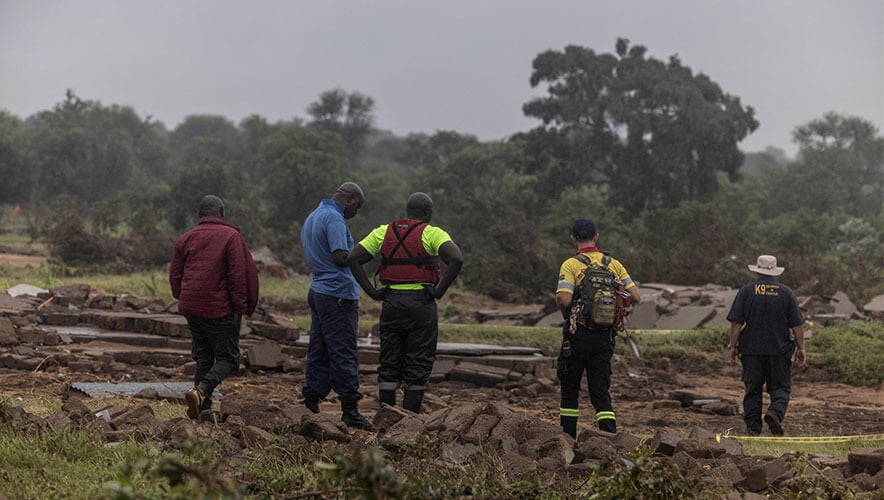
The extreme weather has killed at least 30 people in the northern South African provinces of Limpopo and Mpumalanga, damaged thousands of homes and at least partially destroyed roadways and bridges, according to the Associated Press (AP).
The premier of Limpopo province, Phophi Ramathuba, said the weather had caused around $240 million in damage.
By declaring a national disaster, the South African government can coordinate a response to the rains and floods. Soldiers have been deployed to Limpopo to help rebuild destroyed roads and bridges. Rescue and response efforts have evacuated people from flooded areas, with army helicopters deployed for residents trapped on rooftops and in trees, according to Al Jazeera.
Authorities closed the Kruger National Park on 15 January due to the floods and an evacuation operation extracted hundreds of staff members and tourists from areas of the park that were flooded. The park, which is located in Limpopo, is one of the largest game reserves in the world.
Rescue teams are searching for four people, including government official Andile Mngwevu and a 5-year-old boy. Authorities said that Mngwevu and four other people were in Mozambique’s Gaza province when the car they were in was caught and swept away in a flood. Only one of the car’s occupants has been accounted for, according to the BBC. Meanwhile, the boy has been identified as Siyanda Baloyi, who authorities believe was swept by a flood that hit his home in Limpopo on 15 January.
The floods and rains have also displaced hundreds of thousands, including more than 400,000 people in Mozambique alone, according to the World Food Programme, pointing to overlapping crises impacting the nation, including conflicts, drought, and the cyclone season.
Businesses in the region are likely to be coping with the disaster for weeks and months afterwards.
“Recovery [from flooding] is a really long process. It is extraordinarily expensive and extraordinarily time consuming when you have one of these major incidents,” Thomas Henkey, director of emergency management for Titan Security Group, told Security Management for an article on flood preparedness. “Clearing the water, clearing the mud, clearing the debris, and clearing the contaminants that may have been in the water and debris, and then you have to deal with mold remediation.”
“As the safety and crisis management folks, we're seen as the problem solvers,” he continues. “And so, it's really important to put those pieces in place ahead of time, and then to understand that this is going to be a marathon. And as leaders, we need to step up, keep morale up, keep the function moving forward, stay on top of any contractors or subcontractors that you have, and keep them on time and on task and on budget. But understand that this is going to be a lengthy process, and we will very much be seen as leaders in getting that accomplished and getting business back to normal, or to a sense of normalcy, at least.”