Campus Shooting Victims Sue Brown University for Negligent Security
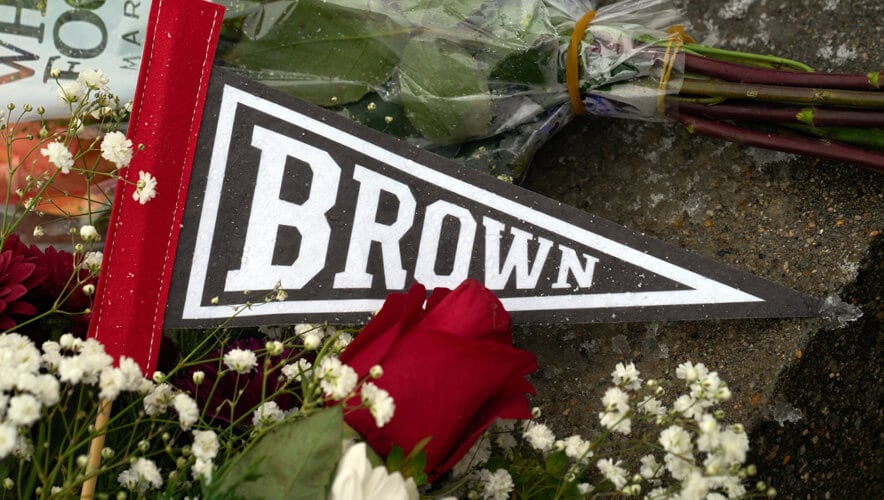
Three students who were injured during a shooting at Brown University in December 2025 are suing the school, alleging security failures.
Representatives for the students filed the three lawsuits last week, claiming that the unnamed plaintiffs have suffered because Brown failed to maintain “reasonable and appropriate security measures” and ignored prior warnings about the shooter, the Associated Press (AP) reported.
The suits are pursuing charges of negligence, negligent security, premises liability, and negligent hiring, training, supervision, and retention.
Forty-eight-year-old Claudio Manuel Neves Valente entered an economics class study session on 13 December 2025 in Tanner Auditorium in the Barus and Holley building and opened fire on students, killing two people and wounding nine others.
Neves Valente, a former Brown student, also fatally shot Massachusetts Institute of Technology professor Nuno F.G. Loureiro at his home on 15 December. Neves Valente's body was found four days later in a storage facility; authorities said he killed himself.
The perpetrator had planned the attack for years and left behind videos in which he confessed to the murders, but he did not share a motive, according to the U.S. Department of Justice.
The lawsuits claim that custodian Derek Lisi alerted Brown’s campus security that Neves Valente was surveilling the Barus and Holley building on approximately a dozen occasions.
“During these encounters, Lisi observed Valente pacing hallways, peering into classrooms, and moving in and out of bathrooms in a manner he considered suspicious, including repeated presence in and around the area of Tanner Auditorium, where the shooting later occurred,” according to one legal complaint.
The lawsuit alleged that “Despite Lisi’s reports and the suspicious nature of Valente’s presence and conduct in and around Barus and Holley, Brown University took no known reasonable or meaningful steps to investigate the reported threat, identify Valente, restrict his access to the building, increase monitoring or security presence, or otherwise secure Barus and Holley.”
The lawsuits also focused on the limited surveillance camera coverage of the building (two exterior cameras, and interior cameras did not cover the area around Tanner Auditorium, the complaint said) and the public accessibility of Barus and Holley “without meaningful entry restriction.”
A spokesperson for Brown University said it was reviewing the complaints “carefully and promptly,” in a statement to the AP.
Brown has already moved ahead with significant campus security changes.
Shortly after the shooting, Brown launched an external, comprehensive campus safety and security assessment for the campus, including an on-site physical security assessment.
University President Christina Paxton also placed the vice president of public safety and emergency management on leave, replacing him with interim vice president for public safety, Hugh T. Clements, Jr. In an open letter published on 30 December, Clements wrote that the university would sustain an elevated and visible public safety presence in the spring semester. She also pledged to work with students, faculty, and staff on security improvements moving forward.
Following the shooting, the university required anyone in administrative, academic, and residential buildings to hold Brown IDs or arrange authorized access for guests. The school also expanded its security camera coverage and added blue light phones around campus. In March, Brown launched a voluntary, one-hour hostile intruder preparedness training course led by FBI-trained instructors.
In April, the university requested feedback from faculty, staff, and students on their experiences navigating the new building access policy and their perspectives on the placement, use, and footage management of campus security cameras.