Shooting at U.S. Military Base in Georgia Injures Five
A disgruntled employee allegedly opened fire at his place of employment on Wednesday. Several factors made this mass casualty event unusual.
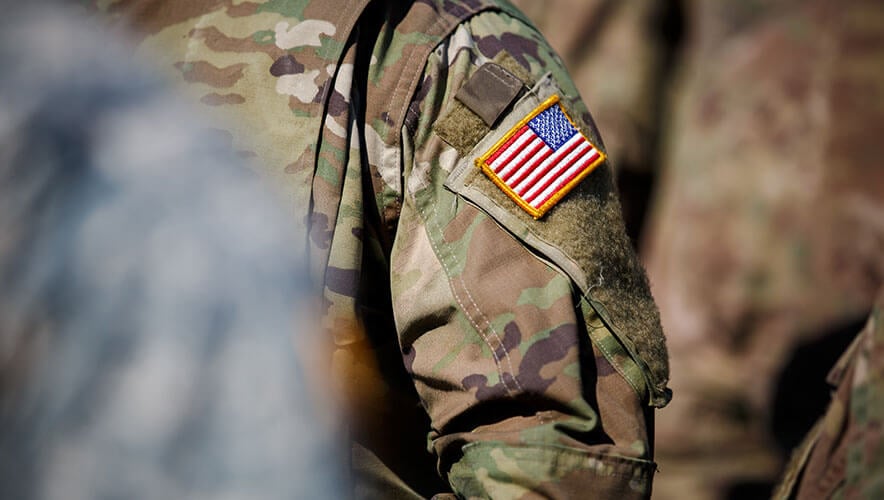
The setting—the U.S. Army’s Fort Stewart-Hunter in southeast Georgia—is one of those uncommon factors. While such incidents are not unheard-of at bases, security is an ever-present component at domestic U.S. military bases, making them among the most fortified places in the country.
The severity of the incident is also unusual. The United States is infamous for incidents involving dozens or hundreds of rounds being fired from high-powered weaponry. This incident, however, resulted in five service members sustaining non-life-threatening gunshot wounds. The Army sergeant arrested for the attack, Quornelius Radford, allegedly used a single handgun and was quickly subdued by other soldiers in the offices where the attack occurred. The choice of weapon and the location—where 21,200 U.S. troops trained in self-defense are employed—surely limited the damage.
There are other unusual, or at least unexplained, factors. One is that Radford was arrested earlier this year on a civilian charge of misdemeanor driving while intoxicated and running a red light—charges his commanders did not know about. Typically, any off-base legal issues would be quickly shared with military officials. Radford was scheduled to appear in court on 20 August, according to The New York Times.
Another unusual factor is that Radford had what has been reported as a personal firearm at his workplace. Weapons on domestic military bases are generally restricted to security personnel.
“This one’s a bit difficult, and we’re going to have to determine how he was able to get a handgun to his place of duty,” Brigadier General John Lubas said in a press conference.
What is less unusual is that the violence occurred at the accused’s workplace. In ASIS’s 2024 research on active assailant preparedness, 8 percent of security professionals reported their organization had experienced a violent incident resulting in a fatality in the last five years, 14 percent reported experiencing a violent incident that required ambulatory assistance, and 21 percent reported experiencing a person brandishing a firearm in the workplace.
Motivation for the attack is sketchy at this point, and more is sure to come out as authorities investigate the incident. The New York Times spoke with Radford’s father, who said that his son had been seeking a transfer and had complained about racism at Fort Stewart. As of now, it is not known if the transfer request had any connections to alleged racism or the civil arrest. The father also said that Radford sent a cryptic text to his aunt on the morning of the incident which said “that he loved everybody, and that he’ll be in a better place because he was about to go and do something.”
The local NBC affiliate put together a timeline for the incident. Some notable observations in the timeline:
- The shooting occurred at 10:55 a.m., and the shooter was quickly subdued after opening fire.
- Nine minutes later, the base was put on lockdown.
- Fourteen minutes after the incident started, emergency medical personnel were dispatched.
- One hour and 15 minutes after the incident, the lockdown in the immediate part of the base was lifted.
- The three public schools closest to the incident entered a “soft lockdown” at 12:45 p.m. “out of an abundance of caution.” It was the first day of the new school year.
- Three hours after the incident, the base’s lockdown was fully lifted.
Additional Security Management and ASIS active assailant resources:
- Time is the Critical Element in Active Assailant Preparation
- Fast Facts: 4 Features that Improve Active Assailant Preparedness
- Workplace Violence and Active Assailant Prevention, Intervention, and Response Standard