Ian Bremmer: Navigating Leadership in a G-Zero World
When everything feels unpredictable and unstable, how can security and business leaders protect business continuity and keep on top of risks? In this environment, what does effective leadership even look like?
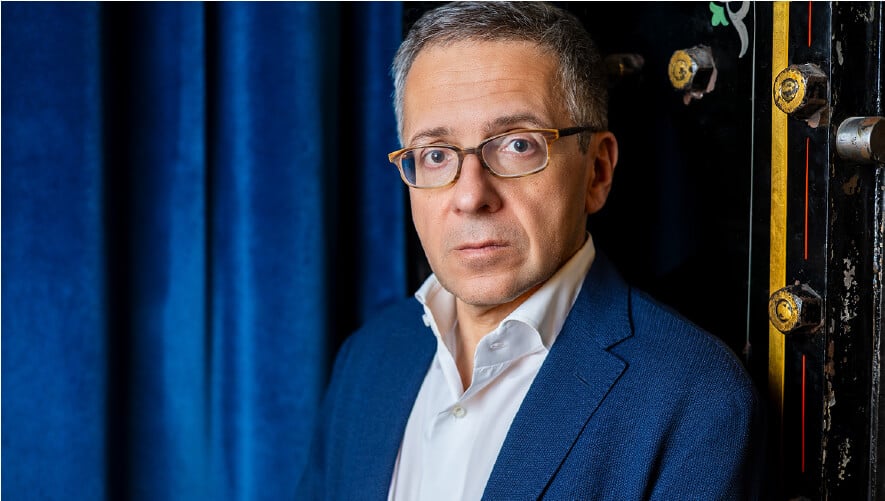
In his 2019 GSX keynote session, global political risk analyst and president of the Eurasia Group Ian Bremmer warned of a looming geopolitical recession. This meant that existing power structures between nations and alliances were weakening, and people’s trust in traditional institutions was waning as a result, producing global tension.
At GSX 2025, Bremmer will explain where we have ended up as a result of that geopolitical recession—a G-Zero world, a twist on the G-7 or G-20 that indicates no single country or coalition is willing or capable of setting an international agenda.
“Our G-Zero world is the result of misalignment of the ‘rules’ of the global order with the balance of power,” wrote Bremmer in a Eurasia Group newsletter in July. “That means higher levels of geopolitical risk playing out in a number of ways: more wars, displaced people, trade disputes, and political support for anti-establishment leaders. More market volatility as a consequence. But navigating heightened levels of risk is nothing new, especially when there’s cyclicality to the risk, whether it’s a recession, hurricane season, a pandemic, or the G-Zero (a geopolitical recession), the market settles into a new equilibrium.”
But the current environment runs contrary to previous cycles—today, countries that had once been sources of stability are unreliable policymakers. The G-Zero environment also makes business and political conditions harder to predict or plan for, especially with rapidly changing or frequently paused tariffs, technological advancements, cross-border conflicts, and volatile markets.
In his GSX keynote on Monday, 29 September, “The New Abnormal: Who are the Winners and Losers in a G-Zero World?” Bremmer will outline the ramifications of the current geopolitical environment, explore where it could go from here, and how business leaders can focus on the most critical variables to make a difference in their organizational resilience. But he also emphasizes the need for increased flexibility and more of a view on the short-term.
The “backdrop of a G-Zero world also means less capacity to project years in the future. especially given the impact of advanced technology on geopolitics,” Bremmer wrote. “Some variables still have 10-year or more staying power—demographics, resource exploitation, climate trends. But many key estimates that historically change more incrementally—country and institutional stability, multilateral political/economic/security environment, treaty governance, rule of law, and the like—have become structurally uncertain over shorter time periods. For many of these assessments, a 10-year projection no longer has useful utility.
“That’s important to recognize as a constraint,” he continued. “Accept that some forecasting that used to be routine has become functionally useless over longer time periods. Which means updating when you can, admitting it when you can’t, hedging more than before, and understanding everyone else is in the same boat.”
Security professionals can take some comfort in that sense of community at GSX, while working together to find agile and viable paths forward in the new abnormal.
The keynote is part of the Monday General Session, which is sponsored by Axon. Stay tuned to the GSX Daily for our on-site coverage of Bremmer’s keynote presentation.
Claire Meyer is editor-in-chief of Security Management. Connect with her on LinkedIn or directly via email at [email protected].