Legal Report: How a DJI Ban Could Impact the Drone Industry
Happy Friday! Megan Gates here with an update on our regular Legal Report column. This mainstay that originated in our print magazine is taking on a new format this year to provide more analysis on emerging cases, legislation, and regulation that affect the security industry. Our hope is that this updated approach will make our legal content more engaging for you, our readers, while continuing to cover the most pressing legal issues of the day.
As part of that transition, I’m taking back the helm of Legal Report—many thanks to my colleague, Sara Mosqueda, for captaining the column for the past few years.
And with that, we’ll dive into it:
- FCC bids farewell to foreign drones
- But is the U.S. drone market ready?
- Security’s use of restraint under scrutiny
- Venezuela’s leader arraigned in New York City
- New disclosure requirements for AI developers
FCC Bids Farewell to Foreign Drones
In a long-anticipated yet still somehow surprising move, the U.S. Federal Communications Commission (FCC) banned new sales of foreign-made drones in the United States under national security concerns.
Under a 22 December 2025 deadline in the 2024 National Defense Authorization Act, the FCC added unmanned aircraft systems (UAS) and their critical components that are produced in foreign countries to its Covered List. This list is the commission’s log of equipment and services that pose an unacceptable national security risk and therefore cannot be authorized, marketed, or sold in the United States.
The reasoning. The Trump administration has been concerned about the use of foreign-made drones to conduct espionage and share sensitive information with adversaries about critical infrastructure in the United States.
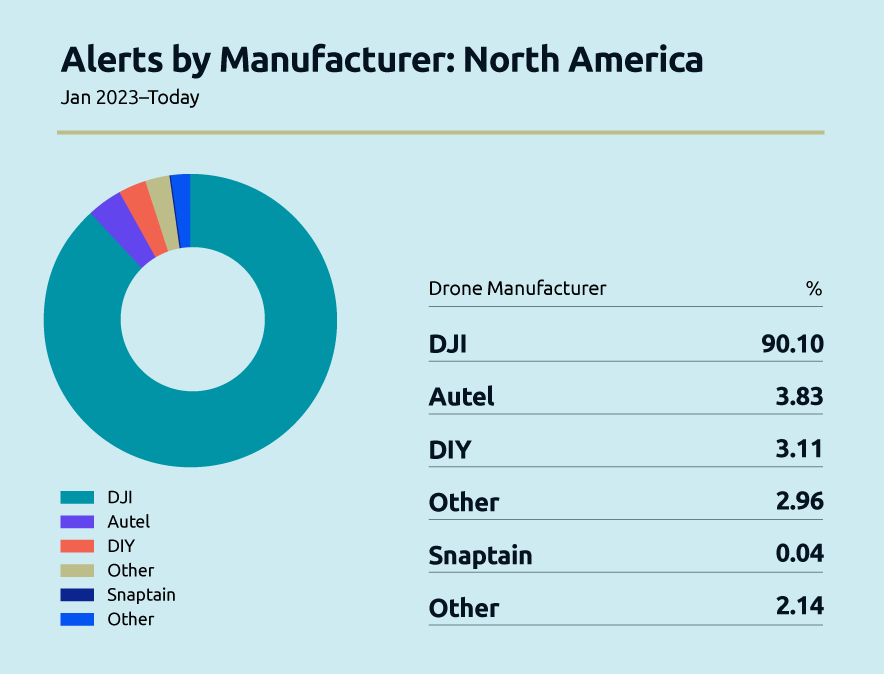
These concerns are particularly high when it comes to Chinese espionage attempts since China-based DJI (Da-Jiang Innovations) controlled 70 percent of the drone global market share as of 2024. Law enforcement, firefighters, emergency responders, and private practitioners regularly use DJI’s drone and camera products for their work.
Now, the Trump administration is pushing back to limit new purchases of DJI—and other foreign-made drone—products. The FCC explained in its announcement of the move that adding foreign-made drones to the Covered List will safeguard Americans and restore American airspace sovereignty ahead of several major events—including the 2026 FIFA World Cup, America250 celebrations, and the 2028 LA Summer Olympics.
Brian Harrell, former assistant secretary for infrastructure protection at the U.S. Department of Homeland Security, tells Security Management in an email that Chinese manufactured drones introduce risk for all deploying them.
“This isn’t some mythical bogeyman—data exfiltration and national security concerns are real, especially for critical infrastructure owners and operators,” he says. “This ban has been a long time coming.”
Case in point: Harrell alerted industry to this very problem back in 2019. The U.S. Cybersecurity and Infrastructure Agency (CISA) and the FBI doubled down on those concerns in industry guidance released in 2024.
Building a domestic market. By limiting access to foreign-made technology, the FCC said the U.S. drone industrial base will be bolstered. But it’s unclear how that will actually happen in the near future.
During a session at the American Bar Association’s National Security Law Review in November 2025, panelists shared that China continues to dominate the market for drones and their parts. Representatives from the United States and Europe spoke about the desire to move away from Chinese suppliers but said that it will take time to build up independent supply chains that can manufacture the parts at a competitive price point.
“From our perspective, we’re pro-moving off of Chinese parts, but we need time to gather,” said Lisa Ellman, chair of the uncrewed aircraft systems practice, Hogan Lovells, and executive director, Commercial Drone Alliance. “We need to bolster our American industrial base—the American companies that are trying to compete at the price point of DJI. Our Drone Alliance is pushing tax incentives [in Congress] to lower the cost and encourage taxpayers to buy them.”
Philip Lockwood, managing director and senior vice president of strategy, STARK International, added that Europe faces a similar challenge with Chinese manufacturers because they dominate multiple layers of the supply chain for drones.
“That’s difficult both for civilian and military manufacturing,” Lockwood said. “We’re quite a ways away from being able to produce drones in the way that China, Russia, and Iran can.”
The Commercial Drone Alliance released a statement on 5 January that it was surprised that the FCC’s actions were not targeted to “certain foreign adversary produced drones.” The alliance expressed concerns that the FCC has effectively cut off critical drone components from U.S. allies and will disrupt critical operations—weakening U.S. national security.
“We have critical questions about how broadly this action may be interpreted and the immediate consequences for the U.S. commercial drone industry, operators, and manufacturers working to scale responsibly and provide valued products and drone services,” the alliance explained. “We are currently engaged with federal stakeholders to seek clarity and advocate for a transition plan that preserves our members’ ability to innovate domestically while addressing legitimate national security concerns in a targeted way.”
|
Drones Detected in Europe, Middle East, and Asia in 2025 |
|||
|
Manufacturer |
Country of Origin |
Percentage Detected |
Type of Drones Detected |
|
DJI |
China |
83.48% |
Compact quadcopters and cinematic camera drones |
|
Autel |
China |
1.40% |
Camera drones and industrial-grade platforms for mapping, inspection, surveillance |
|
Do-It-Yourself (DIY) |
NA |
9.82% |
First-person-view kits built from off-the-shelf components |
(Data from Dedrone’s The Current & Future State of Airspace Defense report)
DJI’s take. In a statement released in November 2025, DJI said that being added to the Covered List would impact all DJI products—including drones, cameras, and power stations. The company also pushed back on the narrative that it is a Chinese military company or that it has done something wrong that warrants its placement on the Covered List.
“Kicking DJI out of the U.S. market would also benefit domestic manufacturers seeking to expand, but we’ve never been opposed to their growth,” DJI said. “In fact, we support it, particularly as they focus on sensitive U.S. government as well as military applications, areas for which DJI products are not developed nor suited for.”
In the meantime, consumers and security practitioners can continue to use their pre-approved DJI drones in the United States. They just won’t be able to buy new ones or repair them with new DJI parts moving forward.
Other News to Note
Royal Caribbean faces wrongful death lawsuit. The fiancée of a man who died after being restrained by Royal Caribbean crew members has filed a wrongful-death lawsuit against the cruise company. In the lawsuit, Connie Aguilar claims that Royal Caribbean staff negligently served her fiancée, Michael Virgil, at least 33 alcoholic beverages in one day, ignoring visible signs that he was becoming intoxicated. Then security personnel used restraining methods to subdue him when he became agitated—including standing on Virgil’s body, spraying him with pepper spray, and administering a sedative—which caused the cardiopulmonary arrest that led to Virgil’s death, later classified as a homicide.
UK publishes cyber agenda, with funding. The UK released its Government Cyber Action Plan this week, which details how it will address the growing cyber threat landscape. On the agenda is rapidly improving cyber defenses and digital resilience across government departments for clearer risk visibility, stronger central action to address those risks, and faster response to threats and incidents. The plan is backed by funding from the government of more than £210 million ($282 million).
International travelers meet new biometric requirements. The U.S. government implemented a new federal rule that will enhance biometric exit technology expansions at all airports, seaports, and land crossings across the country. The new rule allows noncitizens and migrants to be required to be photographed upon entry and departure from the United States.
EU approves personal information flow to UK. The European Commission renewed two adequacy decisions for the UK. The renewals allow personal information, including for the purposes of UK immigration control, to flow from the EU to the UK after determining the UK’s data protection practices are equivalent to those required under the EU General Data Protection Regulation.
Speed Reads
Court Cases
- Venezuelan President Nicolás Maduro and his wife, Cilia Flores, were arraigned in U.S. federal court in New York City on 5 January. The couple were captured by U.S. military forces in an extremely unusual raid on Caracas conducted on 3 January. Maduro is maintaining that he was kidnapped by the U.S. military and is a prisoner of war, while UN Secretary General António Guterres expressed concerns that the raid may have violated the UN Charter’s provisions limiting the threat or use of force against a territorial integrity or political independence of any state. Maduro and Flores have pled not guilty to charges that include narco-terrorism and conspiracy to import cocaine into the United States. Their next court appearance is scheduled for 27 March.
- The trial for Adrian Gonzales, one of the first school police officers to respond to the Uvalde school shooting in 2022, is moving forward. He is charged with 29 counts of child abandonment or endangerment for allegedly waiting more than an hour to confront the gunman at the scene. Jury selection began 5 January.
- A man who drove his vehicle into a crowd of soccer fans celebrating Liverpool winning the Premier League championship in 2025 was sentenced to 21 years in prison. Prosecutors said Paul Doyle rammed his car into the fans and injured more than 130 people because he was upset about the crowd causing a traffic delay.
- Hong Kong publisher and democracy activist Jimmy Lai was convicted of national security charges. He faces life in prison and is scheduled for a pre-sentencing hearing on 12 January.
Legislation
- New York enacted transparency and disclosure requirements for artificial intelligence (AI) developers. The law—which applies to companies with more than $500 million in revenue—goes into effect on 1 January 2027 and requires covered entities to adopt safety and security protocols and provide those protocols to relevant authorities. Covered entities must also create detailed plans about how they will handle various risks. It is unclear, though, how a recent executive order to curtail U.S. states from regulating AI will affect the law’s implementation.
- Also in New York, Governor Kathy Hochul signed legislation into law on 5 January that prevents the state and its municipalities from purchasing certain technology products—including computers, drones, and semiconductors—from international companies with close ties to foreign governments. The law mandates new requirements for information sharing and cooperating with intelligence gathering.
- U.S. President Trump signed into law a measure that prevents anyone based in China and other adversarial countries from accessing the U.S. Department of Defense’s cloud computing systems. The prohibition is part of a broader defense policy bill and comes after a ProPublica investigation revealed that Microsoft was using China-based engineers to service the Pentagon’s computer systems. Microsoft had been using that approach for nearly 10 years, but discontinued it after the program became public. Other adversarial countries included in the ban are Iran, North Korea, and Russia.
- Australia plans to change its hate speech laws in response to the Bondi Beach attack in December 2025. The exact measures have not been released yet, but Prime Minister Anthony Albanese’s government has proposed cracking down on leaders and religious officials who spout hatred and anti-Semitism.
Thanks for reading! We’ll be back with more legal analysis in February.
What do you think of our new format? Please email your thoughts and suggestions to [email protected].
Megan Gates is senior editor of Security Management. Connect with her at [email protected] or on LinkedIn.