This Guideline specifies steps that an organization can take to develop and implement and effective risk-based information asset protection program.
To protect its information assets, organizations should establish a formal IAP program appropriate to its size and type. To be effective, the program should be tailored to the organization’s strategy, mission, and operating environment. Additional factors such as the organization’s scope, risk tolerance, decision making protocols, business practices, regulatory environment, public image, interrelationships, and culture play an important role in how the IAP program is designed and implemented.


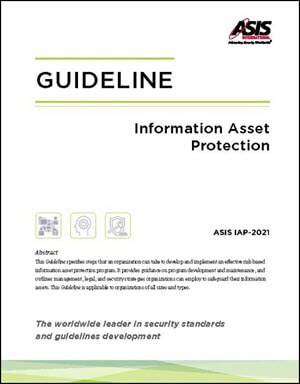 This Guideline specifies steps that an organization can take to develop and implement an effective risk-based information asset protection program. It provides guidance on program development and maintenance, and outlines management, legal, and security strategies organizations can employ to safeguard their information assets. This Guideline is applicable to organizations of all sizes and types.
 Connected Corporate Security: How To Manage Threats and Risks with a Unified Security Model
 Securing Your Organization's Most Vulnerable Asset: Information