The Fragility of Teenage Hope: Cyberbullying Leverages a Perfect Storm of Social Pressure, Psychological Development, and Information Overload
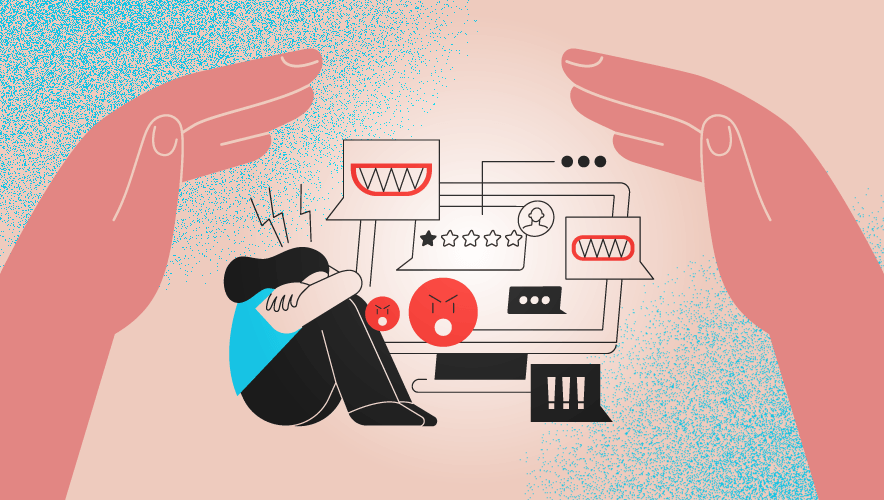
About one-third of U.S. teenagers get bullied every year, and nearly that same number have been victims of cyberbullying in the past month, according to the Cyberbullying Research Center. As many children’s social lives continue to revolve around social media apps, online gaming, and chat servers, school officials and behavioral threat assessment specialists are navigating how to keep up with digital risk factors to prevent student harm.
The ingredients of bullying remain largely the same online as in person, says Bruno Dias, PhD, PCI, CTM (Certified Threat Manager). He is cofounder and principal consultant at Key Operational Insights LLC, a consultancy that provides behavioral threat assessment services and risk management training around targeted violence. Bullying involves hurtful, intentional, and repetitive actions, as well as a power imbalance. It can be physical, verbal, or psychological.
“In a physical environment, going back 20, 30 years, it was just me and my ability to be mean, my ability to exploit a dark hallway or a place where administrators aren’t present,” Dias says. “Now, with the online environment, I don’t really have to worry too much, and my opportunities to be an effective bully are limitless.”
Even if it were easy to accomplish, simply identifying bullying accounts on social media and shutting them down isn’t the solution, says Holly Ryan, a nationally certified school psychologist who has been practicing behavioral threat assessment and management (BTAM) since 2018. Users are getting better at hiding who actually created bullying accounts. If the account doesn’t actively break a law or the platform’s code of conduct, it can be difficult to report them and get them taken down.
“We can’t always figure out who the user is, and we can’t always shut the accounts down. And even when we do, they pop right back up again. It’s like Whack-a-Mole,” she says.
The types of bullying accounts can vary significantly, and they can get specific. In 30 minutes, Ryan unearthed eight new barstool and ship accounts focused on students in her school district. These are either focused on school sports (playing off of legitimate sports blog Barstool Sports) or school relationships (whether you support or “ship” student relationships, and what’s happening with suspected hookups and breakups). Other social media accounts or semi-private chatrooms will target single students or even entire swaths of the school population, including jocks and the popular kids, who are perceived as having more to lose, she says.
The volume and variety of venues means students who are the targets of bullying campaigns can’t escape it after school hours, since the malicious activity follows them online, expanding the opportunities for continuous attacks.
“So now, instead of a group of four or five [students] in-person bullying, harassing, or excluding someone, you have accounts that 100 people are following, and you’re humiliated online,” Ryan says. In some cases, violent online communities target higher-risk students to manipulate them into committing violence against themselves or others. In one case, Ryan consulted with a student who was being extorted by a 764 organization online, which threatened to embarrass and expose him to the rest of the school if he did not comply with the group’s demands.
“The kid burned down his house, killed two of his family pets, and almost threw himself into the fire,” Ryan says. “That’s what’s happening everywhere across schools.”
Artificial intelligence (AI) tools are making online bullying even faster and more accessible, with deepfake images spreading swiftly, depicting students in exposed positions. As AI tools become more sophisticated, it’s harder to tell real images from manipulated ones. By the time the fake is uncovered, the reputational damage is already done.
“With AI, we’re entering uncharted territory because I can bully you with deepfakes, I can generate content that can be very troubling,” Dias says. “Then I get into the secondary and tertiary impacts of online bullying: I can generate sexual-related content and then get you involved in sextortion. I can get into the criminal lane. The ingredients of bullying are heavily connected with the criminal stuff we’re seeing in online environments right now. ... The psychological warfare, the psychological pressure, and the emotional toll—the impact is so severe, and we’re very, very reactive still.”
Part of the problem is the developmental stage of adolescents and teenagers, when they are rapidly changing physically, mentally, and socially, says Peter Faustino, PsyD, a school psychologist in New York and the immediate past president of the National Association of School Psychologists.
“The adolescent brain and teenagers are developing more rapidly and there is more expansion of their neural pathways than from birth to age 5,” Faustino says. “When you think about a child’s growth from birth to 5, you think about them walking, talking, feeding themselves, and toileting themselves, right? It’s all these monumental moments. But for teenagers, it doesn’t look exactly the same. It’s probably not as cute when they are arguing with you, or learning to use language and social connections and relationships, or seeking independence from their adults, or problem-solving, planning, or using executive functioning in the frontal part of their brain—which is the last to develop. You don’t see all those things, necessarily, but they absolutely are occurring.
“And it’s at the same time that we are handing them phones, sometimes with unfettered access to the world, to content, to information overload,” he says.
Even if parents or schools refuse to allow students access to cellphones, the teenagers will likely find ways around those safeguards to assert some independence and maintain social ties.
The social aspect cannot be ignored, since it’s a significant part of adolescents’ growth. In their early teens, students are seeking out greater social connections while learning to use more advanced language and higher order thinking skills, Faustino says.
“Kids realize how to say things to others to get them to be better friends with you, how you can get attention in healthy and unhealthy needs, and they’re using some of those developmental urges within social media platforms,” he says. “That’s where it sort of goes awry—they think that if they post something on their private stories that their parents won’t find out about it, or if they like certain things or emulate certain people online that this is going to get them the attention and social connection they are craving.
“Sometimes when I talk to parents about this stage when a kid becomes a bully, so to speak, or they get involved in bullying, it’s actually their way of saying ‘Woah, I have this newfound skill: I say something and other people laugh,’ or ‘I post something, and other people like it,’ or ‘I comment, and then I get attention for it.’ It’s not the most unhealthy thing; it’s just them exerting this newfound power and discovery that they have.
“What really needs to come in are the guardrails where teachers, parents, or even peers will say: Hey, you’ve crossed the line. That’s too much, we need to rein that in. Here are the consequences, here’s how you should be using some of that power for good reasons. But so much is transpiring online that it’s hard to get that same measure of feedback into adolescents and kids,” he says.
Adolescents don’t always make the best decisions in the moment, though, and many social media platforms reward impulsive behavior, such as thoughtlessly resharing a post about a juicy rumor, Faustino explains. Because online activity is removed from in-person social cues and body language that can show when an action was hurtful or crossed a line, it can be difficult for users to know when to stop.
The psychological warfare, the psychological pressure, and the emotional toll—the impact is so severe, and we’re very, very reactive still.
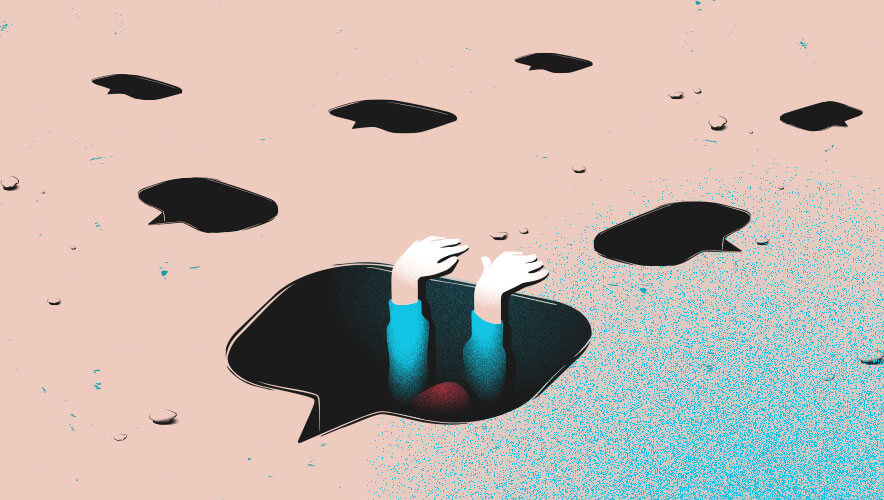
In addition, late adolescence is a formative time for students’ sense of self, as well as their higher cognitive functions. One poor decision—sharing a compromising image or making a compromising statement online—can put a student under a bully’s control, such that he or she is being pushed to do different things, feel a certain way, or hide different activities to a point that the victim can’t see a way out of it, Dias says. That loss of hope can be deeply damaging to a child’s sense of identity.
“It’s a perfect storm for self-harm, it’s a perfect storm to enter other high-risk activities, such as using drugs as a coping strategy,” he says. “That’s just who I am now; I’m fully committed, I’m tethered to this, and I just have to accept it. You lose visibility of hope, and that’s a very negative and difficult way of thinking at that tender age.”
That loss of hope can lead to isolation, mental health concerns, and risks of violence.
“Cyberbullying puts kids in a position of risk, in positions where they don’t see themselves as happy individuals,” Dias says. “They’re dealing with a tremendous emotional toll that compounds every day. They’re carrying that weight, and they often don’t feel like they can talk to someone. … It puts you in a position where you’re carrying the feeling that everybody else is happy, I’m not, I don’t have a future. From a safety and security perspective, that creates additional risks.”
School psychologist Ryan adds, “Kids who are targets are experiencing depression, anxiety, and suicidal ideation to a degree that we’ve never seen before.”
More than one in seven U.S. youths ages 6 to 17 experiences a mental health disorder each year, yet only half receive any mental health services, according to the National Alliance on Mental Illness. Data from the U.S. Centers for Disease Control and Prevention showed that the percentage of high school students experiencing depression climbed from 30 percent in 2013 to 40 percent in 2023. Female students and LGBTQ+ students were more likely than other demographics to report persistent feelings of sadness or hopelessness, as well as suicidal thoughts and behaviors.
Schools are in a tough position, though, given that cyberbullying cases can move significantly faster than schools can intervene. Dias cites one case at a Texas middle school where a group of girls targeted another girl they disliked. They knew she had a crush on a specific boy, so they asked the boy to act as if he were interested in her, with the objective of getting nude photos of her. The boy did, because the other girls promised to exchange nude photos of themselves with him. The targeted girl ended up sharing compromising photos with the boy, who gave them to the group of girls, which shared them more broadly, accompanied by mean messages.
The girl in the photos found out from a friend about the exposure and went straight to the locker room, where she attempted to hang herself.
“This all happened in a very rapid sequence—a matter of hours,” Dias says. “So, the opportunities to detect and intervene were very, very difficult. That’s why we need to be proactive, rather than reactive. If we educate, if that girl had had some really good instructions, maybe she wouldn’t have put herself in that position to begin with. But she never did, and suddenly, she lost hope in a matter of hours. The embarrassment was overwhelming, and the only way, in her mind, to alleviate herself of that embarrassment, of those feelings, was to attempt a suicide.”
In concert with broader BTAM efforts, significant changes in student behavior should elicit a response. A student who suddenly loses interest, spends less effort on hygiene, or becomes more reclusive or isolated should prompt school officials to ask why, Dias says.
“I think we focus too much on threats in school environments,” he adds. “We’re looking for threatening behavior when we should be looking for changes in behavior, including positive changes. If you have a sudden, significant energy burst and positive change, we should be trying to find out why. We need to learn from both positive and negative things, and we don’t. We’re very, very reactive; we try to respond to immediate threats.
“I often tell educators that the systems that we have in place are intended to detect splashes when we should be looking for ripples,” he continues. “Behavior is connected to everything, and if we have strong systems to pay attention to behavior and what’s happening in the student’s life, understanding the why behind the behavior, we’re in a better position to drive safe environments.”
In particular, student isolation puts Ryan on alert. The kids that sit alone in the lunchroom tend to lack connection and community, she finds, which can make them easier targets for bullying and online manipulation. School officials, teachers, and counselors can work to connect with that student and change his or her school experience—instilling different social skills, finding extracurricular activities that align with their needs or interests, and generally exhibiting kindness.
Without some sort of connection, “those are the ones that do end up on my radar in some way, later on,” she says.
Cyberbullying puts kids in a position of risk, in positions where they don’t see themselves as happy individuals.
It’s important to talk with the student in question—whether in a bullying situation or otherwise— to get closer to the root of the problem, rather than resorting immediately to one-size-fits-all programs or even disciplinary action, like a zero-tolerance policy.
School officials should take the time to ask open-ended questions, even when the student who seems to be struggling insists he or she is fine or dismisses concerns, Dias says. The student likely feels as though he or she is going to be accused of doing something wrong—a perception that bullies often exploit to keep their targets quiet. That’s why slow, empathetic, but consistent outreach is important. Schools should identify who the best official is to initiate those conversations. Assistant principals are often associated with discipline, which can inadvertently intimidate a student into staying quiet, while a counselor or social worker can make students feel more comfortable about communicating. The deeper story can be surprising and uncover broader school culture issues.
In one case Ryan handled several years ago, a student was posting pictures of himself with weapons online, saying that he would come back to the new school year with a bang.
“We had over 180 screenshots of him engaging with guns and making veiled threats to people,” she says. “We pulled him in and, through our OSINT [open-source intelligence] kind of investigation, looking at what accounts he had, we’re finding one, two, three, four, five accounts that were made for the sole purpose of mocking and humiliating this kid for two years. … All of them had 100 followers, and people would comment.”
While the situation might have escalated to an act of violence, the BTAM team determined that the student was just trying to stop the bullying by working out, changing his persona to look tough, and making himself seem like a dangerous person to target.
It took months, but Ryan and her team intervened with every one of the 100 students who were interacting with the bullying posts, to try to ensure the students understood the ramifications of their actions and that the student who had been implying violence would have a different school experience going forward.
Schools can’t address every social conflict, though. They need to triage. A good rule of thumb, Faustino says, is that cases that interfere with the flow of the school day or disrupt the learning process require schools to get involved.
Preventive outreach can take the form of digital literacy courses that teach safe and prosocial ways to interact online, in the same way schools teach children about math, reading, or writing, Faustino says. That outreach can start early—as young as kindergarten—with age-appropriate guidance about what constitutes cyberbullying, how to use technology safely and responsibly, and how to report inappropriate online behavior.
“I don’t think the messaging we often go with is that all technology is bad or all social media is bad, but it’s something that has to be taught, developed, and learned,” he says. When social media was first emerging in the early 2000s, students were largely unaware of the potential harms of these spaces. But today’s students are themselves acknowledging the unhealthy habits connected with social media use or the impacts of technology use on sleep or social exchanges, Faustino explains. But where students lack awareness is on what to do about it—how to adjust behavior without losing out on social connection.
Faustino allows that not every student will struggle with cyberbullying and technology issues. Large percentages of kids who use phones and other electronic devices talk with their parents, get their education, and find healthy ways to interact with the technology.
“And then there are percentages that are really predisposed, I think, to unhealthy habits, becoming addicted, fueling some of the mental health struggles or their self-esteem worries, or poor decision-making,” Faustino says. These students will need more targeted interventions tailored to their particular circumstances.
“There is no simple answer on how to keep up on it, other than keeping my ear to the ground and creating a space by which kids are comfortable—psychologically, emotionally, and socially—in the school building, where they are willing to talk about these things,” he says.
“Physical security, you can put a metal detector in a school, but the greater security is if a kid is thinking about doing harm that they tell someone, right? That they trust someone enough to tell them about what they’re thinking or planning,” he continues. “You can set up firewalls, but kids will find their way around. The healthier thing is if they open up to their parents or trusted adults, teachers, school psychologists, to say things like ‘I may be in a compromised position,’ or ‘I may be thinking about making decisions,’ or ‘something made me feel uncomfortable the other day.’ That is always going to be the greatest security we have in these situations.”
Students themselves can get more involved in cyberbullying prevention, although that requires some rebranding. For example, many students think that reporting cyberbullying campaigns could get their friends into trouble, even if the friend is the target. So, schools need to reframe the concept and create transparent response protocols so students can see how early reporting is a form of helping—not labeling or punishing—their friends, Dias says.
“We need to have a curriculum in place where we’re educating kids on tactics, what cyberbullies do, how to help, and what resources are available so they can start seeing hope. We want to maintain visibility of hope,” he adds.
If you or someone you know is in crisis, facing mental health struggles or emotional distress, or just in need of someone to talk to, connect with the 988 Suicide & Crisis Lifeline by call, text, or chat.
Claire Meyer is editor-in-chief of Security Management. She has been reporting on the security industry since 2012. Connect with her on LinkedIn or via email at [email protected].